Table of Contents
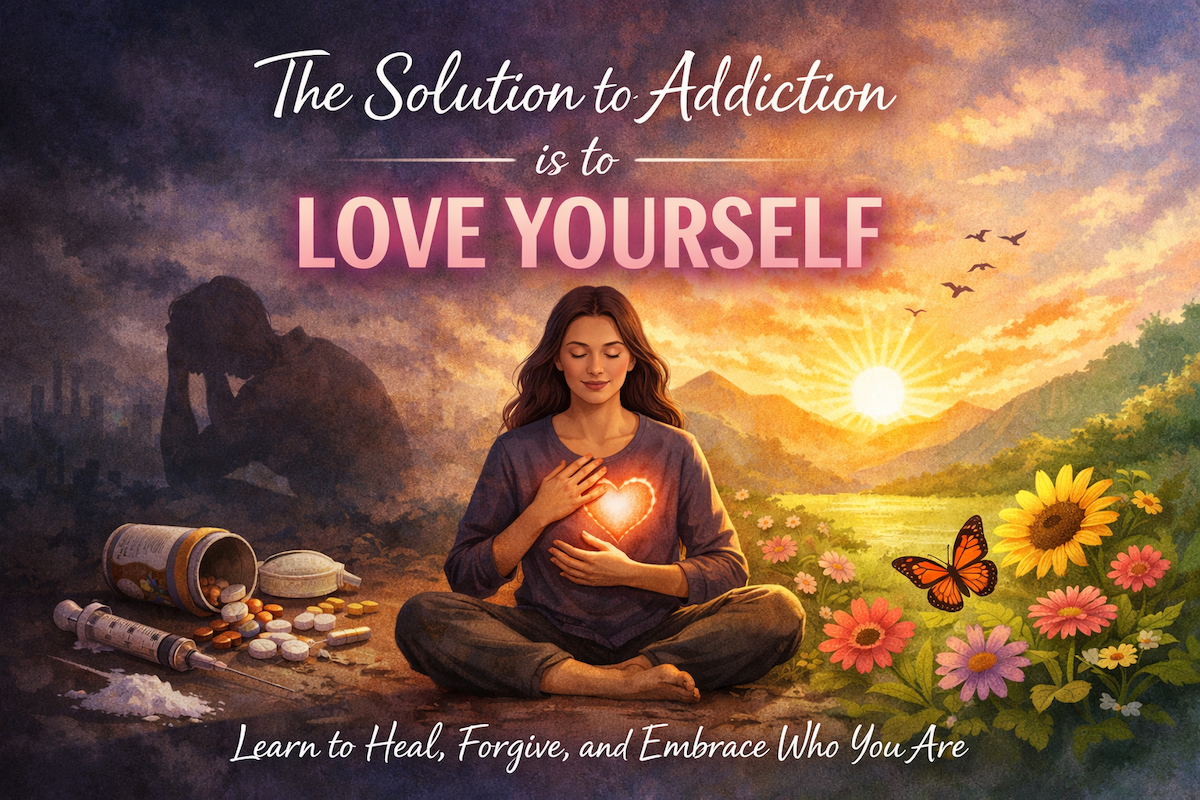
If the actual cause of addiction is a negative belief about personal value—“I am not good enough”—then addiction is not fundamentally a chemical problem. It is a self-image problem that expresses itself through chemical use. In that view, drugs and alcohol are not the origin of the disorder; they are the instruments and symptoms a person uses to act out (and repeatedly “prove”) a painful belief about themselves. Your document states this clearly: the cause of addictive behavior is a thought or belief, specifically the belief that one is “not good enough,” which erodes authentic self-love and fuels self-destructive behavior.
From this foundation, the Third Principle of Transformation—“I have the power to transform my experiences”—becomes a turning point. It is the moment an individual stops relating to life as something that is happening to them and begins relating to life as something that is being created through them, through the mind, through belief, through perception, through choice, and through daily practice. The Third Principle asserts that the power to change the direction of one’s life has always been present, even when it has not been recognized or used.
The real “engine” of addiction: a self-limiting belief that drives self-harm
In the model you’ve provided, addiction is not random, and it is not a life sentence. Addiction is the predictable behavioral expression of a core conclusion about the self: “I am less than others. I am inadequate. I don’t matter.”
When a person believes this at the deepest level, the belief doesn’t stay theoretical. It produces emotions (shame, anxiety, despair), and those emotions shape behavior.
Your document describes how this belief leads a person to repeatedly engage in self-destructive actions that support, reinforce, and validate the belief.
This is why addiction can feel so “sticky.” The behavior isn’t only about pleasure or relief. It is also a form of unconscious self-confirmation: “See? I really am not good enough.”
And because the belief is painful, the person also “sources or attracts” dangerous experiences and substances—especially drugs and alcohol—that match the negative self-perception and intensify it.
In other words, the inner belief recruits outer evidence.
Why Principle Three matters: it restores agency at the exact point addiction steals it
Addiction often carries an identity: powerlessness. People commonly describe feeling like they “can’t stop,” “can’t change,” or “can’t trust themselves.” Principle Three directly challenges this trance. It states:
- You have the ability to change the direction of your life.
- You are not a victim of circumstances, other people, or the past.
- You can choose new thoughts, make new decisions, and create new experiences—starting now.
This is not motivational fluff. In your framework, it is a clinical and spiritual reorientation: if addiction is driven by a belief, then the pathway out must be driven by a new belief—specifically a new belief about power, worth, and identity.
Principle Three does not deny that change can be difficult. It denies that change is impossible. It denies that the past is a prison. It denies that the current pattern is the final truth.
Transformation is not punishment: “I was doing the best I could”
A critical part of reclaiming power is removing self-condemnation. Your document makes an important point: you have always been doing the best you could in each moment with the awareness you had at the time, and condemning yourself for what you didn’t yet understand has no benefit.
This matters because shame is often the emotional fuel of addiction. If someone tries to recover while continuing to hate themselves, they may temporarily stop the substance, but the inner pain remains, and relapse becomes likely because the original function of the drug—escape from self—has not been replaced by love of self.
Principle Three invites a different stance:
- Not “What’s wrong with me?”
- But “What did I believe about myself, and what can I learn now?”
This is power: not the power to dominate yourself, but the power to understand yourself and redirect your life.
Knowledge becomes power when it’s knowledge of your own mind
Your Third Principle document says, “Knowledge is power, especially knowledge of my own mind and how my thoughts and beliefs shape my experiences.”
This is the mechanism of transformation. Addiction persists when the mind is left on autopilot—when old interpretations, old labels, and old inner dialogue run the day.
To claim your power is to become a student of your internal world:
- What is my core belief about my worth?
- What “evidence” do I keep collecting to prove it?
- What emotions predict my cravings?
- What thoughts appear right before I act out?
- What self-talk do I use when I feel stressed, rejected, tired, or afraid?
When the person can see these patterns, they stop being mysteriously controlled by them. Awareness creates space. Space creates options. Options create change.
The center of transformation: changing self-image through thought and inner dialogue
Both documents converge on the same core solution: change negative thoughts and beliefs about the self into positive, truthful, empowering ones.
Your addiction-cause document emphasizes that the individual can transform life only by changing negative thinking—especially about perceived worth—into authentically positive thinking, replacing negative ideas with positive ones.
So how does Principle Three end addiction?
It ends addiction by addressing the actual cause—the belief—and by giving the individual a new operating identity:
- From “I’m broken and powerless”
- To “I have the power to transform my experiences by transforming my thinking.”
This is why the Third Principle is not separate from self-love; it is the doorway into it. When you believe you have power, you stop treating yourself like a hopeless case. When you stop treating yourself like a hopeless case, you can begin treating yourself like someone worthy of care, patience, and respect.
“My negative thoughts are not facts”: the moment the spell breaks
One of the most liberating lines in your Third Principle document is that negative thoughts about self-worth are not facts; they are ideas and interpretations you created, repeated, and eventually believed—and because you created them, you can change them.
This is a pivotal insight for addiction recovery:
- If “I’m not good enough” is a fact, then there is no solution.
- If “I’m not good enough” is an old conclusion, then there is a pathway out.
Principle Three gives permission to stop arguing with the past and to start creating the present.
Drugs and alcohol as symptoms: why lasting change requires going deeper
Your cause-and-solution document is blunt: drugs and alcohol are not the real problem; they are symptoms and instruments a person uses to inflict self-harm.
If that is true, then sobriety alone—while important—must be paired with inner reconstruction. Otherwise, the person is left with the original pain and the original belief, only now without the coping mechanism they relied upon.
Principle Three supports inner reconstruction by insisting:
- You are the cause of your life, not the effect of it.
- You can reshape your life trajectory in the direction you truly desire.
- The key is to transform your thinking, especially about your value and worth.
So the “forever” in “end addiction forever” is not based on willpower. It is based on identity change. When the identity changes, the behavior loses its purpose.
What power looks like in daily life: practical applications of Principle Three
Power becomes real when it becomes practice. Here is what claiming the power to transform experiences looks like as a daily lifestyle:
1) Catch the core belief in real time
When cravings, anxiety, or hopelessness arise, ask:
“What am I believing about myself right now?”
Very often, the belief is some version of “I’m not enough,” “I can’t handle this,” or “I don’t matter.”
2) Interrupt the inner dialogue
Your Third Principle document emphasizes changing inner dialogue and self-image.
So interrupt the old script and replace it with a deliberate, life-giving statement, for example:
- “I am learning to value myself.”
- “I am worth protecting.”
- “I can be present with this feeling without escaping.”
3) Practice the shift from self-criticism to self-respect
You explicitly describe the power to move from self-criticism to self-respect, self-rejection to self-acceptance, self-hatred to self-love.
This is not merely emotional—it is behavioral. Self-respect looks like:
- avoiding people/places that reinforce old patterns,
- choosing supportive relationships,
- creating structure,
- keeping promises to yourself.
4) Replace “evidence gathering” with “truth building”
A person trapped in addiction often collects evidence to prove they are failing. Principle Three invites the opposite: build evidence that you can change. Celebrate small wins. Track clean days. Track honest conversations. Track moments of presence. Each win weakens the old belief.
5) Stay open to help (power includes humility)
Your addiction document notes that transformation requires help from others and willingness to accept suggestions from those who live the principles of transformation.
Power is not isolation. Real power includes support.
The true outcome: authentic self-love replaces the need to escape
Your cause-and-solution document states that loving yourself is the only solution to addictive behavior and mental health issues, and that recovery requires learning to respect, approve, accept, acknowledge, and eventually love oneself in the present moment.
Principle Three is the bridge to that self-love because it changes the person’s relationship with their mind:
- You are not trapped by old interpretations.
- You are not doomed by old mistakes.
- You are not a victim of your past identity.
- You can transform your experiences by transforming your thinking—and that transformation awakens self-love as lived wisdom.
When a person comes to think positively about themselves—seeing themselves as whole, worthy, and “enough”—the desire to use drugs and alcohol fades because the inner reason for self-harm dissolves.
This is not the suppression of craving; it is the removal of the underlying wound.
Conclusion: the Third Principle ends the “negative trajectory” by restoring the creator within
The negative trajectory of addiction is driven by a single inner decision repeated over time: “I am not good enough.” That belief produces pain, and pain seeks escape, and escape reinforces the belief. Your documents present a coherent alternative: the cause is in the mind, not the body; the solution is self-love; and transformation requires replacing negative self-beliefs with positive, truthful ones.
The Third Principle of Transformation changes everything because it returns the individual to the most important position in recovery: the position of power. It says the power to change has always been within you; it can be claimed now; it grows with knowledge and awareness; and it is activated through transforming your thinking and self-image.
From this perspective, “ending addiction forever” is not a fantasy or a lucky break. It is the natural result of a new identity: a person who knows their worth, practices self-respect, tells a new truth about themselves, and lives from the inside out—no longer compelled to escape life because life is no longer being lived as a verdict against them, but as an experience they have the power to transform.
Dr. Harry Henshaw
Port Charlotte, Florida
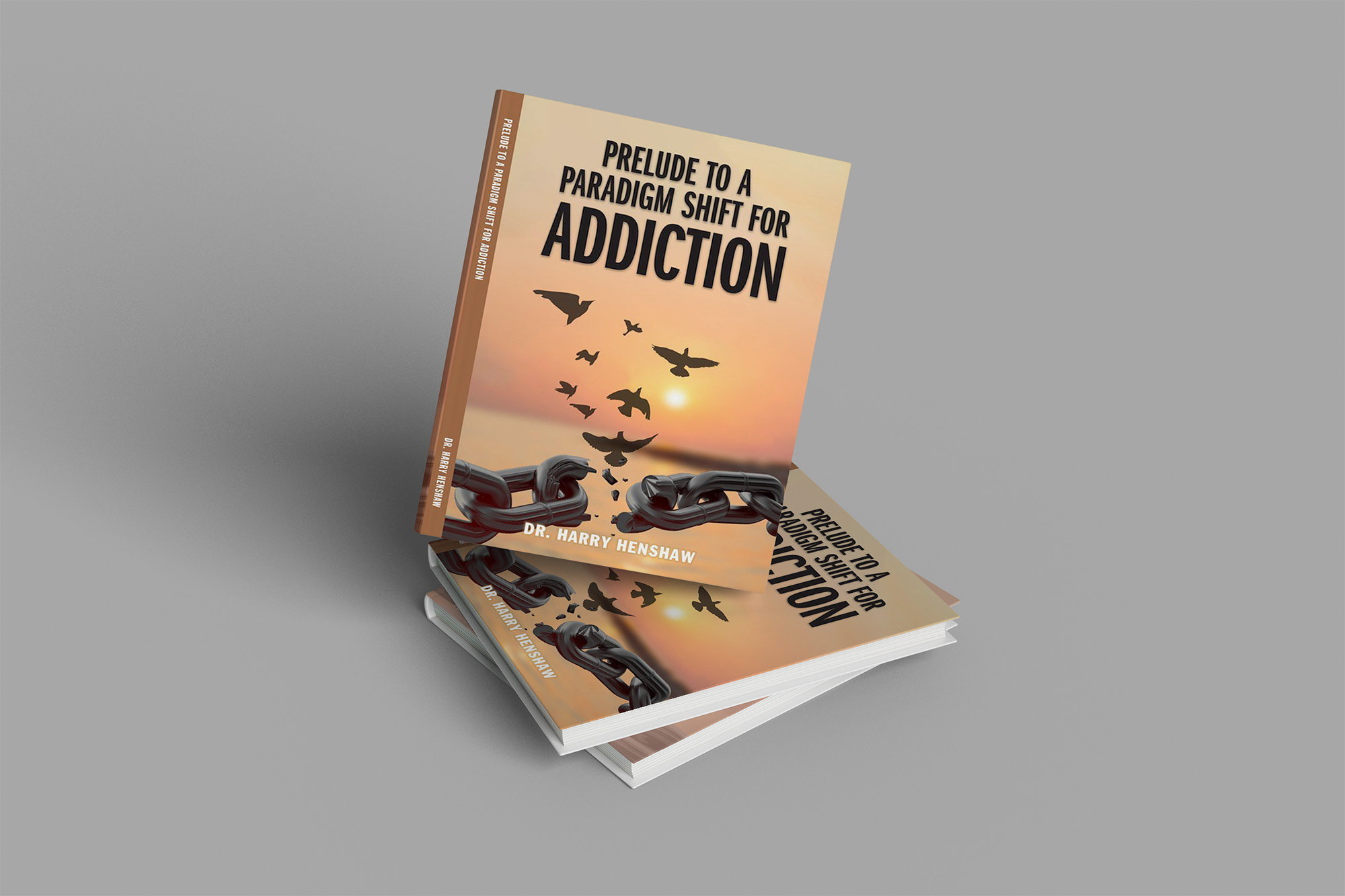
Get Free from Addiction!
Discover a groundbreaking perspective on addiction recovery. Click below to buy Prelude to a Paradigm Shift for Addiction and explore innovative solutions to transform the way we understand and treat substance use disorders.
About Enhanced Healing
Enhanced Healing Counseling specializes in addiction recovery, mental health, and self-esteem support. Offering online and in-person services, we empower individuals to transform their lives with personalized care and proven therapeutic methods.