Table of Contents
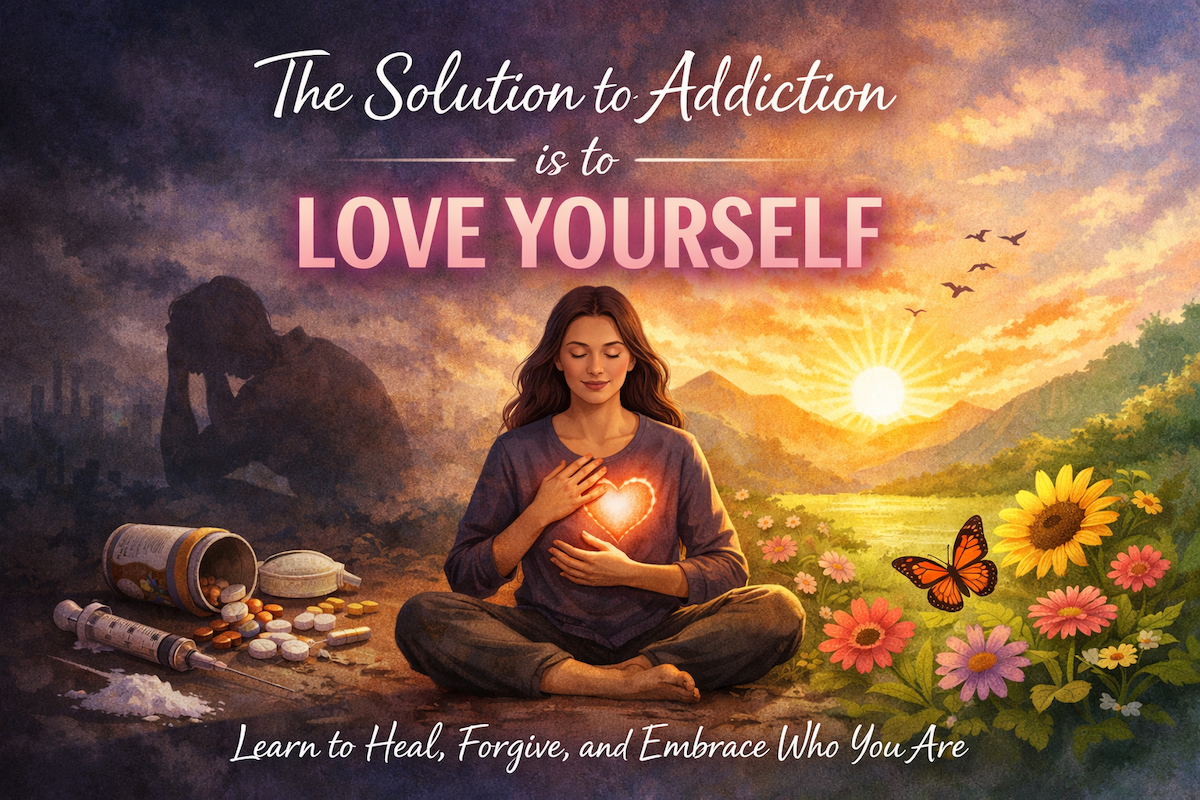
If the true cause of addiction is not the substance itself, but the painful core belief “I am not good enough,” then it makes sense that lasting recovery requires more than abstinence. It requires a change in self-perception, an inner transformation from self-rejection to self-acceptance, self-approval, and authentic self-love. In that framework, drugs and alcohol are not the “problem”; they are the symptom and the instrument a person uses to escape, numb, confirm a negative identity or worse.
This is where the fifth Principle of Transformation, “My point of power is in the present moment” becomes a pivotal healing tool. Because if addiction is maintained by the ongoing repetition of a negative self-belief, then the only place that belief can be interrupted, challenged, and replaced is right now. Not tomorrow. Not once a person “feels ready.” Not after they “fix the past.” Transformation happens through what a person practices in the present moment, what they choose to think, speak, and do now.
The present moment is not just a spiritual idea. It is the practical doorway through which new identity is built. It is the only place where a person can reclaim agency, rewrite inner dialogue, retrain emotional responses, and stop feeding the old self-image that fuels addictive behavior.
Why Addiction Feels Like the Past and Future Control You
Addictive behavior tends to trap people in two time zones:
1) The past: regret, shame, trauma, humiliation, guilt, “I ruined everything,” “I always mess up,” “I’ve never been enough.”
2) The future: fear, anxiety, dread, “I’ll never change,” “I can’t handle life sober,” “I’m going to fail anyway.”
When someone lives psychologically in the past, they often feel defined by it. When someone lives psychologically in the future, they often feel threatened by it. Either way, the emotional result is the same: distress and distress is a common trigger for relapse and compulsive behavior.
The fifth Principle of Transformation cuts through this trap with a direct truth: the past and future have no power unless I give it to them with my thoughts. Only the present moment is real, and only here do I have the creative power to choose again.
This is not denial of what happened in the past or avoidance of responsibility for the future. It is something more empowering: a refusal to surrender identity and power to anything outside of Now.
The Present Moment Is Where Self-Beliefs Are Rewritten
A negative core belief doesn’t live in history, it lives in current mental activity. The belief “I’m not good enough” is not painful because it happened once. It is painful because it is rehearsed, often unconsciously, through thoughts, interpretations, and self-talk happening today.
That is why transformation cannot be achieved by simply analyzing the past forever. Insight helps, but insight alone does not replace a belief. Beliefs change through new repetition, new embodiment, and new choice. The fifth Principle of Transformation puts a person in the only position where that repetition can occur: this moment.
Each present moment offers a fork in the road:
- I can repeat the old thought: “I’m broken, I’m weak, I’m not enough,” and feel the familiar emotional collapse that pushes me toward escape.
- Or I can practice a new thought: “I am worthy now. I am learning. I am enough in this moment,” and begin laying new tracks in the mind.
In this way, the fifth Principle of Transformation becomes the “switch” that moves a person from unconscious repetition to conscious creation. The future is not something that merely happens to you. In this model, the future is something you plant, moment by moment, through what you choose to believe about yourself now.
Addiction Is Fueled by Identity, and Identity Is Practiced in the Now
People often describe addiction as cravings, withdrawal, triggers, stress, or temptation. But beneath those experiences is something even more powerful: identity.
When someone believes “I’m not good enough,” they often develop identity statements like:
- “I’m a mess.”
- “I’m a failure.”
- “I don’t matter.”
- “I’m damaged.”
- “I can’t cope.”
Those identity statements generate feelings (shame, hopelessness, anxiety) that naturally lead to coping behaviors—often addictive ones. And every time the person uses, they reinforce the identity: “See? I really am not enough.” This is how a self-limiting belief becomes self-fulfilling.
The fifth Principle of Transformation interrupts the identity loop by teaching: I do not have to live inside an identity story. I can live inside this moment. And inside this moment, I can choose a new identity statement, even if my emotions haven’t caught up yet.
This is crucial: transformation often begins before it feels true. A person may not feel worthy at first. But they can practice worthiness now, and feelings will follow practice.
The Present Moment Neutralizes Craving and Urge
Cravings thrive on time distortion. A craving often says:
- “You need relief right now and you won’t survive without it.”
- “This feeling will last forever.”
- “You’ll never feel okay unless you use.”
But cravings are experiences that rise, peak, and fall, especially when a person learns to stay present and stop fueling them with catastrophic thinking.
The fifth Principle of Transformation gives a person a simple operational method:
- Come into the Now (notice breath, body, environment).
- Name what is happening (“I’m having an urge”; “I’m feeling fear”; “shame is here”).
- Refuse to time-travel (“I don’t have to solve my whole life right now”).
- Choose one present-moment action aligned with transformation.
Notice what changes. The person stops wrestling with the next year. They stop reliving last decade. They start living this minute. And this minute is manageable.
Addiction often feels unbeatable because the person imagines fighting it for the rest of their life. The present-moment approach reframes the task: I am not staying sober forever. I am staying sober now. And then again now. And again now.
This does not trivialize recovery; it makes recovery doable.
Shame Cannot Survive Sustained Presence
Shame is one of the most common emotional engines of addiction. Shame says: “I am bad.” It is not merely guilt about behavior; it is condemnation of the self.
The “not good enough” belief is essentially a shame-belief. And shame lives largely in psychological time: it feeds on memories and predicted rejection. It also thrives in secrecy and isolation.
The fifth Principle of Transformation helps dissolve shame because it invites a person into a different experience of self:
- In the present moment, I can observe my mind without being my mind.
- In the present moment, I can treat myself with gentleness rather than judgment.
- In the present moment, I can practice self-approval even while I’m still healing.
And according to Transformation Counseling, self-approval and self-acceptance are the keys to genuine self-love and transformation.
When you practice presence, you stop repeatedly stabbing yourself with old conclusions. You begin to relate to yourself as someone learning, not someone condemned.
“Now” Is the Laboratory Where Self-Love Becomes Real
Many people treat self-love as an abstract concept—something inspirational but not practical. The fifth Principle of Transformation makes self-love concrete by turning it into present-moment behaviors.
Self-love is not only a feeling. It is a way of being with yourself right now:
- How am I speaking to myself in this moment?
- What do I believe about myself in this moment?
- What choice am I making for my well-being in this moment?
- Am I treating myself like someone who matters—right now?
This is why the fifth Principle of Transformation is so powerful: it transforms self-love from a distant goal into a current practice.
And practice is how the subconscious mind changes. A person doesn’t overcome addiction by winning one heroic battle. They overcome it by becoming someone new through thousands of small present-moment choices, choices that align with worthiness instead of worthlessness.
Present-Moment Power Replaces “Helplessness” With Agency
A core feature of addiction is the sense of powerlessness. Even when people intellectually know they have choices, they may feel swept away by emotion, craving, or habit.
The fifth Principle of Transformation restores agency by narrowing the focus:
- I may not control everything that happened.
- I may not be able to guarantee the future.
- But I can control what I do with this moment.
This is not a small thing, it is the foundation of psychological empowerment.
When a person begins to trust themselves with the present moment, they begin to rebuild self-esteem. They start to accumulate evidence: “I can be with discomfort and not destroy myself.” That evidence becomes a new identity: “I am capable. I am learning. I am worthy of care.”
And as your addiction document emphasizes, when a person comes to think positively about themselves, when they come to believe they are enough, they no longer have the same desire or need to escape through substances.
How the fifth Principle of Transformation Ends the Old Trajectory
A “trajectory” is simply a repeated direction over time. Addiction is a trajectory built from repeated patterns:
- repeated negative self-talk
- repeated avoidance of feelings
- repeated use of external substances to manage internal pain
- repeated reinforcement of the “not good enough” identity
The fifth Principle of Transformation changes the trajectory the only way any trajectory can be changed: by changing what is repeated.
When you repeatedly return to the Now, you repeatedly interrupt the old pattern. When you repeatedly choose a loving thought, you repeatedly plant a new pattern. When you repeatedly take a self-respecting action, you repeatedly confirm a new self-image.
Over time, repetition becomes embodiment. Embodiment becomes identity. Identity becomes destiny.
The person does not merely “stop using.” They become someone who no longer needs to use, because the inner cause, self-rejection, has been replaced with self-approval and authentic self-love.
A Practical Present-Moment Framework for Recovery
Here is a simple way to operationalize “My point of power is in the present moment” in daily recovery—especially when temptation, anxiety, or shame appears.
1) Pause and locate yourself in the Now.
Feel your feet. Notice your breath. Name five things you see. This signals to your nervous system: I am here, not back there, not ahead.
2) Tell the truth about the moment without judgment.
“This is an urge.” “This is anxiety.” “This is sadness.”
Truth reduces panic. Panic fuels relapse.
3) Identify the old belief trying to run the moment.
Usually it is some version of: “I’m not enough,” “I can’t handle this,” or “I don’t matter.”
4) Replace it with a present-moment statement of worth.
Not a fantasy, something grounded and real:
- “In this moment, I am enough.”
- “In this moment, I can choose again.”
- “In this moment, I am learning to love myself.”
- “In this moment, I will not abandon myself.”
5) Take one small action that matches the new belief.
Drink water. Call support. Walk outside. Journal. Pray. Do mirror work. Listen to a calming track. Make your bed. Eat something healthy.
The action is important because it turns belief into lived reality.
This is how the present moment becomes a tool of transformation rather than a battlefield of temptation.
Presence as Spiritual Reconnection
The fifth Principle of Transformation also points to a deeper dimension: in the present moment, we open to Source, Spirit, Higher Power, God.
From this view, addiction recovery is not only behavior change; it is spiritual remembrance, remembering who you are beneath the false veil of belief of unworthiness.
When a person becomes present, they often experience something profoundly healing: stillness. In stillness, the frantic “not enough” voice softens. In stillness, a person can feel life itself supporting them. In stillness, one can sense: I am not separate. I am held. I belong.
This spiritual grounding matters because it addresses the deepest hunger behind addiction: the hunger to feel okay inside, the hunger to feel whole, the hunger to feel connected and safe.
Closing: The Power That Changes Everything Is Not Tomorrow’s Power, It Is Now
If addiction is rooted in a negative belief about personal worth, then recovery must be rooted in a new belief: “I am worthy. I matter. I am enough.”
But that new belief does not arrive magically in the future. It is built deliberately in the present. The fifth Principle of Transformation, “My point of power is in the present moment” teaches a person how to stop living inside the story that created addiction and start living inside the moment where transformation is possible.
The past may explain, but it cannot change. The future may inspire, but it does not exist yet. The present moment is the only place where you can:
- interrupt the old self-belief,
- practice a new inner conversation,
- choose self-respecting actions,
- reconnect with Spirit,
- and build a life that no longer requires escape.
Recovery becomes real when a person stops asking, “Can I stay sober forever?” and starts living this truth:
“In this moment, I will love myself. In this moment, I will choose life. In this moment, I will transform.”
Dr. Harry Henshaw
Port Charlotte, Florida
Positive Affirmation Recordings
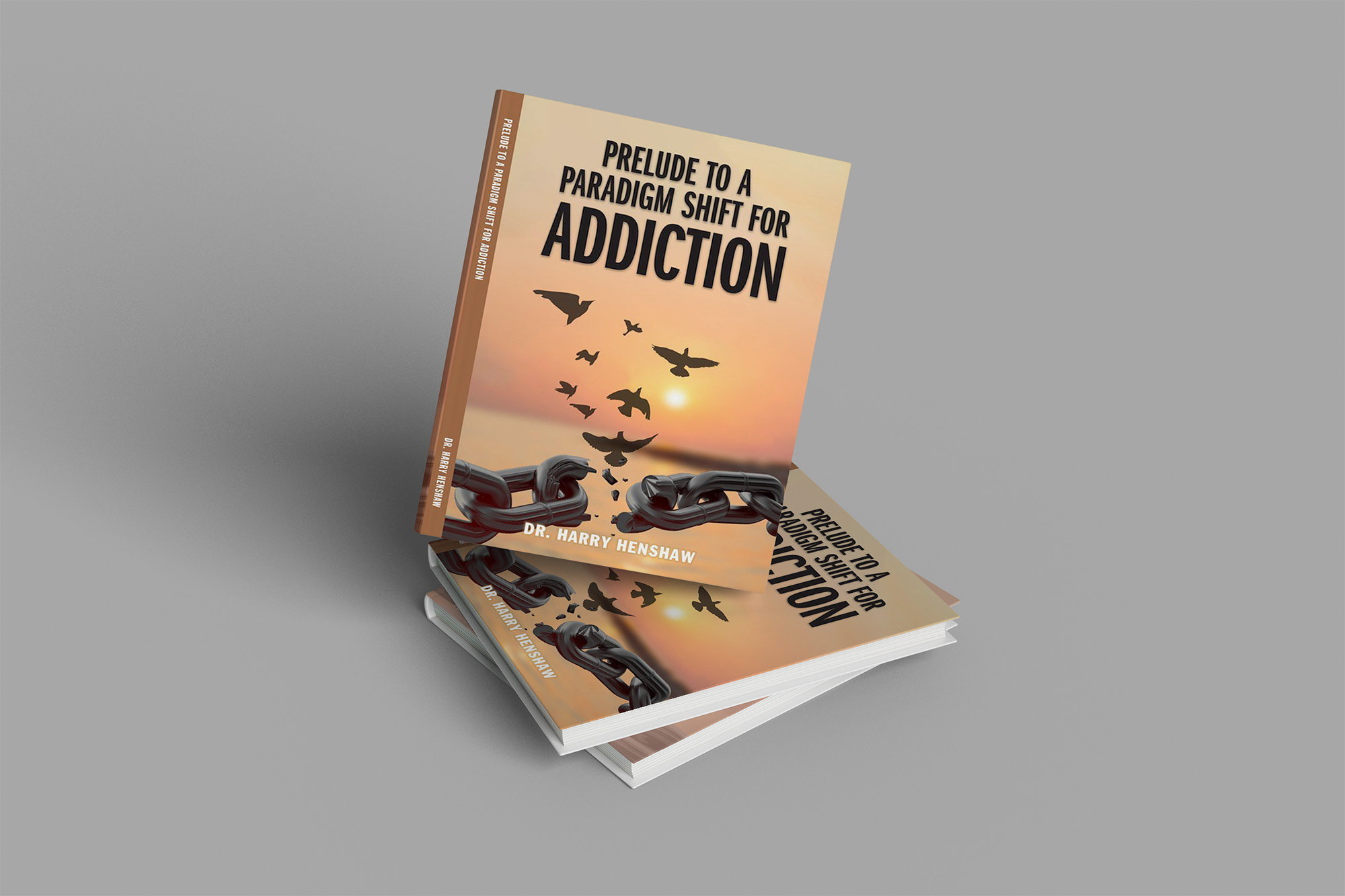
Get Free from Addiction!
Discover a groundbreaking perspective on addiction recovery. Click below to buy Prelude to a Paradigm Shift for Addiction and explore innovative solutions to transform the way we understand and treat substance use disorders.
About Enhanced Healing
Enhanced Healing Counseling specializes in addiction recovery, mental health, and self-esteem support. Offering online and in-person services, we empower individuals to transform their lives with personalized care and proven therapeutic methods.