Table of Contents
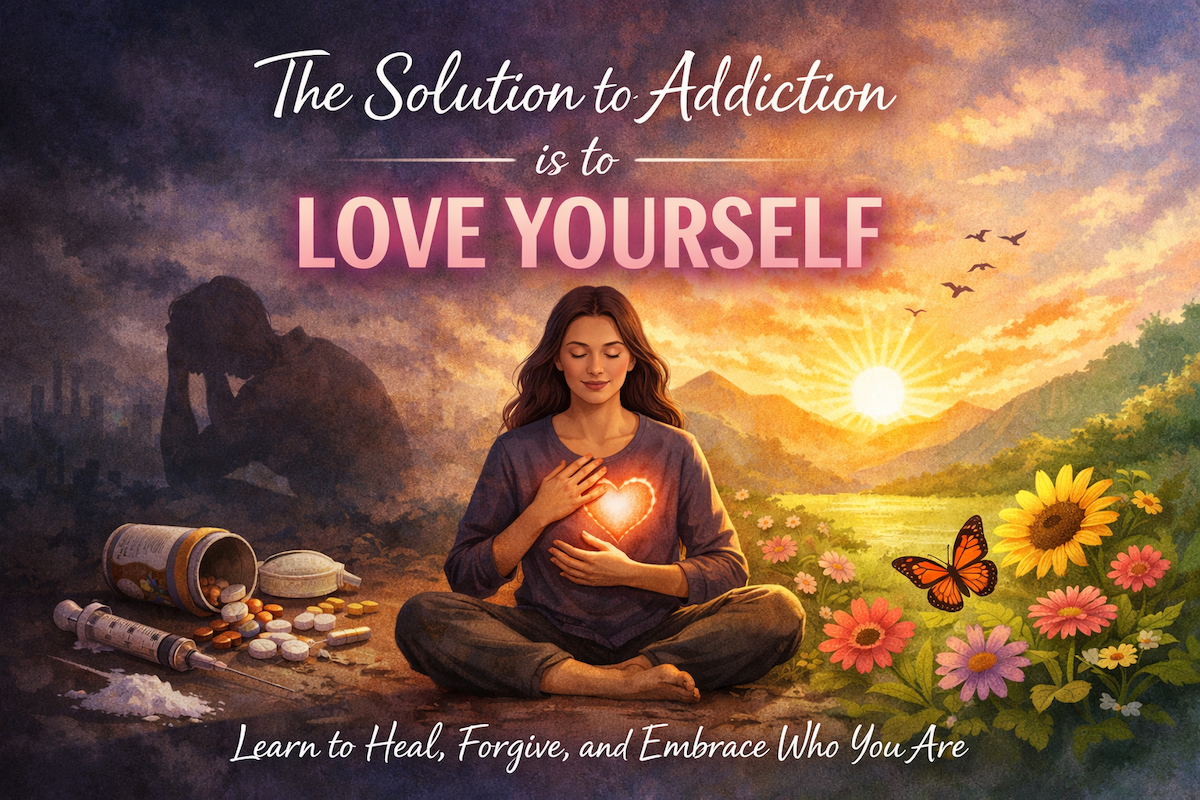
If the actual cause of addiction is a negative core belief—“I am not good enough; I don’t matter; I am inadequate”—then it follows that the deepest fuel of addictive behavior is not a substance, but a painful identity. Drugs and alcohol become the symptom, the instrument, and the ritual a person uses to manage, numb, escape, or confirm an internal verdict of unworthiness. In this framework, addiction is not primarily a chemical problem. It is a self-image problem—a psychological and spiritual problem rooted in self-rejection.
That is why the eighth Principle of Transformation—“I forgive myself and let go of the past”—is not a “nice idea” or a sentimental add-on. It is one of the most direct ways to dismantle the inner engine that keeps addiction alive. Forgiveness, especially self-forgiveness, interrupts the cycle of shame, resentment, victim identity, and self-punishment that reinforces the belief “I am not good enough.” It returns a person to the present moment—where power, choice, and change actually exist—and it clears the emotional debt that keeps the individual tied to the very identity addiction depends on.
In other words: Forgiveness is not weakness. Forgiveness is psychological liberation.
Why the Past Keeps Addiction Alive
The past has a strange power in the addicted mind. It becomes a courtroom: a record of evidence that “proves” the negative self-belief. A person remembers failures, betrayals, humiliations, trauma, losses, relapses, broken relationships, and consequences—and interprets them through a single lens:
- “This happened because I’m defective.”
- “I ruined everything because I’m weak.”
- “People hurt me because I don’t matter.”
- “I can’t change because I never have.”
- “I’m not worthy of love, forgiveness, or peace.”
When that is the inner narrative, the person doesn’t simply recall the past—he re-lives it emotionally. He remains attached to old stories that keep the nervous system activated and the heart closed. Then drugs and alcohol become the predictable “solution” to that emotional imprisonment.
Principle Eight teaches a crucial psychological truth: the past does not exist as an active reality—it exists as thought, memory, and interpretation in the mind now. And if it exists as thought, it can be transformed through thought. The event may be unchangeable, but the meaning you assign to it is not.
This is one of the most empowering ideas a person in recovery can learn:
I am not trapped by what happened. I am trapped by what I keep believing it means about me.
The Hidden Role of Shame: Addiction’s “Gravity”
Shame is not the same thing as guilt. Guilt says, “I did something wrong.” Shame says, “I am wrong.”
Addiction feeds on shame because shame creates the felt sense that change is pointless. If you believe you are fundamentally flawed, then growth feels impossible, and self-care feels undeserved. When people can’t imagine themselves as worthy, they often unconsciously choose self-destruction—not because they want to die, but because they don’t know how to live with the pain of self-rejection.
Your “cause and solution” document states this clearly: addictive behavior is driven by the belief that a person is not good enough, which then produces self-destructive behaviors that reinforce and validate that belief. The substance isn’t the primary cause; it is the symptom and instrument used to inflict harm and confirm the inner verdict.
Here’s the brutal loop:
- Negative self-belief (“I’m not good enough.”)
- Emotional pain (shame, anxiety, depression, emptiness)
- Self-destructive coping (use, acting out, numbing)
- Consequences (regret, loss, conflict, self-disgust)
- More “proof” of not being good enough
- Return to step 1
Principle Eight breaks this loop at a core point: it removes shame as the operating system.
What Forgiveness Actually Does (and What It Doesn’t)
A major reason people resist forgiveness is because they misunderstand it.
Forgiveness does not mean:
- Pretending harm didn’t occur
- Excusing abusive behavior
- “Approving” of what happened
- Forgetting or denying reality
- Removing boundaries
- Re-entering unsafe relationships
Forgiveness does mean:
- Releasing emotional chains to the past
- Withdrawing your life-force from resentment and shame
- Ending the identity of victim or “damaged person”
- Returning to the present moment as your point of power
- Choosing peace and freedom over emotional bondage
In the transformational model, forgiveness is an act of self-respect. It’s the decision:
“I will not keep poisoning my life with yesterday.”
This matters profoundly in addiction recovery because resentment and shame are two of the most common triggers for relapse. A person who cannot forgive is still living in emotional captivity—and captivity inevitably seeks escape.
Why Self-Forgiveness Is the Real Key
Many people can intellectually forgive others yet remain brutal toward themselves. But Principle Eight emphasizes the most important form of forgiveness: forgiving myself—for what I did, what I didn’t do, and for the painful experiences I created through negative thinking about myself.
This is where transformation gets real.
If the addicted individual’s deepest belief is “I am not good enough,” then the person will interpret past mistakes as evidence of personal unworthiness. He will carry his history like a sentence. And as long as he remains sentenced, he will keep acting like a condemned man.
Self-forgiveness does something radical: it changes the identity underneath the behavior.
It says:
- “I am not my worst moment.”
- “I am not my relapse.”
- “I am not the story I’ve been repeating.”
- “I can take responsibility without self-hatred.”
- “I can learn, grow, and choose again.”
Self-forgiveness is not denial of responsibility; it is responsibility without self-execution.
And that matters because your addiction framework makes a bold point: substances are often used as instruments of self-harm—what you describe as “self-execution.” If that is true, then self-forgiveness is the beginning of choosing life.
Forgiveness Restores the Present Moment—Where Power Lives
Principle Eight links directly to another core transformational truth: the present moment is the only point of power.
When the mind is anchored in the past, it lives in replay and reactivity. When it returns to the Now, it becomes available to new choices and new self-perception. Your Principle Eight document states that forgiveness returns you to the present moment, where you can access inner power and bring an end to addictive behavior and heal mental health problems.
This is psychologically accurate and spiritually profound:
- The past is fixed as an event, but not fixed as meaning.
- The future is unknown.
- The present is the only place where you can choose differently.
Addiction often collapses a person’s sense of time into emotional flashbacks: old pain feels current, so the urge to escape feels urgent. Forgiveness loosens that grip. It brings the nervous system out of the past and back into the Now—where the person can breathe, observe, choose, and respond.
Forgiveness Dismantles Victim Identity and Rebuilds Agency
Addiction is often reinforced by a victim identity: “Life happened to me. People did this to me. I had no choice. I’m powerless.” In your Principle Eight document, you state that without forgiveness a person remains attached to the past, sees himself as a victim, replays stories, blames others, and develops resentments—while taking no real responsibility.
Whether or not someone was harmed is not the question. Many people were harmed. The transformational question is:
Who am I going to be now?
Forgiveness is the point where a person stops living as a prisoner of what happened and begins living as a creator of what happens next. It shifts the locus of control inward. It’s not “I deny what occurred.” It’s “I refuse to build my future out of the emotional rubble of the past.”
That shift—from victim to agent—is essential for ending addiction because recovery requires daily agency: daily choice, daily practice, daily self-care, daily re-commitment to a new identity.
The Spiritual and Psychological Logic: “Everyone Was Doing the Best They Could”
You also include a powerful reframing: everyone, including myself, was doing the best they could with the awareness they had in that moment.
This does not mean harmful behavior was “okay.” It means you stop treating the past as proof that you or others were monsters. You begin seeing the past as a classroom rather than a prison.
This reframing softens the nervous system. It reduces rage, bitterness, and self-condemnation. It opens compassion, which is one of the most healing emotions for a person trapped in the “not good enough” belief.
And compassion is not weakness—it is medicine for shame.
How Forgiveness Changes the Core Belief “I Am Not Good Enough”
Let’s connect this directly to your central thesis.
If addiction is sustained by the belief “I’m not good enough,” then the solution is to replace that belief with truth-based, life-giving beliefs: “I am enough. I matter. I am whole and complete. I can love myself in the present moment.”
Forgiveness is a bridge from the old identity to the new one.
Because the “not good enough” belief is often reinforced by:
- What I think happened to me
- What I think I did
- What I think I should have done
- What I think others did or didn’t do for me
- How I interpret my pain
Forgiveness does not erase memory; it removes the poison from memory. It changes the emotional meaning of the past so the past can no longer serve as “evidence” against your worth.
When you forgive, you stop using yesterday as a weapon against yourself.
And when you stop attacking yourself internally, the compulsion to numb begins to dissolve. Why? Because the primary reason to numb is pain—and the deepest pain is self-rejection.
Practical Forgiveness as a Daily Transformational Practice
Principle Eight becomes most powerful when it is practiced as a daily discipline, not a one-time declaration. Here are practical ways to apply it in the transformational model:
1) Forgiveness as a decision (not a mood)
Say it plainly: “I am willing to forgive.”
Willingness matters. You don’t have to feel free to choose freedom.
2) Forgive the story you’ve been repeating
Ask: “What story about my past am I using to justify my self-hatred?”
Then challenge it: “Is that the only meaning this could have?”
3) Replace blame with responsibility
This aligns with your broader principles: if I am responsible for what I think, believe, and experience, then blame becomes unnecessary. I can learn without hatred.
4) Use self-forgiveness statements (spoken daily)
Examples:
- “I forgive myself for believing I was not enough.”
- “I forgive myself for coping the only way I knew how.”
- “I release the past and choose peace now.”
- “I am learning. I am growing. I am becoming free.”
5) Pair forgiveness with self-approval
Your “cause and solution” document emphasizes self-approval and self-acceptance as keys to authentic self-love.
So forgiveness should naturally lead into: “I approve of myself now. I accept myself now.”
6) Let forgiveness guide boundaries
Forgiveness doesn’t require reconnection. It may require distance. The point is inner freedom, not forced relationships.
7) Return to the Now when the mind time-travels
When resentment or shame arises, treat it as a cue:
“I’m leaving the present moment.”
Then come back: breathe, ground, affirm, choose again.
Ending Addiction “Forever” Requires Ending the Need for Self-Harm
If addiction is a form of self-harm driven by the belief “I am not good enough,” then lasting recovery requires more than abstinence—it requires a transformed self-image and authentic self-love.
Principle Eight supports that transformation by removing the two emotional forces that most reliably drive self-harm:
- Resentment (directed outward)
- Shame (directed inward)
Forgiveness releases resentment.
Self-forgiveness dissolves shame.
When resentment and shame lose their grip, the emotional “need” for intoxication weakens. The person no longer needs to escape himself—because he is no longer attacking himself. The individual begins to experience something that many addicted people have rarely known: inner peace without chemicals.
That is not just recovery. That is transformation.
Conclusion: Forgiveness Is the Doorway to Freedom and Self-Love
Principle Eight “I forgive myself and let go of the past” is essential because it targets addiction at its root: the wounded identity that believes it is unworthy. Forgiveness breaks the emotional bondage to yesterday. It returns a person to the present moment, where power exists. It dismantles victim identity and restores responsibility and agency. It interrupts shame and resentment—the two most common emotional fuels for relapse. And most importantly, it creates the inner conditions required for the true solution you describe: authentic self-love born from a positive belief about one’s worth.
When a person forgives, he stops using the past as proof that he is not good enough. He stops sentencing himself. He stops self-executing. He begins to live from a new identity:
I am enough. I matter. I am learning. I am free now.
Dr. Harry Henshaw
Port Charlotte, Florida
Positive Affirmation Recordings
Get Free from Addiction!
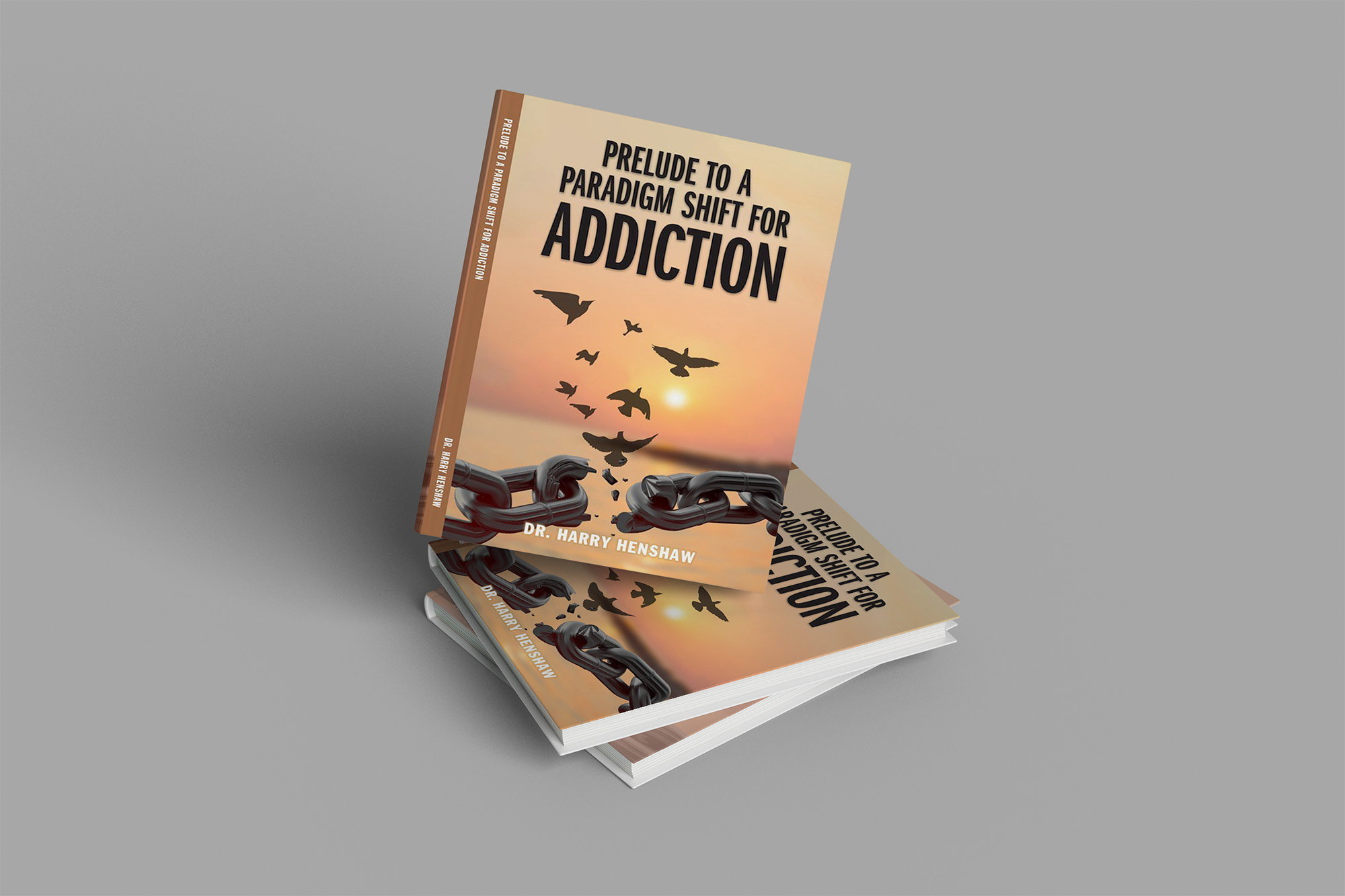
Discover a groundbreaking perspective on addiction recovery. Click below to buy Prelude to a Paradigm Shift for Addiction and explore innovative solutions to transform the way we understand and treat substance use disorders.
About Enhanced Healing
Enhanced Healing Counseling specializes in addiction recovery, mental health, and self-esteem support. Offering online and in-person services, we empower individuals to transform their lives with personalized care and proven therapeutic methods.