Table of Contents
For decades now, we have been told a particular story about addictive behaviors and mental health. We have been told that addiction is a brain disease, that mental health problems are permanent disorders, that our biology and our past experiences largely determine who we are and what we will become. We have been taught that substances, diagnoses, and life circumstances hold the real power and that we are mostly at their mercy.
And yet, despite all our programs, medications, rehabs, and slogans, the suffering continues.
Relapse rates remain high. Many individuals move in and out of treatment centers without experiencing true and lasting change. They learn new language, adopt new labels, attend groups, and perhaps become “compliant” with a program, but deep inside, something fundamental remains untouched. Their relationship with themselves, the way they see, value, and talk to themselves, often goes unexamined and unchanged.
This book is about that untouched place.
It is about the inner foundation upon which all addiction and mental health problems rest: the way you think about yourself, the way you see yourself, and the beliefs you hold about your own value and worth as a human being. It is about your self-image and your self-esteem. It is about the creative power of your thoughts and your words. It is about responsibility, choice, power, and the deeper spiritual truth of who you are.
Most importantly, this book is about the genuine possibility of transformation.
Why Another Book on Addiction and Mental Health?
You may already know me, or you may be meeting me for the first time in these pages. In my earlier book, Prelude to a Paradigm Shift for Addiction, I began to lay out a challenge to the prevailing disease-based model of addiction and offered a radically different way of understanding the problem. I proposed that the core issue was not the drug or the drink itself, one’s past experiences nor a broken brain, but a broken relationship with self, a deeply ingrained belief of “I am not good enough.”
Over the years, working with countless individuals struggling with addiction and mental health problems, that conviction has only grown stronger. I have watched people cycle through treatment after treatment episode, only to end up exactly where they started, because the deepest cause of their malady was never addressed. Their substance uses or symptoms were treated, but their self-image remained untouched. Their behavior was confronted, but their inner conversation, the constant stream of self-criticism, shame, fear, and unworthiness, was left in place.
The result is predictable: when the inner problem remains the same, the outer life eventually follows suit. While appearing better after treatment, most resort back to the same behavior and way of life because the source was never healed.
This new book is not a revision of what I have already written; it is a deepening of it. It is the next step. Here, I am taking the core insights from years of clinical work, personal reflection, and study, and organizing them into a set of practical, lived Principles of Transformation that you can apply directly to your life.
This is no longer just a critique of what is not working in the addiction and mental health fields. It is a manual for what does work, when we are willing to accept responsibility, reclaim our power, and remember who we really are.
The True Cause: A Wounded Self-Image and the Power of Thought
At the heart of this new paradigm lies a simple, but profound, insight:
The real cause of my addictive behaviors and mental health problems is a negative belief about myself, most often, the belief that I am not enough. For many individuals this belief is that I am not “good” enough.
This belief is usually not conscious at first. It is woven into the background, into the context of our lives. It is present in the way we react, the choices we make, the relationships we create and tolerate, the risks we take, and the ways we avoid our own feelings. Over time, it becomes so familiar that we no longer question it. It feels like “just the way I am.”
Around this core belief, a whole system of thoughts develops.
“I am not lovable.”
“I can’t handle life.”
“I always mess things up.”
“Something is wrong with me.”
“I’ll never change.”
We repeat these kinds of thoughts in different forms hundreds of times a day. Most of the time we don’t even hear them; they have become the wallpaper of our mind, the context of our thinking. But whether we hear them or not, they are working. They are creative and powerful. They are shaping what we think, how we feel, what we expect, what we notice, what we do and especially, all that we experience.
When the emotional pain of living with this negative self-image becomes too great, we seek relief. For some, that relief comes through alcohol and drugs. For others, through work, relationships, food, pornography, gambling, or any number of behaviors that temporarily numb or distract us from the inner noise and pain. Over time, these coping strategies take on a life of their own. They can become compulsive, destructive, and even life-threatening. But they are not the original cause. They are the attempted solution to a problem we have not clearly named.
The traditional addiction and mental health models often stop at the level of behavior and symptom. They focus on what you are doing and how to make you stop. They may label your condition, describe its course, and offer strategies for managing it, but they rarely go to the inner foundation:
- What do you really believe about yourself?
- How do you speak to yourself all day long?
- What story do you tell yourself and others about who you are and what you deserve?
This book begins there. It begins with the fundamental truth that:
My thoughts are powerful and creative.
My thoughts about myself form the foundation of my experience.
If I change how I think about myself, I change my life.
This is not positive thinking in a superficial sense. It is a call to a deep, honest, and sometimes uncomfortable examination of the beliefs that have been running your life, and then to the gradual, disciplined practice of replacing them with thoughts and beliefs that are loving, true, and aligned with who you really are.
Transformation: A Different Kind of Counseling and Treatment
The approach I call Transformation is a counseling and treatment model built around this central truth: that healing from addiction and mental health problems requires a fundamental shift in self-image and self-esteem. It is not enough to abstain from substances, manage symptoms, have a relapse prevention plan or adopt new coping skills. The goal is not merely “not using” or “staying stable.” The goal is to become a person who genuinely knows and experiences their own worth, who loves and respects themselves, and who lives from a sense of inner power and connection to their Identity.
In transformational counseling, we do not treat you as a passive patient with a disease. We do not view you as broken, defective, or limited by a permanent diagnosis. Instead, we work with you as a powerful creator who has been using that power unconsciously against yourself. We recognize that you have been doing the best you could with the beliefs and level of awareness you had. Now we invite you to something more: to consciously examine, challenge, and transform the very thoughts and beliefs that have been causing your pain.
To do this, we use a set of clear guiding statements—the Principles of Transformation. These principles are not abstract theories. They are living commitments you can practice, one day at a time, as you transform your inner world and, with it, your outer life.
The Ten Principles of Transformation
This book is organized around ten core principles. Each principle is written in the first person, because transformation is always personal. You will not heal by believing that someone out there is responsible, powerful, or loved. You will heal by discovering that you are responsible, you are powerful, and you are loved.
In the chapters that follow, we will explore each of these principles in depth. For now, I want to introduce them briefly so you can see the overall map of the journey ahead.
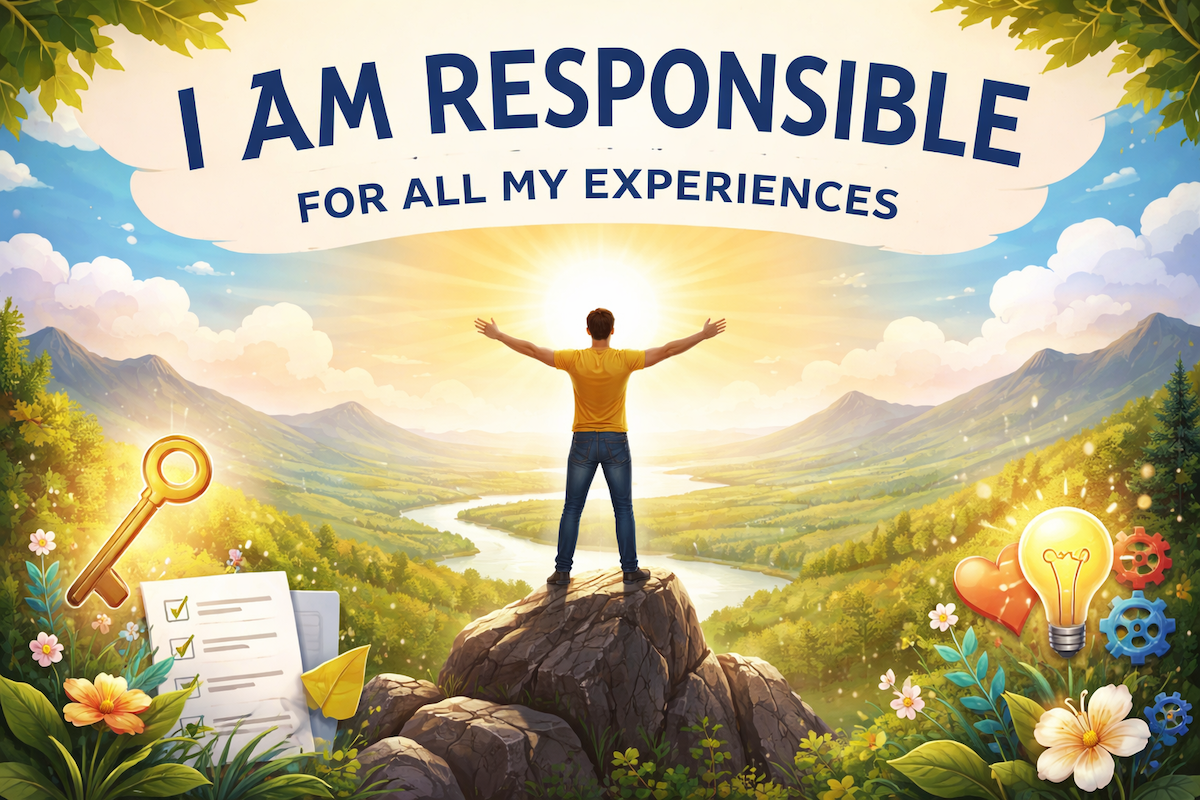
- I am responsible for all my experiences.
I am responsible for everything I think, believe, say, feel, and do. I am responsible for the way I interpret my past and the way I respond in the present. Responsibility is not blame; it is the recognition that I am the author of my experience and that I have the power to choose again. - I choose everything that I experience.
My life is not a random accident. Moment by moment, through my thoughts, beliefs, and decisions, I am choosing what I experience. When I fully accept that I am choosing, I can begin to choose differently. - I have the power to transform all my experiences.
I am not stuck. I am not condemned to relive my past. By changing what I think, believe, say, and do, I can transform the way life occurs for me. I have the power to heal, to grow, and to live in a new way. I have always had this power to transform. - My thoughts create all that I experience.
My thoughts are powerful and creative. They shape how I feel, how I see the world, what I believe, what I expect, what I do and what I attract. When I change my thoughts, especially my thoughts about myself, I change my experience of life. - My point of power is in the present moment.
The past is over. The future has not yet arrived. My power to choose, to think differently, and to act from self-love exists only in this moment. Every time I bring my awareness back to the present, I reclaim my power. My present moment is all that is real. - My thoughts create what I experience in my body.
My body responds to the thoughts I hold in my mind. Chronic tension, stress, and many physical symptoms are reflections of my inner state. As I transform my thoughts and beliefs, my body can move toward greater peace and health. - I always do my best.
In every moment of my life, given my beliefs and level of awareness, I have been doing the best I could. Recognizing this allows me to release shame and self-attack and to approach change with compassion rather than condemnation. When I gain more knowledge, acquire more insights and awareness, I will do differently. This principle applies to both myself and my understanding of others. - I forgive myself and let go of the past.
I release myself from the burden of guilt, resentment, and self-hatred. I no longer define myself by what I have done or what has been done to me. Forgiveness is my decision to free my mind and heart from the past so that I can live fully now. - I am fully committed to my transformation.
Change does not happen by accident. I choose to commit myself, daily, consciously, to the practices and principles that support my healing. My commitment is reflected in what I read, what I think, how I speak, and what I do. - I am Spirit, Source, Higher Power, God.
I am more than my body, my history, or my behaviors. At the deepest level, I am not only an expression of the same spiritual Reality that created me, but I am that Reality. I am not a broken, defective human trying to become worthy; I am a sacred being remembering my worth and who I truly am, Spirit, Source, Higher Power, God.
Each of these principles will have its own chapter. In each chapter, we will deepen the meaning of the principle, relate it to addiction and mental health, connect it to the other nine principles, and offer practical exercises to help you live it in your daily life and provide a summary of the principle.
As you will discover, these principles are not ten separate ideas. They form a single matrix, a unified way of seeing yourself and your life. Together, they offer a clear path from victimhood to authorship, from shame to self-love, from identification with addiction and illness to identification with Spirit, Source, Higher Power, God.
How to Use This Book
This is not a book to “get through.” It is a book to work with.
If you are struggling with addiction or mental health problems, I invite you to approach this book not as a passive reader, but as an active participant in your own healing. The principles are written in the first person because they are meant to be spoken, questioned, wrestled with, and practiced.
Here are some suggestions for how to use what you will find in these pages:
- Read slowly and honestly.
You do not need to rush. It is better to read one chapter deeply than to skim the entire book. Let yourself notice where you feel resistance, anger, or fear. Often, those are the exact places where the most healing is possible. - Engage with the exercises.
Each chapter will include practical exercises—journaling prompts, affirmations, mirror work, daily practices. These are not optional extras. They are the tools that turn ideas into transformation. The more seriously you engage with them, the more change you will experience. - Use “I” language out loud.
When you encounter a principle or affirmation, speak it aloud:
“I am responsible for all my experiences.”
“I am committed to my transformation.” “I am Spirit, Source, Higher Power, God.”
Notice how your body and emotions respond. Notice the thoughts that arise. This is valuable information. - Keep a Transformation Journal.
Consider dedicating a notebook to your work with this book. Write down your insights, your resistance, your questions, your breakthroughs. Track the changes you notice in your thinking, your feelings, and your behavior over time. - Seek support if needed.
While transformation is ultimately an inner process, you do not need to walk it alone. A counselor, a support group, a trusted friend, or a spiritual community can provide encouragement, reflection, and accountability. Asking for help is not a sign of weakness; it is an act of responsibility and self-love. - Be patient and compassionate with yourself.
The patterns you are working with did not arise overnight. They are the result of years of repeated thoughts and reinforced beliefs. As you begin to change them, you will sometimes feel resistance, fear, or fatigue. Remember: you are learning to love yourself. Offer yourself the same patience and kindness you would offer someone you deeply care about.
If you are a counselor, therapist, or other helping professional, this book can serve as a framework for integrating transformational principles into your work. You may find that these principles give language to insights you have long felt but not fully articulated. You can use the chapters and exercises with your clients, adapting them to their needs and stage of readiness.
What This Book Is—and Is Not
Before we move on, it is important to be clear about what I am offering here.
- This book is not a denial of biology, trauma, or social conditions.
I am not saying that the brain, the body, or the environment are irrelevant. I am saying that they are not the final determining factor in your life. Whatever your history or biology, your thoughts and beliefs still matter. You still have the power to choose how you interpret your experiences and how you respond in this moment. - This book is not an attack on any particular recovery program or tradition. Many people have found help in 12-step programs, therapy, medication, and other forms of support. Where those approaches truly help people heal, I am grateful for them. My critique is not of sincere efforts to help, but of any model that leaves the individual feeling powerless, defective, or forever broken.
- This book is a call to responsibility and power.
It is an invitation to step out of a passive, victim-centered narrative and into an active, creative relationship with your own mind and life. It may challenge some of your cherished beliefs about yourself and your problems. It may ask more of you than you are used to giving. But it will never ask you to become something other than who you truly are. - This book is ultimately about love.
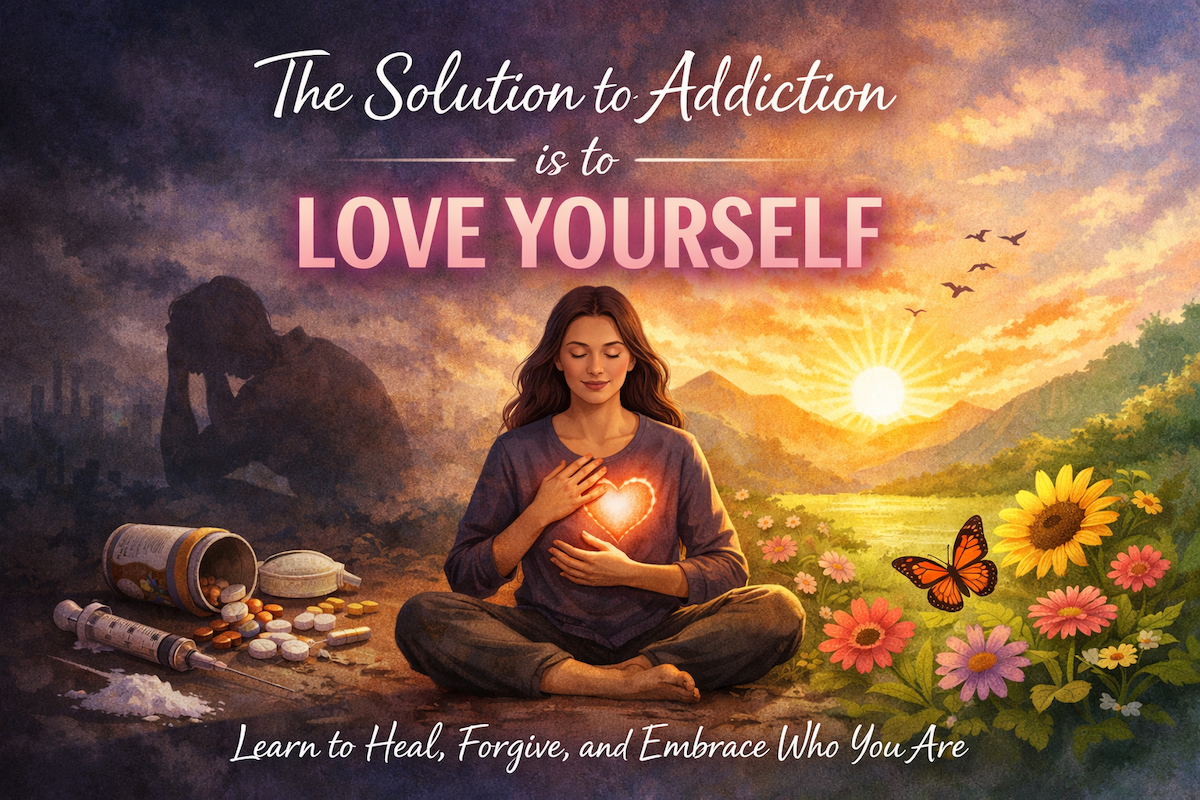
At the deepest level, transformation is not about controlling behavior or managing symptoms. It is about remembering your inherent worth and learning to treat yourself with the respect, kindness, and love that have been missing for so long. As your relationship with yourself heals, your relationship with substances, symptoms, and other people changes as well.
The Journey Ahead
As you move from this Introduction into the first principle, “I am responsible for all my experiences”, you will begin the work of reclaiming authorship of your life. You will be invited to see your experiences, not as random events or cruel punishments, but as reflections of your own thoughts, beliefs, and choices. This can be a sobering realization, but it is also profoundly liberating. You created your current experience, therefore you can create a new one.
From there, we will explore the power of choice, the creative force of thought, the importance of the present moment, the connection between mind and body, the act of always doing your best, the role of forgiveness, the necessity of commitment, and, finally, the spiritual truth of who you are.
You do not need to believe all of this right now. You do not need to agree with every statement or fully understand every concept. All you need, at this moment, is a willingness, a willingness to consider that you are not powerless, not broken, and not beyond hope. A willingness to experiment with new ways of thinking. A willingness to see yourself differently.
Bring that willingness to these pages and the Principles of Transformation will meet you where you are and guide you, step by step, toward a new experience of yourself and your life.
Let us begin.
Dr. Harry Henshaw
Port Charlotte, Florida
305-498-3442
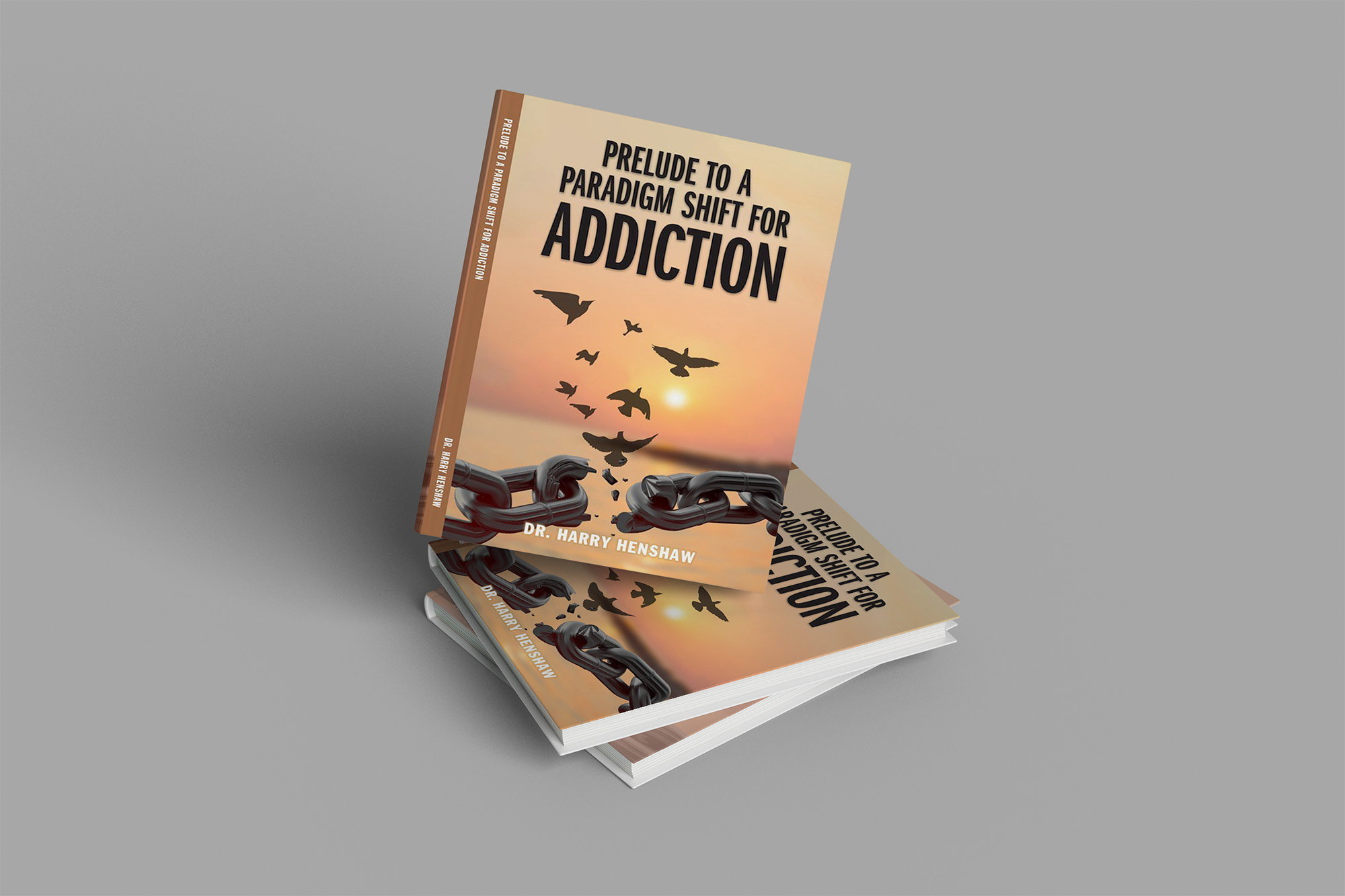
Get Free from Addiction!
Discover a groundbreaking perspective on addiction recovery. Click below to buy Prelude to a Paradigm Shift for Addiction and explore innovative solutions to transform the way we understand and treat substance use disorders.
About Enhanced Healing
Enhanced Healing Counseling specializes in addiction recovery, mental health, and self-esteem support. Offering online and in-person services, we empower individuals to transform their lives with personalized care and proven therapeutic methods.