Table of Contents
The 10 Principles of Transformation offer a coherent way to address the most common psychological problems by going to their shared root: distorted self-image, disempowering beliefs, and a chronic disconnection from the present moment and from one’s deepest spiritual identity.
Instead of treating anxiety, depression, addiction, and relationship problems as separate “compartments,” the principles show how changing one’s thinking, self-concept, and spiritual awareness can gradually resolve suffering across the full range of emotional and behavioral difficulties.
This is not an argument against diagnosis, therapy, or medical care. It is a framework for understanding why so many different symptoms often feel connected—and why lasting change frequently requires something deeper than symptom management: a shift in identity, meaning, and daily mental-emotional habits.
Core idea: one root, many symptoms
Across the major problem areas (anxiety, depressive disorders, trauma and stress-related conditions, substance use disorders, obsessive–compulsive patterns, bipolar and psychotic conditions, eating disorders, somatic symptom issues, chronic personality/interpersonal difficulties, and grief/adjustment problems), the surface forms are different, but the underlying fuel is often the same: fear, shame, “I’m not good enough,” and the sense of being a powerless victim of life.
People may describe that underlying fuel in different ways:
- “I’m unsafe.”
- “I’m unlovable.”
- “I’m defective.”
- “I can’t handle life.”
- “I’ll never change.”
But the lived experience is remarkably consistent: the person feels trapped inside a painful identity and a painful story—one that seems reinforced by emotion, behavior, memory, and even the body.
The Principles of Transformation target these deeper patterns by teaching that:
- You are responsible for and actively choosing your thoughts, beliefs, and interpretations.
- Your thoughts create your inner and outer experience, including addictive and psychiatric symptoms.
- Your point of power is always in the present moment, where you can choose again.
- Your true identity is spiritual— inherently worthy and one with Source, making enduring change possible.
Because the principles address these underlying mechanisms—responsibility, choice, thought, present-moment power, forgiveness, commitment, and spiritual identity—they create a unified approach that can be applied across problem areas without needing a different philosophy for every diagnosis.
The 10 Principles of Transformation (clear, practical wording)
Below is a simple, working version of the principles (you can adjust the exact language to match your published phrasing):
- I am responsible for all my experiences.
- I choose everything that I experience.
- I have the power to transform my experiences.
- My thoughts create all that I experience.
- My point of power is in the present moment.
- My thoughts create what I experience in my body.
- I always do my best.
- I forgive myself and let go of the past.
- I am committed to my transformation.
- I am Spirit—Source—Higher Power—God.
To “use” these principles is not to repeat them once and hope for a miracle. It is to build a new way of thinking and living through daily practice, honest self-observation, and consistent re-choosing.
Why these principles help across so many psychological problems
1–2: Responsibility and Choice shift the core posture: from victim to creator
Many psychological problems are intensified by the sense that life is happening to the person: “My anxiety controls me,” “My past ruined me,” “My cravings own me,” “My moods determine everything.” Principles 1 and 2 directly challenge that posture. They confront the sense of powerlessness that sits beneath anxiety, depression, addiction, and long-standing relational patterns.
This is a crucial distinction: responsibility is not self-blame. The transformational meaning is not “I caused my trauma” or “I should be ashamed.” It is:
- “I may not control what happened, but I can learn to recognize and change what I’m choosing now—my interpretations, beliefs, self-talk, and the identity I keep rehearsing.”
- “Even when patterns feel automatic, there is still a choosing of focus, meaning, and belief about worth.”
Once a person can honestly say, “I’m participating in the creation of my experience,” hope becomes rational—not wishful.
3–4: Power and Thought explain how symptoms are maintained—and how they change
Principles 3 and 4 name the engine: thoughts and beliefs shape emotion, behavior, perception, and the felt experience of reality moment to moment.
This matters because most people don’t suffer only from events. They suffer from:
- What the event “means” about them
- What they believe it predicts about the future
- The identity they conclude from it
When the core belief is “I am not good enough,” the mind tends to interpret life through that lens—and then the person experiences anxiety, shame, compulsion, depression, or addiction as an attempted escape from that inner verdict.
For OCD and related patterns, this reframes intrusive thoughts and rituals as more than “random symptoms.” The person learns to stop treating every thought as truth and begins deliberately generating more compassionate, accurate interpretations.
For trauma and stress-related disorders, the principles help disentangle the event from the ongoing story. The trauma is real—but the present-day suffering is often maintained by repeated beliefs such as “I’m broken,” “I’m unsafe,” or “I’m powerless.” Choosing new meaning in the present is how power is reclaimed.
For severe mood disorders, the principles do not deny biology; they insist that how one thinks about diagnosis and identity still shapes recovery, shame, and adherence to care.
5: The present moment is the true point of power
Anxiety lives in the future. Depression often lives in the past. Grief can live in both. Principle 5 teaches that the past and future exist now only as thought—and transformation happens by choosing again now.
For anxiety, present-moment practice interrupts catastrophizing:
“What is actually happening right now—and what am I choosing to think about it?”
For depression, the present moment becomes the place of micro-choices: one constructive thought, one life-giving action, one shift in self-respect—repeated until a new trajectory forms.
For somatic symptom disorders, present-moment awareness reduces fear-driven scanning and helps the person notice the immediate link between thought, emotion, and bodily sensation.
6: Mind–body connection: thoughts create what is experienced in the body
Principle 6 explains why emotional healing often changes physical experience. Persistent thoughts of danger, unworthiness, or self-hate send chronic stress signals through the nervous system—affecting breathing, muscle tension, sleep, digestion, energy, and immunity.
This is highly relevant for:
- Anxiety (hyperarousal feeding “something’s wrong”)
- Depression (hopeless thoughts reinforcing low energy and sleep disturbance)
- Somatic symptom patterns (catastrophic focus magnifying discomfort)
Transformation is not “positive thinking.” It is learning to stop using the mind to injure the body.
7–8: Compassion and forgiveness soften shame—the hidden fuel of relapse and self-sabotage
Shame is not just a feeling; it becomes a strategy: hiding, numbing, pleasing, controlling, avoiding, using, or self-attacking. Principles 7 and 8 directly target shame by teaching:
- People acted from their level of awareness at the time—they were doing the best they could with what they knew.
- Forgiveness is not excusing harm; it is releasing mental bondage to the past and reclaiming power now.
In addiction recovery, this is essential. Without self-forgiveness, shame easily triggers relapse, self-sabotage, and the “why try?” collapse.
In personality and interpersonal difficulties, compassion and forgiveness soften rigid blame narratives and make responsibility possible without cruelty.
9: Commitment is the bridge between insight and stable change
Many people have insight. Fewer people have consistent practice. Principle 9 teaches that transformation requires sustained commitment—especially to changing beliefs about worth.
Commitment shows up as repetition:
- Anxiety: repeated present-moment anchoring and challenging catastrophizing
- Depression: repeated noticing of self-judgment and choosing more truthful self-respecting thoughts
- Addiction: daily contact with transformational ideas, support, accountability—especially when distressed
Commitment also highlights the importance of trusted guides—therapists, counselors, mentors—so the principles are applied safely and effectively, especially in severe conditions.
10: Spiritual identity resolves the deepest wound: “I am not enough”
Principle 10 addresses the fundamental confusion beneath many psychological problems: identity. Many people define themselves by roles, achievements, opinions, diagnoses, or failures—unstable foundations that create chronic insecurity.
The principle teaches:
- Thoughts and beliefs are tools, not the true Self.
- The true identity is awareness and connection with Source/Spirit/Higher Power.
- Authentic self-love and spiritual connection are the same process.
As this identity stabilizes, symptoms can be held differently: not as definitions of self, but as experiences moving through a fundamentally whole being—reducing fear and shame and increasing willingness to engage in healing.
Applying the principles to the major problem areas
What follows is a practical map for applying the 10 Principles of Transformation to the most common psychological and behavioral problem areas. This framework stays compatible with standard clinical care while adding something many people are missing: a clear explanation of how self-image, interpretation, and identity shape symptoms—and how consistent present-moment practice begins to dissolve them.
In each problem area below, you’ll see three layers:
-
How the pattern maintains itself (the “loop”)
-
Which principles interrupt the loop (where transformation enters)
-
What the transformational aim becomes (the new identity and new choice)
Anxiety disorders
Anxiety is often sustained by a repeating internal cycle: the mind predicts danger, the body reacts as if the danger is real, and that bodily reaction becomes “proof” that something is wrong. This is why anxiety feels so convincing. The person isn’t merely thinking anxious thoughts—they are experiencing real physiological changes (heart rate, muscle tension, tight breathing, stomach distress), and the body’s alarm becomes a reinforcing signal: “See? I knew something was wrong.”
The Principles of Transformation interrupt this loop by restoring agency and returning power to the present moment. Principles 1–2 (Responsibility and Choice) teach the individual to stop relating to anxiety as an external force and begin relating to it as a trainable internal process. Principle 5 (Present moment power) reduces future-based catastrophizing by bringing attention to what is actually happening now—not what might happen later. Principle 6 (thought-body connection) helps the person see anxiety symptoms as the body responding to meaning, interpretation, and fear language—rather than as proof of impending catastrophe. Principles 7–8 (I do my best; I forgive and release the past) reduce shame about anxiety (“What’s wrong with me?”), which is often a hidden amplifier of the anxious cycle. Principle 9 (Commitment) emphasizes repetition: anxiety changes when the nervous system receives consistent experiences of safety and self-trust.
Transformational aim: the person moves from “anxiety controls me” to “I can observe my thoughts, choose again, and retrain my body into safety.” Anxiety becomes a signal to return to the principles, not a verdict about one’s capacity to live.
Depressive disorders
Depression is frequently maintained by a loop of harsh internal judgment: “I’m failing,” “I’m defective,” “Nothing will change,” followed by emotional collapse, withdrawal, and reduced meaningful action—which then becomes “evidence” confirming the original judgment. The deeper issue is often not only sadness, but a collapsed self-image: the person has begun to identify as powerless, unworthy, or permanently damaged.
The principles directly target depression’s hidden engine: identity and interpretation. Principle 4 (thought creates experience) helps the person see that depression is intensified by repeated meanings assigned to the self, the future, and the past. Principle 5 (present moment power) introduces a powerful strategy: depression often feels overwhelming when someone tries to change their whole life at once; the present moment makes transformation manageable through small, consistent choices. Principles 7–8 (compassion and forgiveness) are essential because depression often includes self-attack—an internal cruelty that drains energy and hope. Principle 9 (commitment) supports behavioral momentum: healing frequently requires doing small acts of self-respect even when motivation is low.
Transformational aim: replace “I am defective” with “I am learning and rebuilding.” Momentum is created through daily, realistic acts of self-respect—new thoughts, small action steps, gentle structure, and consistent re-choosing in the present.
Trauma- and stress-related conditions
Trauma-related suffering is often maintained by a present-day loop: something triggers a memory network, the mind instantly creates a fear-story (“I’m unsafe”), the body reacts, and the person adapts through vigilance, avoidance, numbness, or control. Over time the person may not only fear the world—they may begin to fear their own internal experiences (memories, emotions, sensations). In that way, trauma can become an identity: “This is who I am now.”
The Principles of Transformation work here by separating the event from the ongoing identity story. Principles 4–5 (thought creates experience; present-moment power) help the person notice the moment where the nervous system reacts—and the moment where the mind interprets. The goal is not denial of what happened, but freedom from being defined by it. Principle 8 (forgiveness and letting go) is about releasing bondage to the past—not excusing harm, but reclaiming one’s present power. Principle 6 (body-based calming) is vital because trauma lives in the body; transformation must include new physiological experiences of safety, regulation, and groundedness. Principle 9 (commitment) emphasizes careful repetition—slow, safe practice that rebuilds trust over time.
Transformational aim: honor what happened without allowing it to define identity, future, or worth. The person shifts from “I am damaged and unsafe” to “I can be present, regulated, and empowered now.”
Substance use disorders and compulsive behaviors
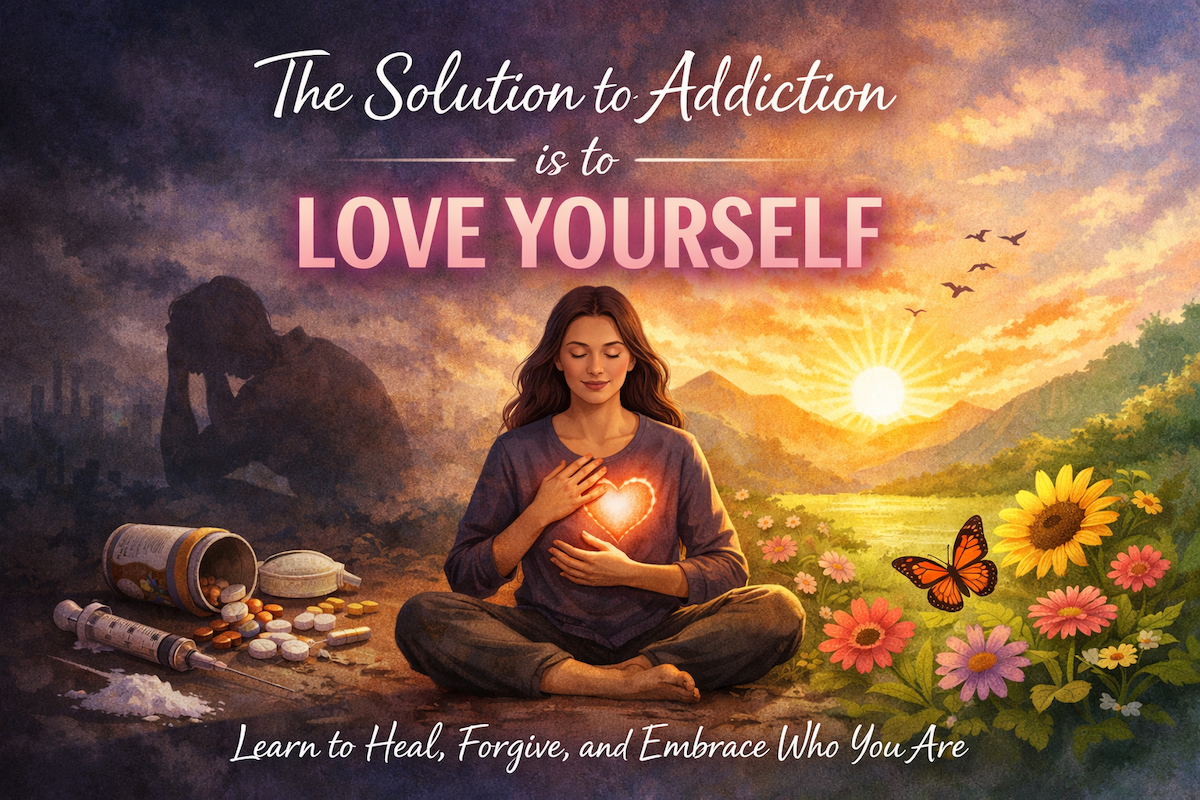
Addiction and compulsive behaviors are frequently sustained by an emotional loop: painful self-belief (“I’m not enough”) produces distress, the person seeks relief or escape, temporary numbness occurs, and then shame follows—often intensifying the original belief and restarting the cycle. In this model, substances and compulsions are not the core cause; they are strategies of relief used in response to an unbearable inner identity.
The principles interrupt the loop at its root: the self-belief. Principles 1–2 (responsibility and choice) restore agency and remove the myth that the person is powerless. This does not ignore craving or habit—it reframes them as patterns that can be understood, interrupted, and replaced. Principle 4 (thought creates experience) explains why self-contempt feeds relapse: the internal story drives emotional pain, and emotional pain drives escape. Principles 7–8 (compassion and forgiveness) reduce shame, which is one of the most common relapse triggers. Principle 9 (commitment + support) emphasizes that transformation requires daily reinforcement—new inputs, new practices, new identity, and consistent accountability.
Transformational aim: stop treating substances as the “cause” and start transforming the self-belief that creates the need to escape. Recovery becomes the rebuilding of a new identity: worthy, capable, and connected.
Obsessive–compulsive and related disorders
OCD and related patterns often involve intrusive thoughts that are misinterpreted as meaningful, dangerous, or identity-defining. The person tries to neutralize the thought through rituals, checking, reassurance, avoidance, or mental review. Relief occurs temporarily—but because the ritual “worked,” the brain learns that rituals are necessary, which strengthens the obsessional loop.
The Principles of Transformation shift the person’s relationship to thought itself. Principle 4 is key here: thoughts can be creative and powerful, but they are not always true, not always predictive, and not always meaningful. The person learns to stop treating thoughts as commandments. Principle 5 (present moment power) helps the individual return to immediate reality instead of living inside the mental emergency. Principle 7 (I do my best) reduces self-criticism and perfectionism, which often intensify compulsive patterns. Principle 9 (commitment) supports repetition of healthier responses—tolerating uncertainty, letting urges rise and fall, and choosing a calm identity over a fearful one.
Transformational aim: develop the capacity to tolerate uncertainty and stop assigning identity-level meaning to thoughts. The person shifts from “my thoughts define me” to “I can observe thoughts and choose my response.”
Bipolar and psychotic conditions
These conditions can involve significant biological vulnerability and may require medication, structured care, and safety planning. The Principles of Transformation do not replace clinical treatment here. However, they can still contribute profoundly to the person’s healing by reducing shame and strengthening identity beyond symptoms.
Many individuals suffering from these conditions internalize a painful identity: “I am broken,” “I am dangerous,” “I will never have a real life.” The principles provide a corrective foundation: Principle 7 (I do my best) and Principle 8 (forgiveness) reduce shame and self-condemnation. Principle 9 (commitment) supports stability through routine, sleep protection, consistent self-care, and meaningful structure. Principle 10 (spiritual identity) helps the person anchor beyond diagnosis: symptoms can be experienced without becoming the self.
Transformational contribution: reduce shame, strengthen identity beyond diagnosis, and support stability through self-care, structure, spiritual grounding, and purpose—alongside appropriate clinical care.
Eating disorders
Eating disorders are often sustained by a painful identity focused on appearance, control, and worth. The loop frequently looks like this: shame about the body → attempts to control food/body → temporary relief or numbness → rebound shame and intensified self-attack. For many individuals, the eating disorder becomes a way to manage emotional pain and reclaim a sense of control when self-worth feels unstable.
The principles address the true target: identity and worth. Principle 10 (spiritual identity) helps the person move beyond appearance-based worth into intrinsic value. Principle 6 (mind-body connection) helps them see how shame thoughts impact the body and how self-hatred becomes a physiological stress state. Principles 7–8 reduce the internal cruelty that fuels the disorder. Principle 9 emphasizes support and repetition: this is not a willpower issue; it is a transformation issue that requires consistent practice, accountability, and compassionate structure.
Transformational aim: shift from appearance-based worth to intrinsic worth, then build caring behaviors from that truth—nourishment, body respect, emotional honesty, and self-love in action.
Somatic symptom issues
Somatic symptom patterns often involve a cycle where physical sensations are interpreted as threatening. The person becomes hyper-focused on the body, fear escalates, stress physiology intensifies symptoms, and the person feels trapped in a body that seems to be “proving” something is wrong.
The principles are especially powerful here because they clarify the relationship between meaning and sensation. Principle 6 teaches that chronic fear and self-protective thinking can create real bodily distress—tension, inflammation, fatigue, pain amplification, stomach upset, shallow breathing. Principle 4 emphasizes that interpretation shapes experience: the same sensation can be understood as danger or as a temporary stress response. Principle 5 helps the person return to present safety rather than scanning for future catastrophe. Principle 9 reinforces the need for consistent practice: the body learns safety through repetition, not through one breakthrough moment.
Transformational aim: stop scanning for danger and begin cultivating safety and trust in the body—reducing fear-based interpretation and building a calmer relationship with physical sensation.
Chronic personality and interpersonal difficulties
Long-standing relational patterns are often rooted in wounded self-image: distrust, fear of abandonment, shame, control, avoidance, people-pleasing, resentment, emotional volatility, or withdrawal. These strategies usually began as protection, but over time they generate conflict and reinforce the original belief: “I’m unsafe,” “I’ll be rejected,” “I’m not enough,” “I can’t trust people.”
The principles shift relationships from being “proof” of unworthiness to being a practice field for transformation. Principles 1–2 (responsibility and choice) help the person stop blaming others for all emotional experience while still maintaining boundaries and accountability. Principle 4 (thought creates experience) reveals how the person’s meaning-making shapes conflict and perception. Principles 7–8 soften shame and resentment—the two emotional forces that keep relational patterns rigid. Principle 9 is essential because interpersonal change requires consistent practice over time: emotional regulation, truth-telling, boundary setting, repair, and new self-respecting choices.
Transformational aim: move from “relationships prove I’m unworthy” to “relationships are where I practice new worth-based choices.” The goal becomes connection built on self-respect rather than fear.
Grief, adjustment, and life-transition distress
Grief and major life transitions often create a collapse in meaning: “Life will never be good again,” “I don’t know who I am now,” “The future is empty.” The loop can involve loss → meaning collapse → fear about the future → stuck identity (“I’ll never be okay”). When grief becomes fused with identity, healing can feel like betrayal of love or memory—so the person stays stuck.
The Principles of Transformation honor grief while preventing identity collapse. Principle 5 returns the person to today: grief is carried one day at a time. Principle 8 supports letting go—not of love, but of bondage to an old story that says life cannot continue. Principle 10 provides spiritual grounding: meaning and connection can exist even in pain. Principle 9 emphasizes gentle commitment—small practices that rebuild life without forcing the person to “get over it.”
Transformational aim: allow grief while rebuilding meaning and identity from a deeper foundation—one grounded in love, presence, and spiritual connection rather than loss-based identity.
Integrating the principles with clinical care (important)
The Principles of Transformation do not replace psychotherapy, medication, or structured treatment programs. They provide a philosophical and spiritual framework that can guide and deepen those approaches when used in a therapeutic relationship.
Used well, they:
- Help clients understand why cognitive, behavioral, and relational changes matter—linking them to responsibility, choice, thought, and identity.
- Support long-term recovery by anchoring clients in stable self-worth and spiritual connection beyond symptom relief.
Applied consistently, the principles resolve problems not by attacking symptoms directly, but by transforming the way people think about themselves, their past, their power, and their relationship to Higher Power—so symptoms lose their foundation and often diminish over time.
Dr. Harry Henshaw
Port Charlotte, Florida
Get Free from Addiction!
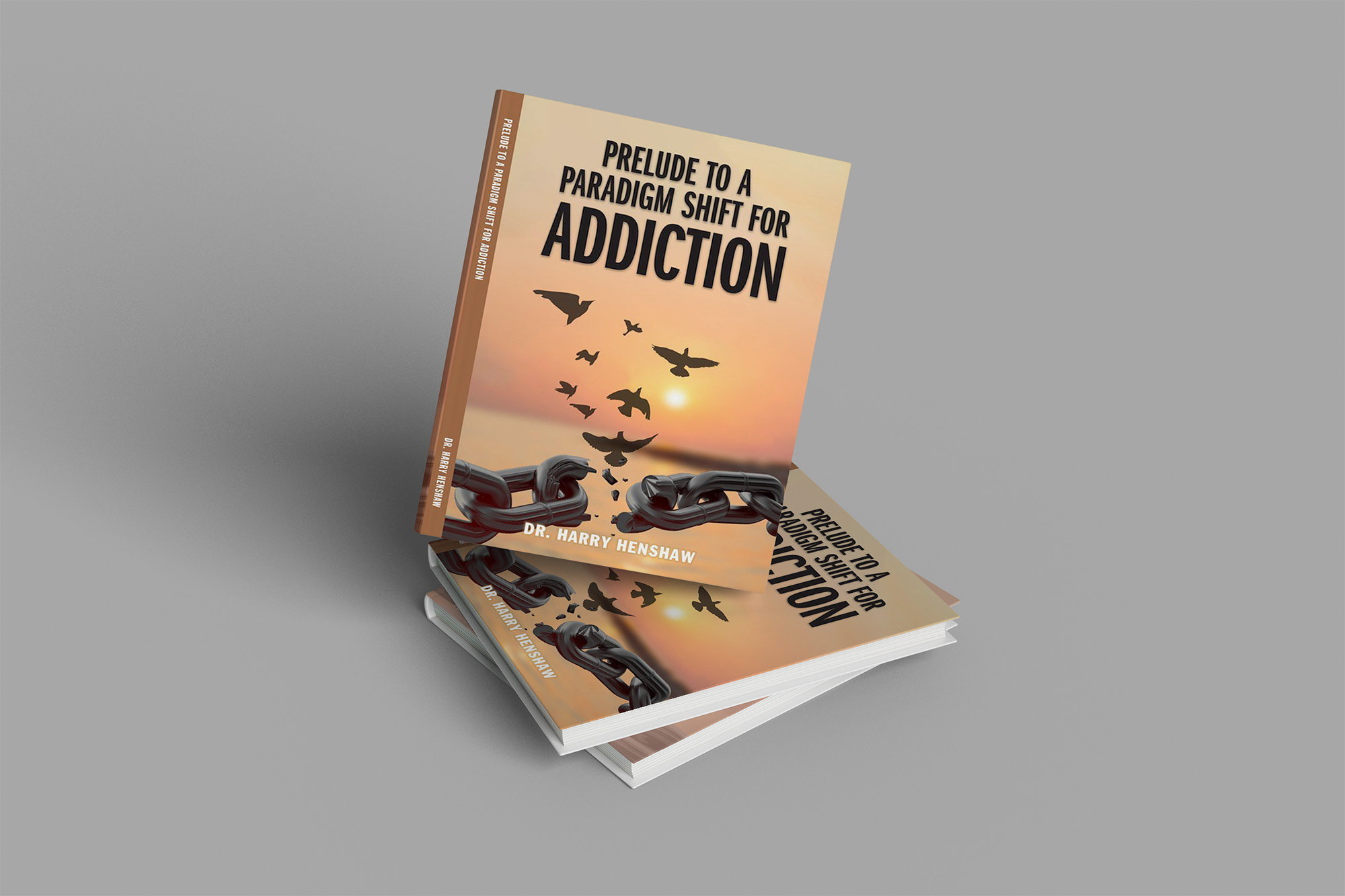
Discover a groundbreaking perspective on addiction recovery. Click below to buy Prelude to a Paradigm Shift for Addiction and explore innovative solutions to transform the way we understand and treat substance use disorders.
About Enhanced Healing
Enhanced Healing Counseling specializes in addiction recovery, mental health, and self-esteem support. Offering online and in-person services, we empower individuals to transform their lives with personalized care and proven therapeutic methods.