Table of Contents
If the true cause of addiction is not a substance, not a brain defect, and not “powerlessness,” but a painful self-belief—“I am not good enough; I do not matter; I am less than others”—then recovery has to be more than stopping a behavior. It has to be a complete transformation of identity. It has to be a change at the level of self-image, self-worth, and self-love.
That is exactly why the ninth principle of transformation matters so much:
- I am committed to my transformation.
Commitment is not a motivational slogan. It is the engine that turns insight into lived reality. It is the difference between “I want to change” and “I am changing.” And in a model where addiction is driven by a negative belief about one’s value and worth, commitment becomes the bridge from self-rejection to authentic self-love—the only real solution.
The real battle is not drugs—it is the belief behind them
When a person believes they are fundamentally inadequate, they don’t just feel bad. They begin to organize their entire life around that belief. They interpret events through it. They choose relationships that confirm it. They sabotage opportunities that challenge it. They seek relief from it—often through substances or compulsive behaviors.
In this understanding, drugs and alcohol are not the root problem. They are symptoms and instruments—ways a person temporarily escapes the emotional pain of self-disapproval, or even ways they unconsciously punish themselves for being “not good enough.” The addiction continues because it keeps “proving” the person’s story: “See? I’m broken. I can’t do it. I mess everything up.”
So the target of transformation is clear:
- Replace the core belief: “I am not good enough”
- With a truthful belief: “I am enough. I matter. I am whole. I am worthy.”
- And build a daily way of living that matches that truth
That replacement is not achieved by wishful thinking. It is achieved by commitment—daily, deliberate, consistent commitment.
Why commitment is the “non-negotiable” principle
Principle Nine states something uncompromising: half-measures do not work. If the old belief system has been practiced for years—sometimes decades—then an occasional positive thought, an inconsistent routine, or selective participation in healing practices won’t reliably rewire the deeper identity. The negative self-belief will simply return to center stage under stress, and the person will drift back into old behaviors.
This is why the document on Principle Nine is direct: the level of commitment determines whether a person returns to addictive behavior and mental health suffering—or whether they change the trajectory of their life into one that is “happy, joyous, and free.”
Commitment is the container that holds transformation steady long enough for it to become real.
Commitment means “transformation becomes the center of my life”
Many people try to recover while still treating healing as a side project—something they do around the rest of life. But if addiction is rooted in a core belief about worth, then the healing process must become central, because it is rebuilding the very foundation of the person’s identity.
Commitment means:
- “My recovery is not what I do after everything else is handled.”
- “My recovery is what makes everything else possible.”
- “My recovery is my daily priority—because my life depends on it.”
This is not fear-based. It is reality-based. When someone has lived under the spell of self-rejection, the pull back to old coping strategies can show up at any time—fatigue, conflict, loneliness, shame, boredom, disappointment, even success. Commitment is what makes the response automatic: I return to transformation.
Commitment is not a feeling—it is a set of choices
People often wait to “feel committed.” But transformation does not require perfect feelings; it requires consistent action. Commitment is a decision you renew daily, especially when you do not feel like doing the work.
That is why the Principle Nine document describes commitment as a conscious, daily choice—a total immersion rather than an occasional effort.
A committed person does not ask, “Do I feel like practicing today?”
A committed person asks, “What does my transformation require today?”
This shift is crucial because addiction thrives on mood-based living:
- “I’ll do better when I feel better.”
- “I’ll change when life calms down.”
- “I’ll start tomorrow.”
Commitment ends that cycle by creating a new identity:
- “I am someone who shows up.”
- “I am someone who follows through.”
- “I am someone who lives from self-respect.”
Commitment includes willingness to be guided—without “picking and choosing”
One of the most powerful elements of Principle Nine is the insistence on full participation: no selective commitment, no negotiating with the process, no choosing only what feels comfortable.
The document states that, especially early in transformation, the individual may need to follow the counselor’s suggestions with what could be called “blind faith,” trusting the process more than their old thinking. It also states plainly: “Selective commitment is not commitment.”
Why is this so important?
Because the “not good enough” belief system is highly deceptive. It will try to protect itself. It will produce arguments like:
- “That won’t work for me.”
- “I already know this.”
- “I’m too far gone.”
- “I’ll do the easy parts.”
- “I don’t need support.”
- “I can handle it alone.”
Those are not neutral thoughts. They are the voice of the old identity trying to remain in charge.
Commitment means you stop letting the wounded part of you be the CEO of your recovery. You become teachable. You become willing. You follow the plan.
Commitment creates structure—and structure creates safety
The addiction cycle is often chaotic: inconsistent sleep, inconsistent mood, inconsistent relationships, inconsistent priorities, inconsistent self-care. Chaos amplifies the “not good enough” belief because it constantly generates evidence of failure.
Commitment does the opposite. It creates structure:
- Regular counseling sessions
- Daily practices (affirmations, journaling, meditation, exercise)
- Supportive accountability
- A recovery plan that is written and lived
- Clear boundaries with triggers, people, and environments
As the document says: develop a clear plan with your therapist, then “plan my work and work my plan.”
Structure reduces decision fatigue, and decision fatigue is where relapse often begins. When the day is unstructured, the mind defaults to the old solution: escape. When the day is committed and structured, the person defaults to the new solution: transformation.
Commitment is how you break the “shame → use → shame” loop
If addiction is powered by the belief “I’m not good enough,” then shame is the fuel. And relapse is often less about craving and more about self-judgment:
- “I messed up.”
- “I always ruin things.”
- “I’ll never change.”
- “What’s the point?”
Commitment interrupts that spiral.
A committed person does not interpret setbacks as proof of worthlessness. They interpret setbacks as feedback and training:
- “This is a moment to recommit.”
- “This is where I practice self-compassion.”
- “This is where I learn what I need.”
- “This is where I return to the plan.”
This is not denial. It is leadership. It is self-respect in action.
Commitment is the repeated replacement of the old belief
Transformation, in this model, is the systematic replacement of negative beliefs with truthful beliefs—and then living as if those truthful beliefs are real until they become natural.
The “Cause and Solution” document is clear: to end addiction and resolve mental health suffering, a person must give up negative ideas about self and replace them with positive ones—until they experience authentic self-approval and self-acceptance and, ultimately, self-love.
Commitment is what keeps that replacement going when the old belief resurfaces.
Because it will resurface.
Not because transformation is failing, but because the mind is detoxing from years of self-rejection. When the old thought appears—“I’m not good enough”—commitment responds:
- Notice it (without panic or shame)
- Name it (“That is the old belief.”)
- Replace it (“I am enough. I matter. I am learning.”)
- Act from the new belief (do the next right thing)
Over time, the brain and nervous system learn a new default. The person begins to experience themselves differently—not as broken, but as worthy and capable.
Resistance is part of the process—and commitment expects it
Any real transformation triggers resistance. The old identity will fight to survive. That resistance may look like:
- Suddenly doubting the process
- Feeling “too tired” to do practices
- Becoming critical of help or guidance
- Romanticizing past use
- Minimizing consequences
- Isolating
- Skipping sessions
- Doing “some” of the plan instead of all of it
Principle Nine directly anticipates this: there will be times when the pull to stay the same—or to return to addiction—arises. In those moments, commitment must be renewed and strengthened by remembering why the path was chosen.
This is a crucial point: commitment isn’t proven when it’s easy.
Commitment is proven when you feel resistance—and you show up anyway.
What committed transformation looks like in daily life
To make this practical, here are examples of what “I am committed to my transformation” can mean as a lived practice:
A committed morning
- A short grounding practice: breath, prayer, or meditation
- A written intention: “Today I choose self-respect.”
- Affirmations aimed at the core belief:
- “I am enough.”
- “I approve of myself.”
- “I am learning to love myself.”
- A simple action of self-care (walk, stretch, healthy breakfast)
A committed day
- Keeping appointments and doing assignments
- Honest communication instead of hiding
- Avoiding people/places that reinforce the old identity
- Using a relapse-prevention plan when triggered
- Taking responsibility without self-attack
A committed evening
- A brief inventory:
- “Where did I practice my new identity today?”
- “Where did the old belief show up?”
- “What will I do differently tomorrow?”
- Gratitude and self-acknowledgment (even small wins)
- Sleep hygiene, because exhaustion weakens commitment
This is not perfectionism. This is consistency.
Commitment produces a new identity: “I am a person who loves myself”
Here is the deeper outcome of Principle Nine: it gradually forms a new self-concept.
The old identity says:
- “I’m not good enough.”
- “I’m defective.”
- “I need something outside myself to feel okay.”
The committed identity says:
- “I am transforming.”
- “I am worthy of healing.”
- “I keep my promises to myself.”
- “I am learning authentic self-love.”
And when the person reaches authentic self-love, the need for self-harm dissolves. As the “Cause and Solution” document states: when a person genuinely thinks positively about themselves—whole, complete, enough—they no longer desire drugs or alcohol as a solution, because the inner problem has been resolved at the level of self-worth.
Why Principle Nine helps end addiction in a lasting way
In plain terms, Principle Nine works because it does three life-changing things:
- It keeps the person engaged long enough for the identity to change.
Insight without follow-through does not rewrite self-image. Commitment does. - It prevents relapse from becoming a return to self-hatred.
Commitment treats setbacks as training, not as proof of worthlessness. - It builds self-respect—and self-respect becomes self-love.
Every day a person honors their plan, they gather evidence: “I matter.”
And that evidence is the antidote to the original wound: “I am not good enough.”
A closing recommitment
If a person wants to end addiction and addictive behavior at the root, they must do more than stop. They must transform. And if they want to transform, they must commit—fully, daily, and repeatedly.
Principle Nine is not pressure. It is liberation.
It says:
- “I am no longer living casually with a deadly belief.”
- “I am no longer negotiating with self-destruction.”
- “I am all in with my healing.”
- “I am committed to becoming the person I truly am.”
And as that commitment becomes a lived reality, the old belief system loses power. Self-love becomes real. The need for escape fades. The trajectory changes—because the person has changed.
Dr. Harry Henshaw
Port Charlotte, Florida
Positive Affirmation Recordings
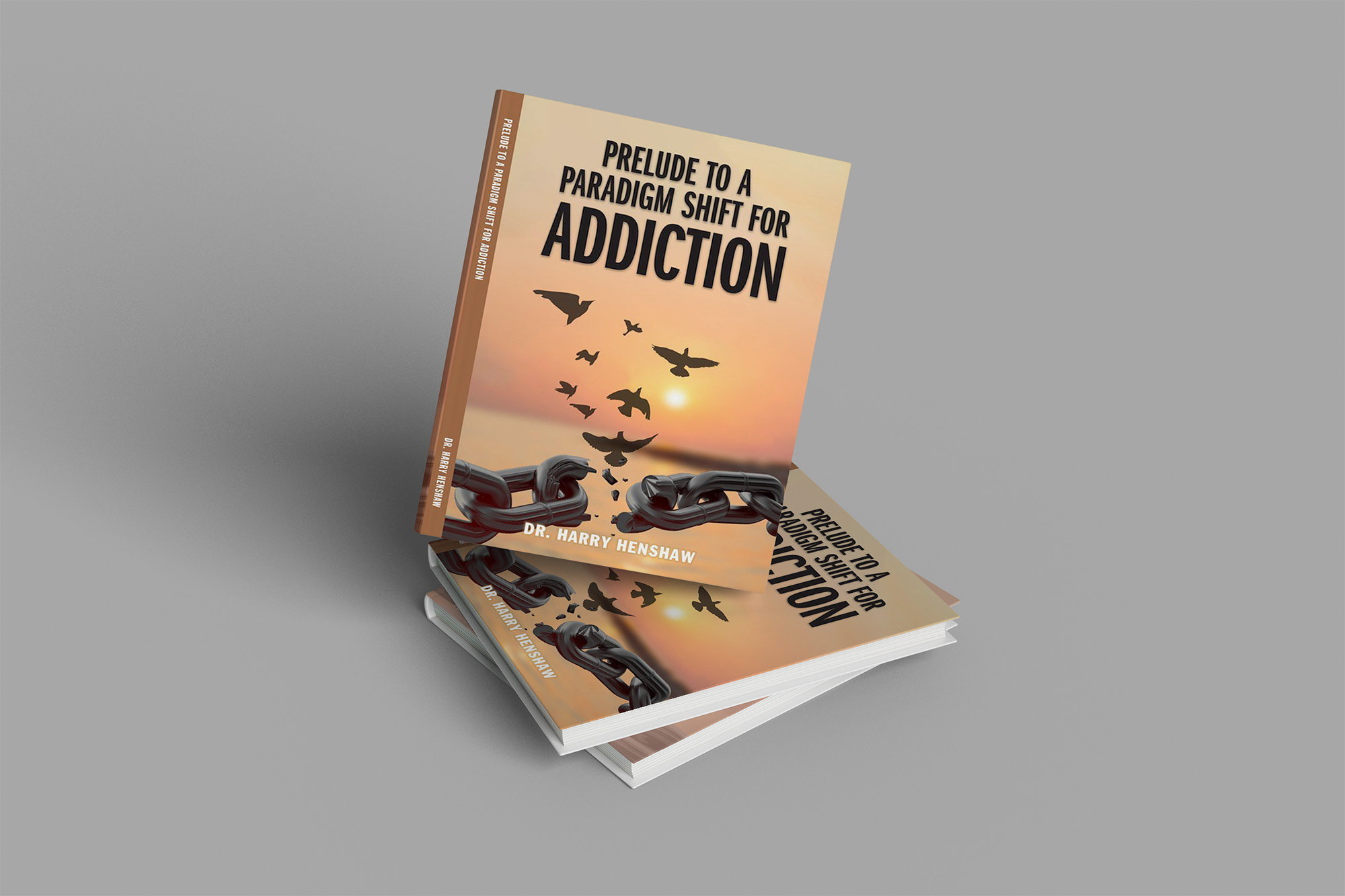
Get Free from Addiction!
Discover a groundbreaking perspective on addiction recovery. Click below to buy Prelude to a Paradigm Shift for Addiction and explore innovative solutions to transform the way we understand and treat substance use disorders.
About Enhanced Healing
Enhanced Healing Counseling specializes in addiction recovery, mental health, and self-esteem support. Offering online and in-person services, we empower individuals to transform their lives with personalized care and proven therapeutic methods.