Table of Contents
If the true cause of addiction is not a chemical, a substance, or a defect in the body, but a negative belief about personal worth, the belief “I am not good enough”, then recovery must be approached at the level where the problem lives: in the mind. Transformation Counseling states this clearly: the actual cause of addictive behavior is “a thought or belief,” specifically the belief that a person is “not good enough or less than others,” which undermines authentic self-love.
It also states that drugs and alcohol are not the real problem; they are symptoms, tools a person uses to inflict self-harm, while the real cause is the belief “I am not good enough, inadequate, and do not matter.”
This is exactly why the fourth Principle of Transformation, “My thoughts create all that I experience”, is not just a nice idea. It is a direct map to the deepest lever of change. It reframes addiction from a life sentence into a solvable internal pattern. It returns agency to the person. And it offers a practical method for transforming the very belief that fuels addictive behavior and the painful emotions that surround it.
- Why this principle matters: it locates the cause where it can be changed
The Fourth Principle of Transformation states that thoughts and beliefs are “extremely powerful and profoundly creative,” shaping feelings, language, behavior, and “every experience” of life.
It also emphasizes something crucial: from moment to moment, in the Now, we are continuously creating how life occurs through the thoughts we generate.
That single idea, I am creating my experience through thought, right now, in the present moment, does something therapeutically profound:
- It moves the person out of helplessness and into authorship.
- It reveals that the internal narrative is not “truth,” but a mental pattern.
- It frames recovery as a learnable skill: changing what you repeatedly think, rehearse, and believe.
In the fourth Principle of Transformation document, it describes how addictive behavior and mental health problems are created through negative ideas accepted early in life, rehearsed repeatedly, and eventually treated as truth—especially beliefs about one’s worth.
This explanation is a blueprint: what was learned and rehearsed can be unlearned and replaced.
- Addiction as a “thought-driven” life trajectory
Transformation Counseling describes the core dynamic of addiction and addictive behavior: when someone believes they are fundamentally not good enough (a “core or self-limiting belief”), they will engage in self-destructive behaviors that reinforce and validate that belief.
This becomes a closed loop:
- Core belief: “I’m not good enough.”
- Emotional pain: shame, anxiety, emptiness, hopelessness.
- Coping/escape: substances, compulsions, self-numbing.
- Consequences: guilt, damaged relationships, lost opportunities, health risk.
- Reinforcement: “See? I really am not good enough.”
This is why the fourth Principle of Transformation is so powerful. It teaches that the “loop” isn’t powered primarily by drugs, it is powered by thought, by interpretation, self-judgment, and rehearsed meaning. In the fourth Principle of Transformation it is stated directly: “The true cause of my addictive behavior lies in my mind, not in my body,” and the real cause is “a thought…a negative judgment about my value and worth…that whispers that I am not good enough.”
That doesn’t deny cravings, withdrawal, or the need for medical support when indicated. It simply identifies what keeps a person returning to the behavior even after consequences: the negative inner story about a person’s value and worth.
- The most important shift: from “I’m addicted to substances” to “I’m addicted to a way of thinking”
One of the boldest, most clarifying lines in the fourth Principle of Transformation is this: “I am not truly addicted to drugs and alcohol; I am addicted to negative thinking and to the self-limiting belief I have created about myself.”
This statement is not meant to shame the individual—it’s meant to liberate them.
Because if addiction is fundamentally maintained by a self-limiting belief and the repetitive thinking that supports it, then:
- The “enemy” is no longer outside the person.
- The “solution” is no longer dependent on perfect circumstances.
- The work becomes specific: change the thoughts that create the experience.
And once the mind changes, behavior follows more naturally, because behavior is no longer serving the old identity.
- How thoughts create experience in real life (the mechanics)
To make the fourth Principle of Transformation practical, it helps to break “thoughts create experience” into a simple chain:
Thought → Meaning → Emotion → Urge → Action → Consequence → Identity
Here’s how addiction often travels this chain:
- Thought: “I can’t handle this.” / “I’m not enough.” / “I already messed up.”
- Meaning: “I’m unsafe.” / “I’m defective.” / “I’m doomed.”
- Emotion: anxiety, shame, despair.
- Urge: escape, numbness, relief-seeking.
- Action: substance use or addictive behavior.
- Consequence: guilt, conflict, health risk, disconnection.
- Identity: “This is who I am.”
The fourth Principle of Transformation interrupts this chain at the earliest point: thought. And it does so with a higher truth: the thought is not the boss; it is a mental event. It can be observed, questioned, and replaced.
This is why Transformation Counseling says transformation requires changing negative thinking about oneself, especially about the value and worth of the individual, into that which is authentically positive, replacing negative ideas “absolutely” with positive thoughts and beliefs.
- The core therapeutic task: replacing the “not good enough” belief with worth
If the core belief is “I’m not good enough,” recovery requires more than abstinence. It requires identity renovation.
Transformation Counseling defines the goal state clearly: when a person comes to think positively about himself, he comes to believe he is “perfect, whole, and complete,” that he matters, that he is good enough, and enough—just as he is in the present moment.
And when that shift happens, the person no longer has the desire or need to use drugs or alcohol as an emotional solution; self-approval and self-acceptance become the keys to genuine self-love and transformation.
So how does Principle Four help? It provides the operating system for building that new belief:
- If thoughts are creative, then repeated thoughts become identity.
- If repeated thoughts become identity, then identity can be rebuilt through new repetitions.
- If identity changes, behavior becomes easier to change because it is now aligned with self-respect and worth.
- The practice: four daily moves that make Principle Four real
Principle Four becomes transformational when it turns into a daily discipline, not forced positivity, but consistent mental re-training.
Move 1: Observe the thought (bring it into the light)
The person learns to notice the “not good enough” thought as a pattern rather than a verdict. This is the beginning of freedom: “That’s the old story talking.”
Move 2: Name the cost (tell the truth about what it creates)
Because “my thoughts create all that I experience,” the individual learns to connect the dots:
“This thought produces shame. Shame produces escape. Escape produces consequences. Consequences reinforce shame.”
This honors your Fourth Principle description that thoughts can “build, heal, and uplift,” or “limit, damage, and destroy.”
Move 3: Replace the thought (choose a worth-based statement)
Replacement is not denial. It is direction. It is choosing a thought that leads toward self-love rather than self-execution.
Examples of replacement thoughts aligned with your framework:
- “I am learning. I can choose again.”
- “I am worthy of care and respect right now.”
- “I am enough in this moment.”
- “My past does not define my value.”
- “I can feel discomfort without harming myself.”
Move 4: Reinforce through repetition (until it becomes belief)
Your Fourth Principle document describes how negative beliefs become “truth” through rehearsal and attention over time.
The same mechanism builds freedom: repeated worth-based thinking becomes the new normal.
This is where practices like daily affirmations, mirror work, journaling, and present-moment awareness stop being “extras” and become the central technology of transformation.
- Why relapse prevention is built into Principle Four
Relapse is often framed as a sudden event. In reality, it is frequently preceded by a gradual return to a familiar internal climate:
- self-judgment
- hopelessness
- resentment
- “why bother” thinking
- secret permission thoughts
Principle Four teaches that the relapse begins in thought, not as moral failure, but as a signal: “I’m back in the old belief system.” That awareness creates a new option: intervene early.
Instead of waiting until the person is in the intensity of an urge, they learn to work upstream:
- Catch the thought.
- Change the meaning.
- Regulate the emotion.
- Choose a self-respecting action.
- Principle Four completes the logic of your model: self-love is not a feeling, it’s a mental commitment
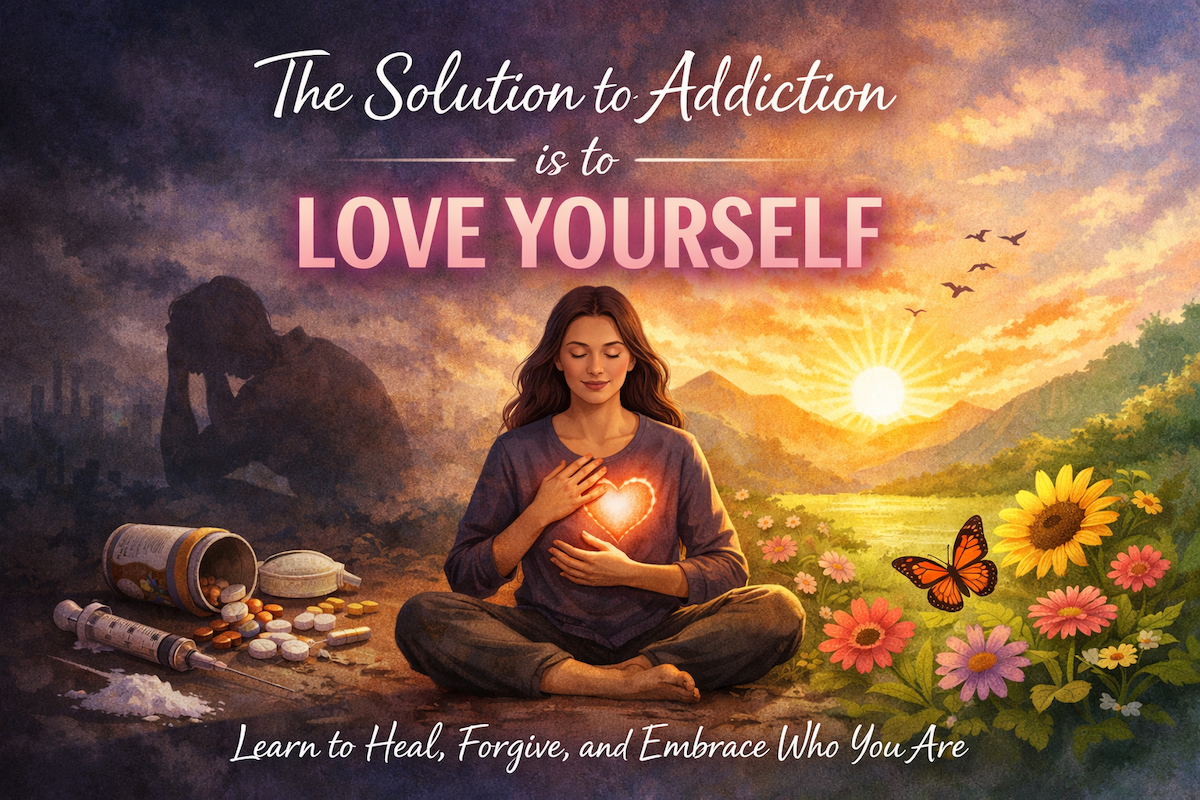
Transformation Counseling states plainly: “Loving yourself is the only solution” and that ending addictive behavior “forever” requires learning to respect, approve, accept, and eventually love oneself in the present moment.
Principle Four explains how self-love is built in real time:
- Self-love is choosing thoughts that do not harm you.
- Self-love is refusing to rehearse “not good enough.”
- Self-love is practicing a new positive, inner conversation until it becomes your lived identity.
This is why the Fourth Principle says the individual has used the power of thinking “against myself” by repeating “I am not good enough,” and that transformation begins when those thoughts are replaced with affirmations of inherent value and worth.
- The deeper promise: ending addiction by changing the self-image that required it
Addiction is often a desperate attempt to regulate an identity wound. If the person believes they are inadequate, substances become temporary relief from the pain of being “me.” But when the self-image changes, the need changes.
The fourth Principle of Transformation states that the self-limiting belief dictates what is possible, deserved, and achievable, and that experiences follow from this distorted self-image.
This is the heart of the paradigm shift of Transformation: as self-image transforms, behavior transforms because the person is no longer trying to escape who they are.
In that sense, Principle Four is the engine of the entire transformation model:
- It identifies the creator (mind).
- It identifies the mechanism (thought).
- It identifies the target (core belief about worth).
- It prescribes the method (replacement + repetition).
- It aligns the goal (authentic self-love now).
Conclusion: “My thoughts create my life”, so I will create a new one
If addiction is driven by the belief “I am not good enough,” then the path out is not merely resisting substances, it is rebuilding the inner foundation of worth. Your documents describe both the diagnosis and the cure: addiction is caused by a thought-belief about inadequacy, and the solution is authentic self-love built through positive thinking and self-acceptance.
The fourth Principle of Transformation gives the individual the most important recovery skill of all: the ability to observe, interrupt, and replace the thoughts that generate emotional suffering and addictive behavior. It transforms recovery from “white-knuckling” into self-creation. It replaces shame with agency. It replaces hopelessness with a daily practice. And it leads the individual toward the only stable end of addiction: a mind that no longer believes it is unworthy of life.
Because when I truly accept that my thoughts create all that I experience, I stop using my mind to sentence myself, and I begin using it to save my life.
Dr. Harry Henshaw
Port Charlotte, Florida
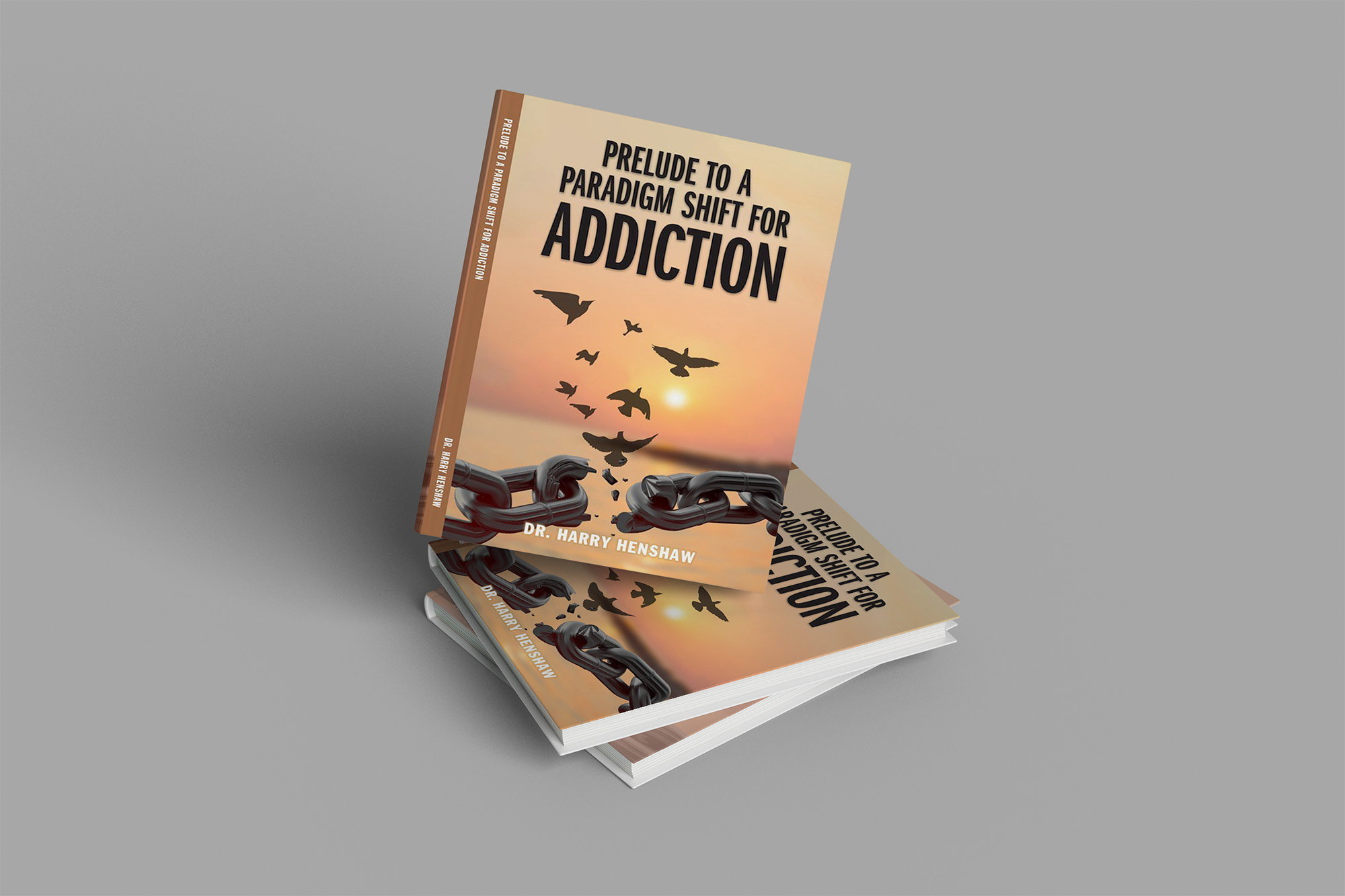
Get Free from Addiction!
Discover a groundbreaking perspective on addiction recovery. Click below to buy Prelude to a Paradigm Shift for Addiction and explore innovative solutions to transform the way we understand and treat substance use disorders.
About Enhanced Healing
Enhanced Healing Counseling specializes in addiction recovery, mental health, and self-esteem support. Offering online and in-person services, we empower individuals to transform their lives with personalized care and proven therapeutic methods.