Table of Contents
Embracing the ten Principles of Transformation offers a coherent, spiritually grounded psychology that reframes human beings as conscious creators of their experience and not passive victims of circumstances. Integrating these principles into human consciousness points toward a new healing paradigm in which possibility, health, and wellness naturally emerge from transformed self-image, responsibility, and spiritual identity. When unified and applied systematically, the ten Principles of Transformation provide a robust, clinically relevant framework for treating mental health challenges and addictive behavior disorders at their true source in thought, belief, and identity.
A new psychology of possibility
The ten Principles of Transformation describe a psychology in which human beings generate their inner and outer lives through what they think, believe, and repeatedly tell themselves about their worth and identity. Addiction and many forms of emotional suffering are understood not as random defects but as the natural outgrowth of a self-image organized around the belief “I am not good enough,” sustained by years of unquestioned, self-rejecting thinking.
In this view, transformation does not begin with symptom management but with a radical shift in responsibility, awareness, and self-definition. Recovery is framed as learning to use the mind differently: replacing negative, fear-based interpretations with truthful, life-affirming thoughts that honor the person’s inherent value and spiritual nature.
Responsibility, choice, and power
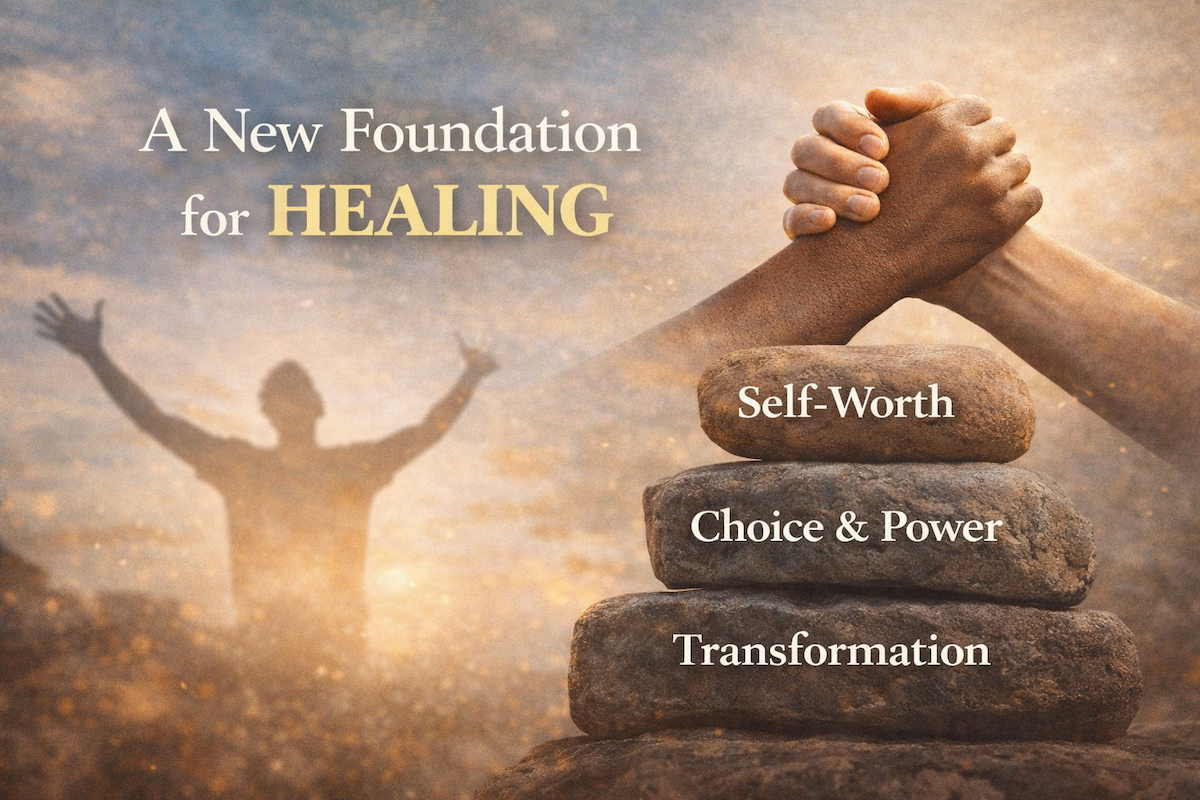
The first three principles form the foundation of this new psychology by returning creative power to the individual.
- Principle 1 states that “I am responsible for all my experiences,” including my addiction and mental health problems, because they arise from thoughts and beliefs about personal worth that were once accepted, repeated, and turned into a self-concept. This responsibility is not blame but creative power: the same mind that constructed a negative identity can construct a loving, accurate one.
- Principle 2 deepens this by affirming, “I choose everything that I experience,” emphasizing that even “automatic” patterns are still choices made from an underlying belief about self-worth. As individuals notice how every thought, interpretation, and behavior flows from a self-image, they discover that new choices become possible the moment they recognize their authorship.
- Principle 3 completes this triad: “I have the power to transform my experiences,” affirming that no one is the effect of their past or circumstances but the originating cause of their inner life. When people see that their negative self-image is an interpretation rather than a fact, they can replace self-criticism with self-respect and self-hatred with self-love, permanently redirecting the trajectory of their lives.
Integrated, these first three Principles of Transformation create a platform for a psychology of possibility in which individuals no longer wait passively for change but engage as conscious participants in their healing. In clinical practice, this translates into interventions that continually return clients to authorship—inviting them to examine how thoughts and beliefs about “not being enough” are actively generating craving, despair, and relapse in the present.
Thought, the present moment, and mind–body unity
The next group of principles clarifies the mechanisms through which this creative power operates.
- Principle 4 teaches that “My thoughts create all that I experience,” locating the true cause of addiction not in the body but in a self-limiting belief—especially the idea that one is not good enough—that shapes feelings, expectations, and behavior. In this model, the individual is “addicted” not primarily to substances but to a destructive way of thinking that continually recreates suffering.
- Principle 5 asserts that “My point of power is in the present moment,” dissolving the illusion that past events or future fears hold independent power. Only what is being thought, believed, and chosen right now determines the person’s experience and the direction of their recovery.
- Principle 6 extends this to the body: “My thoughts create what I experience in my body,” recognizing that chronic patterns of fear, self-rejection, and shame alter physiology; while loving, respectful thoughts support balance, resilience, and health. Mind and body are seen as a single process in which every sustained belief about worth becomes a biochemical and behavioral reality.
Together, these principles invite a present-focused therapeutic process that continually asks: “What are you telling yourself right now?” and “How is that thought showing up in your emotions, body, and choices?” Clinicians can use this framework to connect cognitive, emotional, and somatic experiences, helping clients experience directly that when they change their inner narrative, sensations, cravings, and moods begin to shift.
Compassion, forgiveness, and committed practice
Principles 7 through 9 describe the path by which transformation becomes sustainable.
- Principle 7, “I always do my best,” recognizes that at every moment, people act from the level of knowledge and awareness they possess. This dissolves shame and self-condemnation, honoring that painful choices arose from inadequate information and distorted beliefs rather than inherent defectiveness.
- Principle 8, “I forgive myself and let go of the past,” acknowledges that unhealed stories of victimhood and resentment keep individuals bound to old identities and justify ongoing addiction or emotional turmoil. Because the past now exists only as thought, its power can be transformed by changing the story told about it and releasing blame, especially self-blame.
- Principle 9 insists, “I am committed to my transformation,” affirming that half-measures are not sufficient for lasting recovery; transformation demands daily, conscious, disciplined willingness to follow guidance, challenge negative beliefs, and practice new ways of thinking and behaving.
In treatment settings, these principles support a culture of compassionate accountability. Clients are encouraged to view every relapse, symptom flare, or emotional crisis not as proof of failure but as feedback about where understanding and self-forgiveness are still incomplete, that there is still work to be done. Clinicians, in turn, can ground interventions in an atmosphere of nonjudgmental curiosity, helping clients expand knowledge, soften stories about the past, and reaffirm their whole-hearted commitment to growth.
Spiritual identity and ultimate healing
The tenth principle, “I am Spirit, Source, Higher Power, God,” articulates the spiritual core of this philosophy. It teaches that a person is not their thoughts, beliefs, or even their mind, but the awareness behind them—an expression of the same loving Presence often called Source, Spirit, Higher Power, or God.
When identity is sought in external roles, achievements, and opinions, suffering and addiction intensify because these shifting realities can never provide stable worth or meaning. By turning inward and recognizing that genuine self-love is the felt presence of the Divine within, of Higher Power, of God, individuals realize that their true nature is whole, complete, and sacred rather than broken or deficient. As self-love deepens, the perceived gap between “self” and “Higher Power” dissolves, and spiritual connection to Self becomes a lived experience rather than an abstract belief.
This spiritual reorientation has profound therapeutic implications. Instead of seeing clients as damaged people who need to be fixed, therapists using this philosophical and psychological framework relate to them as spiritual beings temporarily lost in painful stories about themselves. Clinical goals shift from mere symptom reduction to awakening the client’s direct experience of inner worth, connection, and power—out of which sobriety, emotional balance, and healthy relationships can naturally arise.
A unified matrix for mental health and addiction treatment
Taken together, the Ten Principles of Transformation form an interconnected matrix rather than ten isolated ideas. Responsibility (1) reveals choice (2), which awakens power (3); power acts through thought (4) in the only real moment (5), shaping both experience and physiology (6); compassion (7) and forgiveness (8) free energy bound in shame and resentment, while committed practice (9) stabilizes new patterns; all of this unfolds within the context of a reawakening of spiritual identity (10).
In clinical application, this matrix suggests several shifts in how mental health and addictive behavior disorders are understood and treated.
- Etiology is reframed from a primarily biological or environmental model to an integrative model where early experiences matter because they introduce ideas about worth and value that are later repeated and internalized, not because they irrevocably damage the person.
- Diagnosis becomes less about labeling static conditions and more about mapping the specific negative beliefs, thought patterns, and identity conclusions that maintain suffering.
- Treatment focuses on teaching clients to observe, question, and replace self-rejecting thoughts; practice present-moment awareness; forgive themselves and others; and build a living relationship with their Higher Power as their own deepest identity.
Within this paradigm, evidence-based modalities such as cognitive-behavioral therapy, mindfulness, and somatic work can be organized under a unifying philosophy rather than used as disconnected techniques. For example, cognitive restructuring becomes a way of honoring Principle 4 (transforming creative thought), mindfulness grounds clients in Principle 5 (present-moment power), and trauma processing is framed by Principles 7 and 8 (compassion and forgiveness) rather than by perpetual victim narratives.
Creating a culture of wellness for humanity
If embraced collectively, the Ten Principles of Transformation point beyond individual therapy toward a new culture of possibility, health, and wellness. Education systems could teach children early that they are responsible for their thoughts, that their choices matter, and that their worth is inherent and spiritual rather than conditional on performance. Families and communities could normalize self-forgiveness, emotional honesty, and committed inner work, reducing stigma around mental health and addiction by recognizing these struggles as expressions of painful thinking rather than evidence of moral or biological defect.
Organizations and governments influenced by these principles would design policies that reflect the understanding that people do their best with the awareness they have and that sustainable change comes from expanding knowledge, compassion, and spiritual connection rather than punishment. Public health initiatives could focus on teaching thought awareness, present-moment practice, and self-love as primary prevention strategies, potentially reducing the incidence and severity of depression, anxiety, trauma-related disorders, and substance use.
In this emerging philosophy and psychology, humanity is invited to see itself as a network of conscious creators, each capable of transforming inner narratives and, by extension, shared realities. The ten Principles of Transformation offer both the map and the method: reclaim responsibility, consciously choose thoughts, live in the present, honor the mind–body connection, extend compassion and forgiveness, commit fully to growth, and remember that at the deepest level, every person is an expression of the same loving Source. When these principles are integrated into individual lives, clinical practice, and cultural institutions, they hold the potential to reshape not only how mental health and addiction are treated, but how human beings understand who they are and what is possible for their collective future.
Dr. Harry Henshaw
Port Charlotte, Florida
Positive Affirmation Recordings
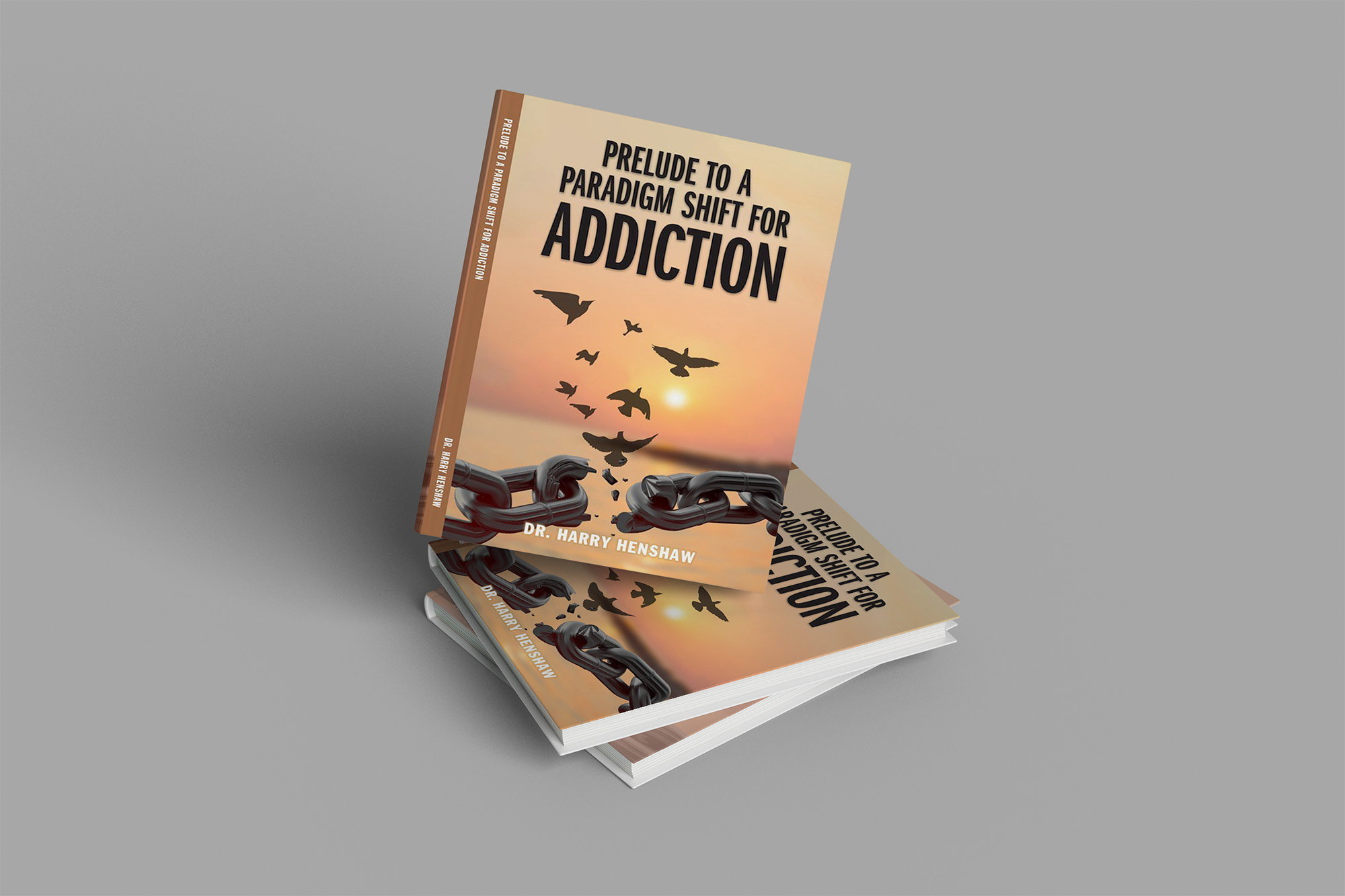
Get Free from Addiction!
Discover a groundbreaking perspective on addiction recovery. Click below to buy Prelude to a Paradigm Shift for Addiction and explore innovative solutions to transform the way we understand and treat substance use disorders.
About Enhanced Healing
Enhanced Healing Counseling specializes in addiction recovery, mental health, and self-esteem support. Offering online and in-person services, we empower individuals to transform their lives with personalized care and proven therapeutic methods.