Table of Contents
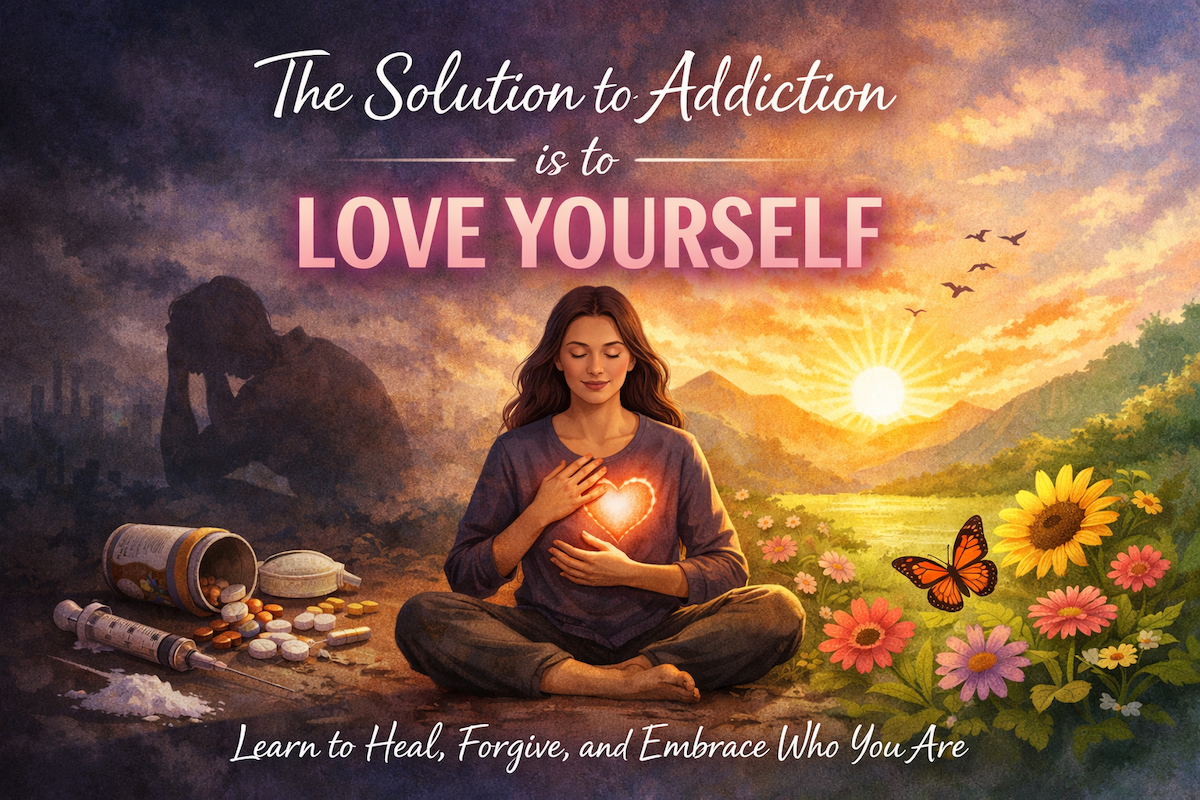
If the true cause of addiction is not a chemical, a drug, or a defective brain—but a painful belief about the self—then recovery must begin where addiction actually begins: in the mind, in the self-image, in the inner conversation. In the framework of Transformation, the actual cause of addictive behavior is the core belief that “I am not good enough,” a belief that produces shame, self-rejection, and a lack of authentic self-love. From that inner wound, a person naturally moves toward self-destructive behaviors that validate the belief and numb the emotional pain it creates.
From this perspective, drugs and alcohol are not the real problem; they are symptoms—tools used for self-harm and self-escape. The addiction is not fundamentally in the body; it is rooted in the person’s perception of themselves, in their psychology and not their physiology.
And if that is true, then the real solution cannot simply be “stop using.” The real solution must be: transform the defining belief of one’s identity, transform the self-image, and awaken authentic self-love.
That’s exactly where the second Principle of Transformation becomes a turning point:
“I choose everything that I experience.”
At first glance, that sentence can feel confronting—especially to someone who has suffered, relapsed, or felt powerless for years. But properly understood, Principle Two of Transformation is not an accusation. It is liberation. It removes the person from the identity of “victim” and restores them to the identity of “creator.” It is the principle that breaks the trance of addiction and returns power to the present moment—where all real change happens.
Addiction’s Hidden Engine: The Core Belief and Its Self-Fulfilling Spiral
When a person believes “I am not good enough,” that belief becomes an internal lens through which everything is interpreted. It doesn’t merely create unpleasant thoughts; it produces an entire emotional climate—shame, anxiety, hopelessness, loneliness, and a chronic sense of being “less than.” And that emotional climate presses the nervous system to find relief.
This is why addictive behavior is so compelling: it provides temporary relief from a self-image that hurts.
But notice the deeper pattern: the belief “I am not good enough” doesn’t just exist in the mind. It seeks confirmation through behavior. As Transformation suggests, when someone believes they are not good enough, they tend to engage in behaviors that “support, reinforce, and even validate” that negative self-belief.
So the spiral often looks like this:
- I feel “less than,” ashamed, anxious, unworthy.
- I use a substance or behavior to escape those feelings.
- The consequences create more shame (and more evidence that I’m “bad”).
- I interpret the shame as proof that I’m not good enough.
- I use again to escape the proof.
In other words, addiction becomes a closed loop of self-validation—a system that continually points back to the same painful conclusion: “I really am not enough.”
If the loop is maintained by unconscious inner choices—choices of interpretation, meaning, and self-labeling—then the way out must involve conscious choice at the level of thought, meaning, language, and identity.
That is what Principle Two of Transformation targets directly.
What Principle Two Really Means: Choice as the Doorway Back to Power
Principle Two of Transformation states:
“I choose all my experiences and how my life is occurring. I decide, moment by moment, what I will think, believe, say, feel, and do, and I also choose the experiences and consequences that naturally follow.”
This principle does not claim that life never brings pain, trauma, loss, or hardship. It claims something far more transformational:
Even when life is painful, I am still choosing how I relate to it, what I believe about myself because of it, and what I do next.
And the most important line may be this:
“Even when I appeared to be on ‘automatic pilot,’ I was still choosing… even if I did so unconsciously.”
That one sentence reframes addiction.
Because addiction is often described as powerlessness. Yet the lived experience of addiction frequently includes moments—small or large—where a person repeats a thought, returns to a story, chooses a meaning, says “it doesn’t matter,” isolates, lies, self-attacks, gives up, and then uses. The person may not experience these moments as “choices” because they occur quickly, habitually, and emotionally. But Principle Two of Transformation teaches: automatic is not the absence of choice; it is unconscious choice.
And if it is unconscious choice, then it can become conscious choice.
That is the beginning of transformation.
The Most Important Place Choice Happens: Thought, Meaning, and Self-Image
The Second Principle of Transformation makes a critical point:
“Every choice I make arises from a deeper context—the thoughts and beliefs I hold about my value and worth as a human being… This inner context is my self-image.”
This is the heart of the model.
A person doesn’t merely choose drugs or alcohol. They choose—often repeatedly—the self-image that makes drugs feel necessary. They choose interpretations like:
- “I can’t handle this.”
- “I’m too damaged.”
- “I always mess things up.”
- “Nothing works for me.”
- “I don’t matter.”
- “I’ll never change.”
These thoughts are not harmless. They are instructions to the nervous system. They generate negative and painful feelings. Those feelings generate cravings. Cravings generate behavior.
So if a person wants to end addiction at its roots, they must learn to make choice conscious at the exact point where addiction is born:
the point of thought.
As the Second Principle of Transformation states:
“When I remember that I am the one choosing my thoughts and beliefs… I recognize that I am the author of my experiences.”
That recognition is not motivational fluff. It is a structural change in an individual’s identity:
- From “I am broken” to “I am the author.”
- From “I can’t” to “I can choose.”
- From “this is happening to me” to “I am creating my experience.”
Once that shift happens, the person is no longer trying to recover while still believing they are powerless. They are recovering as a creator—which is the only position from which lasting transformation makes sense.
Choice Ends the “Victim Identity” Without Creating Shame
A major risk in talking about choice is misunderstanding it as blame.
But Principle Two of Transformation, when taught correctly, does not shame the person. It does the opposite: it returns dignity. It says:
- “You have been choosing, even unconsciously.”
- “Because you’ve been choosing, you can choose differently.”
- “Because you can choose differently, you are not trapped.”
This matters because shame is one of addiction’s strongest fuels. If a person hears “choice” as blame, they may collapse deeper into the belief “I am bad.”
But if they hear “choice” as empowerment, they begin to rise into a new belief:
“I am capable. I am powerful. I can change.”
And that belief is the beginning of authentic self-love—because self-love is not merely a feeling. It is a way of regarding yourself as worthy of change, worthy of effort, worthy of care.
The “Choice Point” Practice: How to Interrupt the Addiction Pattern in Real Time
If addiction is maintained by unconscious choices, then recovery must train a person to locate the “choice point”—the small moment where a new direction becomes possible.
In practice, that moment often appears as:
- a thought (“I can’t take this”)
- an emotion surge (anxiety, shame, anger)
- an urge (craving, impulsivity)
- a trigger (conflict, loneliness, disappointment)
- a story (“it’s always like this”)
Principle Two trains a person to say, in that moment:
- “I am choosing what I think right now.”
- “I am choosing what this means right now.”
- “I am choosing what I do next.”
And then the person makes a new choice—one aligned with self-love and self-respect.
This is not “white-knuckling.” This is authorship.
Choosing New Thoughts Is Choosing a New Life
The Second Principle of Transformation states:
“By choosing new thoughts—loving, encouraging, truthful thoughts about my worth—I begin to release the false belief that I am not good enough… Choosing thought is how I exercise my conscious responsibility and how I use my power to transform my experiences.”
This is the direct mechanism of healing: I choose thoughts that produce a new self-image.
And a new self-image produces new behavior naturally.
When a person genuinely begins to believe:
- “I matter.”
- “I am enough.”
- “I am worthy of care.”
- “I can handle this moment.”
- “I can learn.”
Then drugs and alcohol begin to lose their role. Not because the person is forcing sobriety, but because the emotional function of substances—escape from self—starts dissolving.
Remember: Transformation states that loving yourself is the only true solution, and that transformation counseling requires replacing negative beliefs with authentically positive ones.
Principle Two of Transformation is the how of that replacement—because it makes the inner life something the person can actively direct instead of passively endure.
How Choice Rebuilds Self-Love (Instead of Just Fighting Cravings)
A person trapped in addiction often fights cravings while still hating themselves. That is a fragile recovery, because self-hatred eventually demands relief.
Principle Two of Transformation offers a different path:
Every time I choose in favor of my positive, inherent value and worth as a human being, I strengthen my worth-belief.
Self-love is built in daily decisions, such as:
- choosing honesty over hiding
- choosing support over isolation
- choosing nutrition over neglect
- choosing rest over self-punishment
- choosing forgiveness over self-attack
- choosing “I can learn” over “I’m hopeless”
- choosing “I matter” over “I’m nothing”
These are not small changes. They are identity changes.
And identity change is what ends addiction “forever”—not as a magical guarantee, but as a stable new way of being that no longer requires self-destruction to cope with life.
A Practical Daily Framework for Living Principle Two
Here are concrete practices that align directly with Principle Two of Transformation and the belief-transformation model:
1) The Three-Second Pause
Several times per day—especially when emotionally activated—pause and ask:
- What am I choosing to think right now?
- What am I choosing to believe about myself right now?
- What choice would a person who loves themselves make next?
2) The Thought Audit
Write down recurring self-statements for one day (especially the harsh ones). Then rewrite each as a statement of worth.
- Old: “I always mess up.”
- New: “I am learning. I can choose again.”
This is not denial; it is reprogramming.
3) The Meaning Rewrite
When something painful happens, notice the meaning you give it:
- Old meaning: “This proves I’m not enough.”
- New meaning: “This is a moment to practice choosing self-respect.”
4) Mirror Work and Affirmations
Use affirmations as intentional choices—choices of thought and identity. The goal is not to “feel it instantly,” but to choose it repeatedly until it becomes familiar, then believable, then real.
5) Choose Your Environment
Addictions thrive in isolation and predictability. Choose new inputs:
- supportive people
- recovery literature
- transformational teachings
- structured daily habits
- counseling and group work
Your addiction document emphasizes being open-minded and willing to accept help and guidance from others who live these principles.
Receiving support is a choice—and it is often one of the most self-loving choices a person can make.
6) The “Next Right Choice” Rule
Recovery becomes sustainable when it stops being a giant, terrifying “forever” and becomes one present-moment choice:
- “What is my next right choice?”
Make that choice. Then repeat.
Why This Ends Addictive Behavior at the Root
When Principle Two of Transformation becomes lived reality, three deep changes occur:
- The person stops identifying as powerless.
They begin to identify as an author and creator of experience. - The person stops feeding the “not good enough” belief.
They notice the belief, interrupt it, and choose a new thought. - The person builds authentic self-love through repeated self-respecting choices.
And when self-love grows, the emotional need for self-harm dissolves. As your cause/solution document states, when the person thinks positively about themselves and becomes self-accepting, the desire to use begins to disappear because the person becomes “happy with who [they are] in the present moment.”
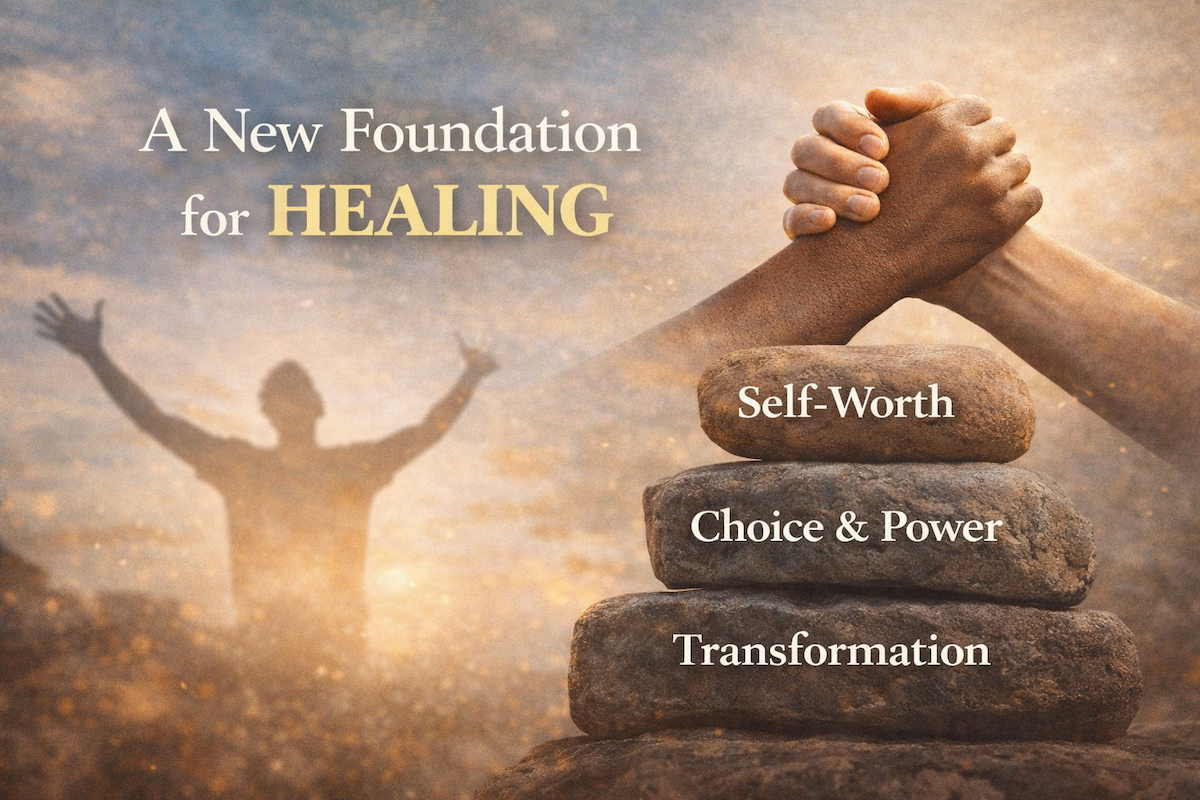
This is the deeper promise of transformation: not merely abstinence, but a new inner foundation, an authentic transformation of self-image.
Conclusion: “I Choose” Is the Sentence That Changes Everything
If the real cause of addiction is the belief “I am not good enough,” then the real solution must be the awakening of a new belief: “I am enough. I matter. I am worthy of love—especially my own.”
Principle Two of Transformation is the bridge between those two worlds.
Because when a person truly accepts “I choose everything that I experience,” they stop waiting to be rescued by circumstances, substances, or other people. They stop rehearsing the identity of a victim. They stop calling their future “hopeless.” And they begin, moment by moment, to choose thoughts, meanings, words, actions, and supports that align with truth instead of self-rejection.
They begin to choose the life they actually want.
And when someone learns to choose from self-love instead of shame, addiction loses its purpose. It no longer has a job to do. The old belief dissolves. The trajectory changes. And the person becomes what they always were underneath the pain:
a worthy human being, capable of transformation—one choice at a time.
Dr. Harry Henshaw
Port Charlotte, Florida
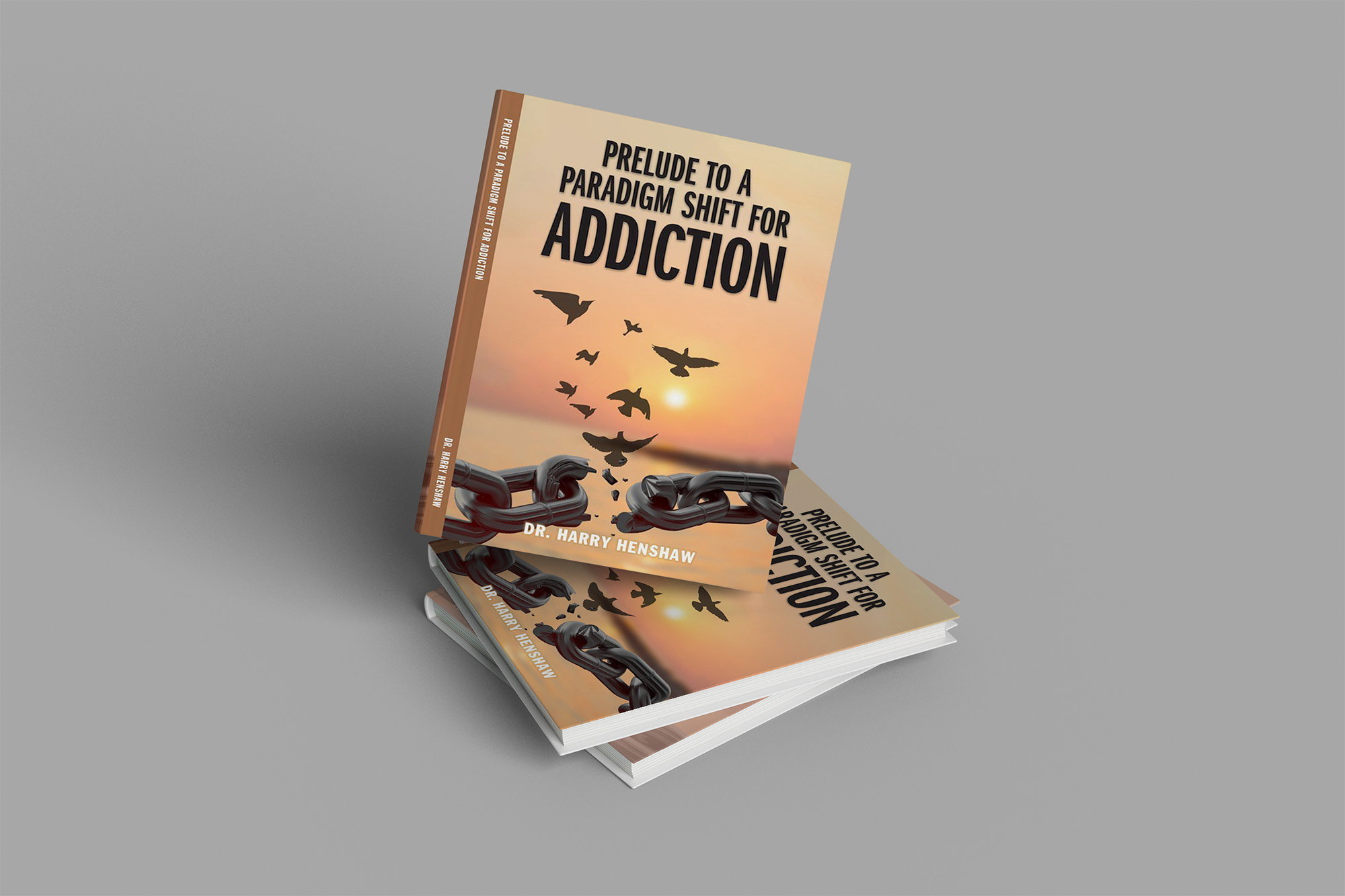
Get Free from Addiction!
Discover a groundbreaking perspective on addiction recovery. Click below to buy Prelude to a Paradigm Shift for Addiction and explore innovative solutions to transform the way we understand and treat substance use disorders.
About Enhanced Healing
Enhanced Healing Counseling specializes in addiction recovery, mental health, and self-esteem support. Offering online and in-person services, we empower individuals to transform their lives with personalized care and proven therapeutic methods.