Table of Contents
“I Am Spirit, Source, Higher Power, God” as the Ultimate Transformation of Self-Belief
Transformation Counseling makes a very specific (and very hopeful) claim: the real cause of addiction is not a substance, not a drug, and not a defective body—it is a belief an individual carries about their value and worth, most often the painful conclusion, “I am not good enough.” From that core belief, addictive behavior becomes a predictable form of self-harm and self-rejection—an attempt to escape, numb, or temporarily silence the inner verdict of inadequacy. And the only true solution is not merely abstinence, but transformation: changing that negative self-belief into a positive, truthful belief about one’s inherent worth, so that authentic self-love becomes natural and sustainable.
The tenth Principle of Transformation, “I am Spirit, Source, Higher Power, God”, directly addresses the deepest layer of that transformation: identity. It says, in essence: “I am not my thoughts. I am not my mind. I am not my past. I am not my roles or reputation. I am not what happened to me. I am not what I fear. I am the awareness behind my thoughts, and I am connected to, and of the same essence as, Spirit.”
When identity changes at that level, the trajectory of addiction can change permanently—not because temptation never appears again, but because the inner foundation is different. The person no longer lives from a self-image of deficiency. They live from a deeper truth: I am whole, I am sacred, I belong, I matter. That shift dissolves the psychological “need” for self-destruction.
What follows is how the tenth Principle of Transformation works—practically, psychologically, and spiritually, to end addictive behavior at its root.
1) Addiction Is a Crisis of Worth Before It Is a Crisis of Behavior
Transformation Counseling frames addictive behavior as the symptom and instrument of a deeper inner wound: the belief that one is inadequate, unworthy, or “less than.” When a person believes they are not good enough, they unconsciously move toward experiences and behaviors that confirm that belief—because the mind will often seek consistency over happiness. This is why addiction can feel fated: the person is living out a story that matches their self-concept.
In that framework, substances are not “the problem” so much as they are a tool used to enact self-harm, self-rejection, and sometimes slow self-erasure. The behavior says, “I don’t matter,” even when the person consciously wants to live.
So the real question becomes: What belief about myself would make self-destruction unnecessary?
And even deeper: Who am I, really, beneath the belief?
That is exactly where Principle Ten enters.
2) Principle Ten Separates “Who I Am” From “What I Think”
Principle Ten begins with a liberating distinction:
- I am not my thoughts or beliefs.
- I am not even my mind.
- My mind is a tool I use.
- My identity is the awareness behind thought.
This is not philosophical fluff. It is clinically and spiritually powerful because addiction is often fueled by mental fusion: the person is merged with self-attacking thoughts.
When someone is fused with the thought “I’m not good enough,” it doesn’t feel like a thought. It feels like a fact—like gravity. And if it feels like a fact, self-harm can feel logical.
But when a person learns—even briefly—to stand in the observer position, a new experience becomes possible:
- “I’m having the thought that I’m not good enough.”
- “That’s a belief I learned.”
- “That thought is not my identity.”
- “I can choose again.”
This is one of the first true moments of freedom.
Principle Ten trains the person to repeatedly return to the seat of awareness—the “I” that witnesses thinking rather than being dominated by it. And from that place, transformation becomes practical: you can’t permanently change a belief you think is your identity, but you can change a belief you recognize as a mental habit.
3) Principle Ten Ends the Search for Worth in the External World
Transformation describes how many people build identity from the external world: roles, possessions, achievements, reputation, relationships, and approval. But all external definitions are unstable. Jobs end. Bodies age. relationships shift. Opinions change. And if “who I am” depends on what changes, then inner security becomes impossible.
This is a hidden engine of addiction: when identity is externally constructed, the person becomes vulnerable to chronic anxiety, disappointment, and shame—especially when life doesn’t match the image they’re trying to maintain.
Addiction often functions as relief from that unstable identity project.
Principle Ten reverses the direction of the search: stop looking outward for “who I am,” and go inward.
When worth becomes inwardly grounded, the person no longer needs chemicals, compulsions, or destructive rituals to escape the pressure of being “someone” for the world. They can rest in being.
And from that rest, self-love becomes far more accessible.
4) Spirit Identity Rewrites the Core Belief: “I Am Not Good Enough”
The addiction belief, as Transformation describes it, is a core self-limiting belief: I am not good enough; I do not matter; I am inadequate.
Principle Ten counters that belief in the most direct way possible: If my true identity is Spirit—if I am an expression of Source—then my worth is inherent, not earned.
This is not denial of human mistakes. It is the end of metaphysical self-contempt.
A person can still take responsibility, make amends, and grow—without concluding they are defective.
Spirit identity produces a new foundational statement:
- “I may have learned painful beliefs.”
- “I may have harmed myself and others.”
- “But my essence is not broken.”
- “I am whole, complete, and sacred.”
- “I can return to what I am.”
The tenth Principle of Transformation makes this explicit: as authentic self-love deepens, the person begins to experience connection to Higher Power and recognizes their identity as whole, complete, and sacred.
That experience is the opposite of addiction. Addiction says, “I am unworthy.” Spirit says, “I belong.”
5) Self-Love, Identity, and Higher Power Become One Process
A key line in Principle Ten is that loving oneself authentically, discovering one’s identity, and connecting with Higher Power are not three separate processes—they are one.
That matters because some people try to recover by “fixing behavior” while still secretly believing they are unworthy. That approach is fragile. It turns sobriety into punishment and recovery into a performance.
Principle Ten offers a different arc:
- I practice new thoughts of self-respect and self-acceptance.
- That creates the emotional space for genuine self-love.
- In that love, I rediscover who I truly am.
- In rediscovering who I am, I feel connection to Source.
- In that connection, the need for self-harm dissolves.
Your addiction document states plainly: the only solution is learning authentic self-love through replacing negative beliefs with positive beliefs—until the person experiences themselves as “perfect, whole, and complete,” and no longer desires drugs, alcohol, or other self-destructive behaviors.
Principle Ten is the spiritual culmination of that same mechanism: it completes the transformation by rooting self-love in spiritual identity rather than in performance.
6) “I Am God” as a Healing Perspective (Not a Personal Ego Claim)
Principle Ten references Wayne Dyer’s perspective: that affirming “I am God” can be understood not as arrogance, but as recognition of spiritual identity and oneness with Source.
This is important to handle carefully. In the transformational context, it doesn’t mean, “My personality is supreme.” It means:
- “The life in me is of the same essence as the Source of life.”
- “I am not separate from Love.”
- “I do not have to beg for worth; I can remember it.”
For many addicted individuals, the deepest wound is separation—feeling cut off from love, belonging, dignity, and hope. Principle Ten dissolves separation at the root.
And when separation dissolves, the psychological logic of addiction weakens dramatically.
7) Principle Ten Changes the Moment of Craving Into a Moment of Return
Craving is often interpreted as an emergency: “I need something right now.” But under your framework, craving is frequently the surface expression of an older pain: shame, fear, loneliness, self-attack, or the belief “I can’t handle this.”
Principle Ten trains a new response:
- “This craving is not me.”
- “This discomfort is not proof that I’m broken.”
- “This is a signal to return to Spirit.”
- “My power is in my connection.”
- “I can come back to myself.”
In practical terms, Principle Ten turns relapse prevention into a spiritual practice of reconnection.
Instead of fighting cravings like an enemy, the person learns to outgrow them by meeting the underlying belief with truth:
- Old belief: “I’m not good enough.”
- New truth: “I am Spirit. I am whole. I matter.”
Over time, the nervous system learns that discomfort can be held without self-harm. This is how new freedom becomes embodied.
8) Daily Practices That Make Principle Ten Real
Principle Ten must be lived, not merely stated. Here are practical ways individuals can “install” this identity shift so it becomes stable:
Spiritual self-inquiry (identity practice)
Ask daily:
- “What am I believing about myself right now?”
- “Is that belief absolutely true?”
- “Who am I beneath this thought?”
This aligns directly with “I am not my thoughts… I am the awareness behind my thoughts.”
Meditation and stillness (witness training)
Even 5–10 minutes of quiet trains the ability to observe thoughts without obeying them—one of the most direct antidotes to compulsion.
Affirmations that target worth (belief replacement)
Your addiction document emphasizes replacing negative beliefs with positive beliefs until self-love becomes real.
Examples aligned with Principle Ten:
- “I am enough as I am.”
- “My worth is inherent.”
- “I am guided and supported by Source.”
- “I forgive myself and return to love.”
Mirror work and self-acceptance (love embodiment)
When a person looks at themselves and practices respect and approval, they are actively dismantling the shame that fuels relapse.
Prayer as relationship (connection)
Prayer here is not begging—it is remembering connection:
- “Help me return to who I am.”
- “Help me see myself with love.”
- “Help me choose life.”
Service and contribution (identity reinforcement)
Acts of kindness reinforce a new self-concept: “I matter. I can give. I belong.” Not as earning worth—but as expressing it.
9) Why This Principle Can End Addiction “Forever”
To say “forever” responsibly means: the inner mechanism that creates addiction loses its power because the person no longer needs self-harm to cope with a self-image of deficiency.
Your addiction document describes the mechanism clearly: when the person believes they are not good enough, they behave in ways that reinforce that belief; when they change the belief to a positive one and develop authentic self-love, the desire for self-destruction ends.
Principle Ten completes that solution by giving the person a new identity foundation:
- Not a defective self trying to become worthy,
- But a worthy spiritual being learning to remember what is true.
When identity shifts from “I am broken” to “I am Spirit,” the entire emotional economy changes:
- Shame decreases.
- Hope increases.
- Self-care becomes logical.
- Integrity becomes natural.
- The future opens.
And the addiction pattern—built on self-rejection—no longer has a home inside the person.
Conclusion: The Deepest Recovery Is Remembering Who You Are
Principle Ten is the culmination of transformation because it answers the question behind every addictive cycle:
“Who am I, really?”
If the person answers that question with a painful belief—I am not good enough—then self-harm will always be tempting.
But if the person answers with spiritual truth—I am Spirit, Source, Higher Power; I am whole; I am love in expression—then the entire trajectory changes. The person stops chasing worth, stops proving worth, stops punishing themselves for not having worth, and begins living from a stable inner foundation.
And from that foundation, the work of recovery becomes what it was always meant to be:
Not a lifelong war with desire,
but a daily return to love, identity, and truth—
until addiction has nothing left to attach to.
Dr. Harry Henshaw
Port Charlotte, Florida
Positive Affirmation Recordings
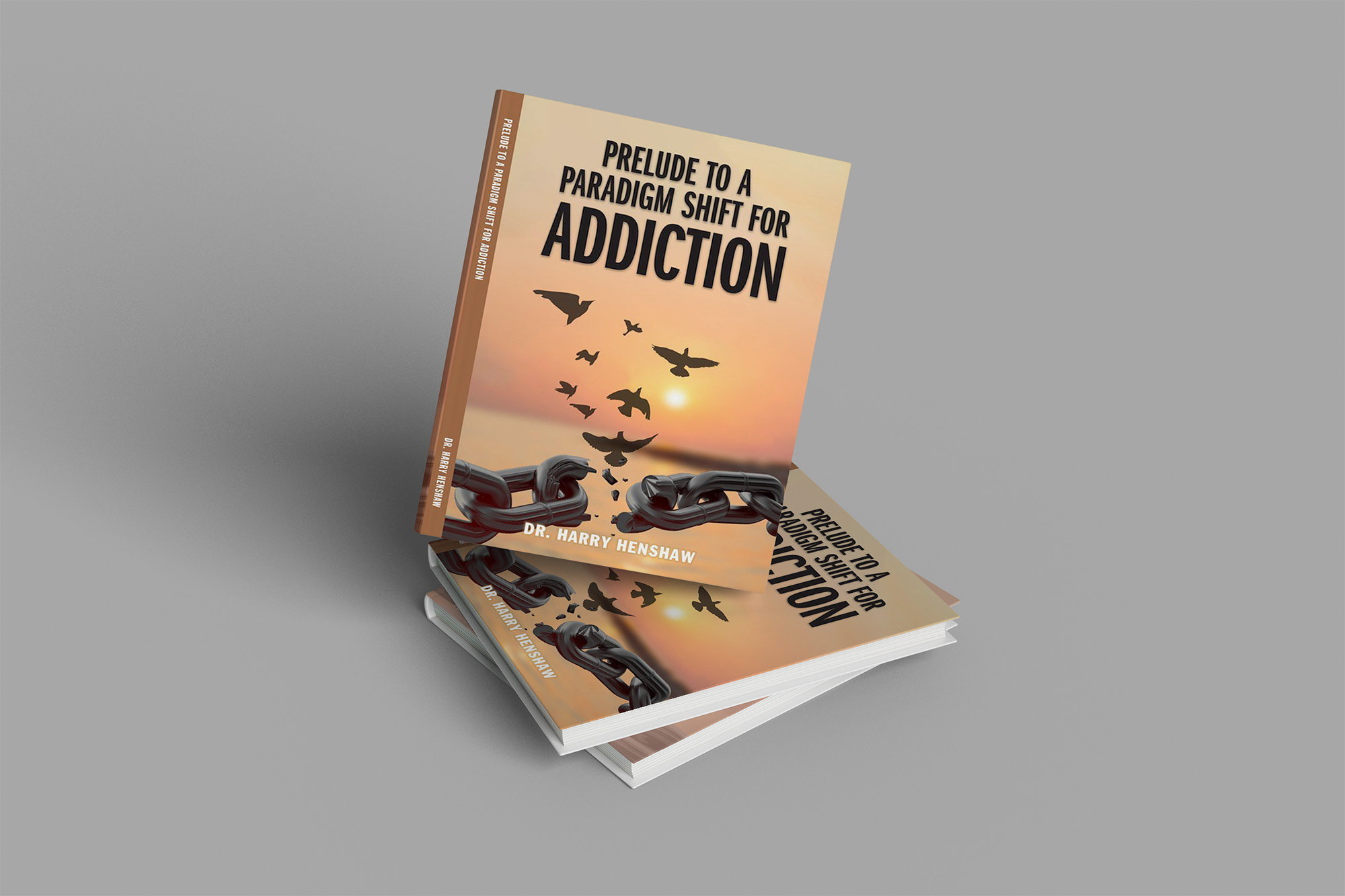
Get Free from Addiction!
Discover a groundbreaking perspective on addiction recovery. Click below to buy Prelude to a Paradigm Shift for Addiction and explore innovative solutions to transform the way we understand and treat substance use disorders.
About Enhanced Healing
Enhanced Healing Counseling specializes in addiction recovery, mental health, and self-esteem support. Offering online and in-person services, we empower individuals to transform their lives with personalized care and proven therapeutic methods.