Table of Contents
If the true cause of addiction is not the substance, not the brain, and not an external “power,” but a negative belief about personal value and worth—I am not good enough—then the deepest work of recovery must address that belief directly. In that framework, drugs and alcohol are symptoms and instruments of self-harm, not the originating cause. The addictive behavior is the outward expression of an inward self-image wound: a person repeatedly thinks and believes they are inadequate, and their behavior begins to match and validate that painful identity. According to cognitive behavioral philosophy, the core driver of addictive behavior is a thought or belief, and substances become the tools used to reinforce and even “prove” the belief through self-destructive living.
This is why the first Principle of Transformation—“I am responsible for all my experiences”—is not just a philosophical idea; it is a practical doorway into freedom. When an individual genuinely accepts responsibility for what they think, believe, say, feel, and do, they stop living as a powerless victim of cravings, triggers, the past, or other people. They reclaim authorship over the inner world that generates the outer life. And once a person becomes the author again, they can rewrite the one sentence that keeps addiction alive: I am not enough.
Addiction as a Life Trajectory Powered by Self-Belief
When someone believes, at the level of identity, “I am not good enough,” they don’t merely feel bad; they begin to live that belief. The belief shapes perception (“nothing works out for me”), emotion (shame, anxiety, depression), and behavior (avoidance, sabotage, self-medication). Over time, this becomes a trajectory—an invisible momentum toward experiences that match the internal story.
According to a cognitive paradigm and Transformation Counseling, a negative core belief leads a person to engage in behaviors that support, reinforce, and validate that belief, and that substances are not the real problem, but a symptom and an instrument used to self-harm.
In other words, the addiction is not random. It “makes sense” inside the logic of the wounded self-image.
That’s also why many people relapse even after detox, treatment, or long stretches of abstinence: because abstinence alone does not automatically transform self-image. If the identity-level belief remains—I am broken, I am less-than, I don’t matter—then the person is still living with the same inner pain and the same inner script. Without a new script, the old coping mechanism returns.
What Responsibility Really Means (And What It Does Not Mean)
Principle One can be misunderstood if it’s heard through shame. Responsibility is not the same as condemnation. It does not mean: “Everything is my fault, I’m bad, I deserve punishment.” It means: “I am the creative power in my life, and I can change what I create.”
According to the first Principle of Transformation this distinction is clear: accepting responsibility is not about harsh blame; it is about recognizing that the individual has been the creative power behind their patterns—and therefore also has the power to create new ones.
That single clarification is crucial for people in addiction recovery, because shame is one of addiction’s favorite fuels. Shame says, “You’re hopeless.” Responsibility says, “You’re powerful.”
So responsibility is not a burden. It’s a liberation. It ends the exhausting search for someone or something else to “fix me” from the outside, and it begins the real work: transforming the inside.
Why Responsibility Ends the Victim Identity That Addiction Needs
Addiction thrives in the victim identity. Not because people are weak—but because victim consciousness convinces a person they cannot change. It says:
- “This is happening to me.”
- “I can’t help it.”
- “My past made me this way.”
- “I’m powerless when the craving hits.”
- “Other people cause my feelings.”
According to the first Principle of Transformation, the victim identity is a thought pattern that avoids full responsibility, gives away power, and makes life seem determined by outside circumstances rather than inner choices.
When someone clings to victim identity, they unconsciously protect the addiction, because addiction depends on the belief that change is impossible or out of reach.
Responsibility reverses that. It says:
- “I can observe my thoughts.”
- “I can interrupt my patterns.”
- “I can choose new beliefs.”
- “I can respond differently.”
- “I can create a new experience starting now.”
This shift is the first major “break” in the negative trajectory. Because the trajectory isn’t ultimately powered by the drug—it’s powered by the belief and the identity that the person is stuck with that belief forever.
Responsibility Targets the True Cause: Repeated Thoughts Become Beliefs
If addiction is caused by a core belief—I am not good enough—then we have to ask: how does that belief stay alive?
It stays alive through repetition:
- repeated negative thoughts,
- repeated negative self-talk,
- repeated negative interpretation,
- repeated emotional rehearsals,
- repeated “proof” gathered from life to support it.
According to the first Principle of Transformation, the individual is responsible for their experiences because they accepted, repeated, and agreed with certain negative ideas early in life, and over time used them to shape beliefs about value and worth—the core of the self-image.
That’s the mechanism: repetition becomes reality.
Responsibility helps because it brings the mechanism into awareness. Instead of “my feelings control me,” the person learns, “my thoughts generate my feelings, and I can change my thoughts.” And instead of “life keeps hurting me,” the person learns, “my self-image is filtering what I notice, choose, tolerate, and attract.”
This is not abstract. It becomes intensely practical the moment a person starts catching the real trigger—not the bar on the corner, not the friend who uses, not the stressful day—but the internal sentence that fires first:
- “I can’t handle this.”
- “I’m not enough.”
- “I’ve already ruined everything.”
- “It doesn’t matter.”
- “I don’t matter.”
Responsibility turns the lights on in the room where addiction is actually operating.
How Principle One Changes the Trajectory in Real Time
A “trajectory” changes the moment a person changes the cause. Principle One of Transformation changes the cause in three immediate ways:
1) It returns power to the individual
When a person says, “I am responsible,” they stop waiting for motivation, perfect circumstances, or someone else’s behavior to change first. They become active rather than reactive. This is why Principle One of Transformation calls responsibility “the greatest source of freedom,” because it reminds the person that in every moment they can think differently, choose differently, and create differently.
2) It reveals where the real work is
Instead of fighting cravings as if they are an external enemy, the person learns to address the inner pain and the inner self belief that produces the craving. According to the philosophy of Transformation the cause of addictive behavior is in the mind—psychology and thinking—not in the body.
So responsibility directs attention to the true battlefield: the individual’s self-image.
3) It ends the “excuse loop” that keeps relapse possible
If addiction is explained as something that happens to the person, relapse always has a doorway. Responsibility closes that doorway—not with fear, but with clarity: “If I created this pattern, I can create a new one.”
Responsibility Leads to the Only Solution: Authentic Self-Love
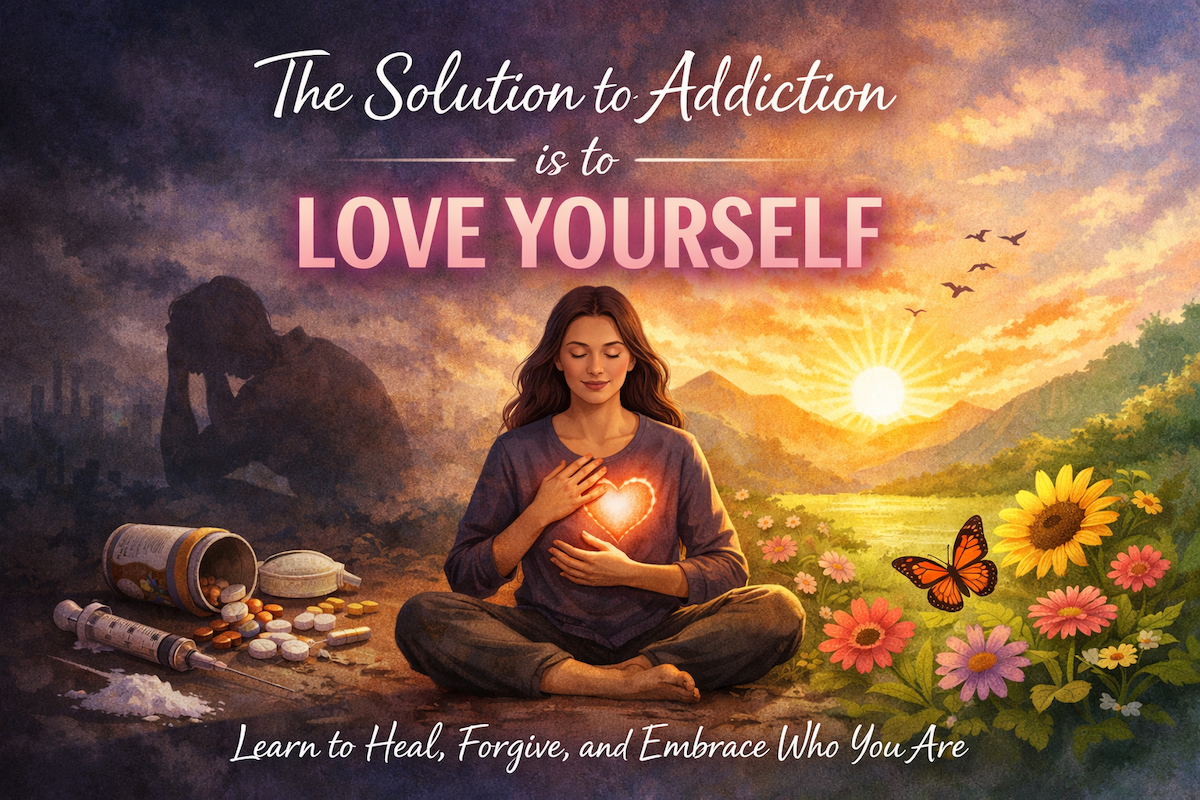
If the cause is lack of authentic self-love rooted in negative self-belief, then the solution is learning to respect, accept, approve, and love oneself in the present moment. That is a clear message generated from the philosophy of Transformation and Transformation Counseling: loving yourself is the only solution, and transformation requires replacing negative beliefs with positive beliefs until the person experiences themselves as good enough, whole, complete, and worthy.
But here is the key: self-love is not a feeling you wait for—it is a practice you take responsibility for and generate yourself.
Responsibility makes self-love actionable:
- If I am responsible for what I believe, I can choose new beliefs.
- If I am responsible for what I say to myself, I can change my inner language.
- If I am responsible for how I treat myself, I can stop self-abandonment.
- If I am responsible for my healing, I can commit to daily practices.
This is why responsibility is the “first” principle: without it, self-love remains an idea; with it, self-love becomes a daily discipline.
A Responsibility-Based Path to Ending Addiction Forever
Here is what “I am responsible for all my experiences” looks like when it becomes a recovery plan—not just a statement.
Step 1: Tell the truth about the core belief
Name it clearly, without drama:
- “I have been believing I am not good enough or I am not enough.”
This removes confusion. It identifies the real cause.
Step 2: Separate responsibility from shame
Use your own framing:
- “This is not harsh blame. This is reclaiming my creative power.”
If shame enters, responsibility collapses into self-attack—and self-attack feeds relapse.
Step 3: Begin daily “thought accountability”
Several times a day, ask:
- “What am I telling myself right now?”
- “Would I say this to someone I love?”
- “Is this thought building my life—or destroying it?”
The goal is not perfection. The goal is awareness and interruption.
Step 4: Replace the belief with chosen truth
Transformation Counseling is direct: negative ideas must be given up and replaced with positive thoughts and beliefs until the person comes to believe they are enough. That means using positive affirmations, mirror work, journaling, and present-moment recommitment aren’t “extras”—they are the mechanism of change.
Examples:
- “I am enough.”
- “I matter.”
- “I approve of myself.”
- “I am willing to learn to love myself.”
Step 5: Take responsibility for environment and support
Responsibility is internal, but it expresses externally. It includes choosing:
- sober supports,
- healthier friendships,
- recovery structure,
- counseling or groups,
- daily routines that protect the new identity.
Transformation Counseling also notes that transformation requires openness, willingness, and help from others who live these principles.
That is responsibility too: I choose support because I value my life.
Step 6: Interpret relapse triggers as negative self-image alerts
Instead of “something is wrong with me,” use:
- “This is my old belief asking for attention.”
- “Where am I telling myself I’m not enough today?”
Then return to practice, immediately.
The Deepest Outcome of Responsibility: A New Identity
People don’t end addiction forever merely by resisting urges. They end addiction forever by becoming someone who no longer needs the urge and the use of drugs and alcohol.
When the core belief changes:
- self-attack becomes self-care,
- shame becomes compassion,
- escape becomes presence,
- self-harm becomes self-respect.
And when that shift stabilizes, the addictive behavior becomes unnecessary—because the individual is no longer living in the inner condition that addiction was trying to anesthetize.
This is the ultimate gift of Principle One. It does not merely say, “You are responsible.” It says, “You are powerful enough to transform.”
Conclusion: Responsibility Is the First Door Out of the Old Life
If addiction is rooted in the belief “I am not good enough,” then recovery must become a transformation of self-image, self-talk, and self-worth. According to the philosophy of Transformation, drugs and alcohol are not the cause, but symptoms of a wounded relationship with self—and that authentic self-love is the only solution.
The first Principle of Transformation is what makes that solution possible, because it returns the individual to the driver’s seat of their life.
Responsibility ends victimhood. Responsibility ends the excuse loop. Responsibility reveals the true trigger—negative self-belief—and directs daily effort toward replacing it with life-affirming truth. Most importantly, responsibility creates a new identity: not “addict,” not “broken,” not “less-than,” but a person who is learning—day by day—to approve of themselves, accept themselves, and love themselves in the present moment.
And when that becomes real, addiction loses its job. It no longer has a purpose, a place, or a future. At this point, addictive behavior will end forever.
Dr. Harry Henshaw
Port Charlotte, Florida
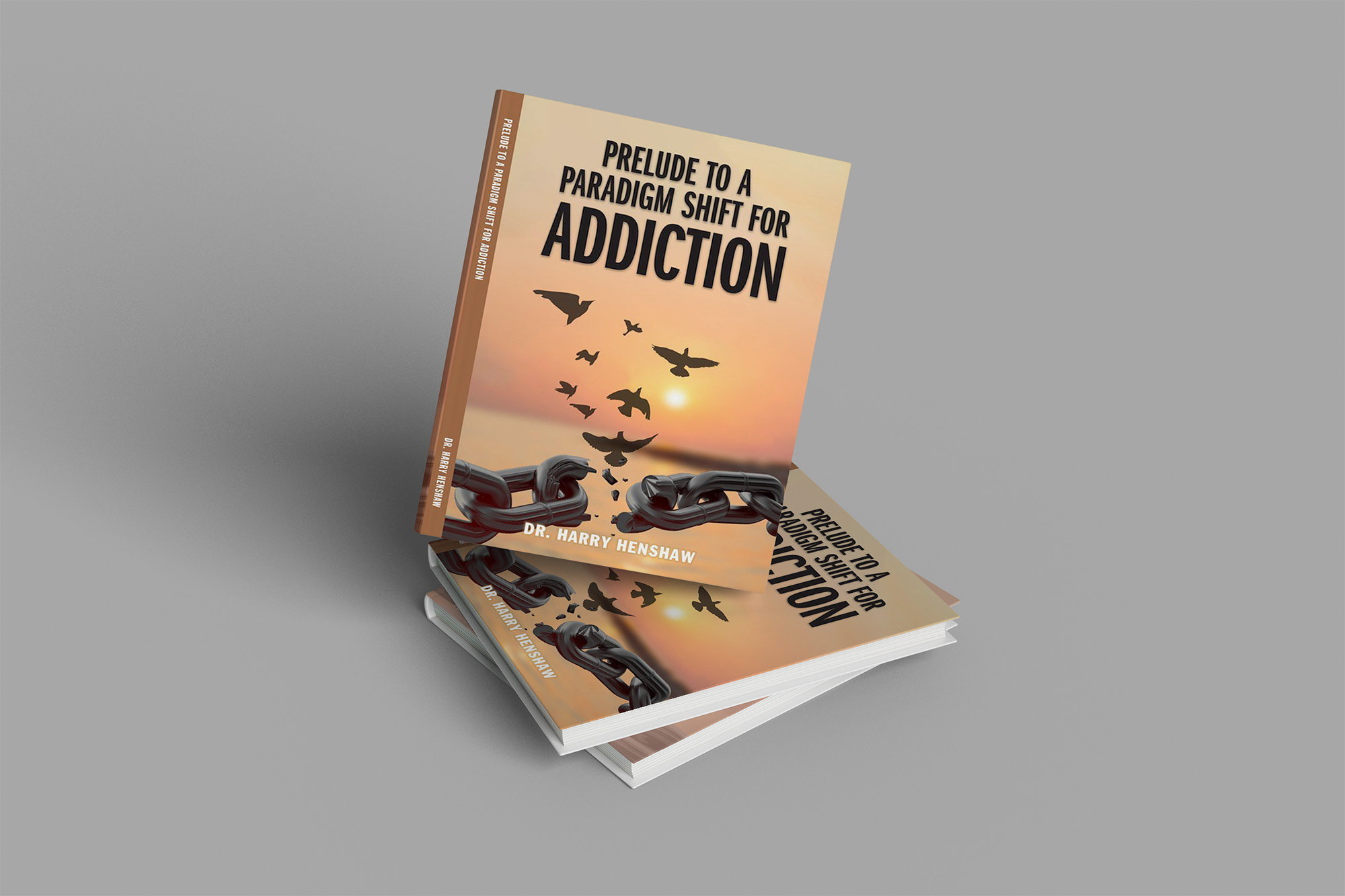
Get Free from Addiction!
Discover a groundbreaking perspective on addiction recovery. Click below to buy Prelude to a Paradigm Shift for Addiction and explore innovative solutions to transform the way we understand and treat substance use disorders.
About Enhanced Healing
Enhanced Healing Counseling specializes in addiction recovery, mental health, and self-esteem support. Offering online and in-person services, we empower individuals to transform their lives with personalized care and proven therapeutic methods.