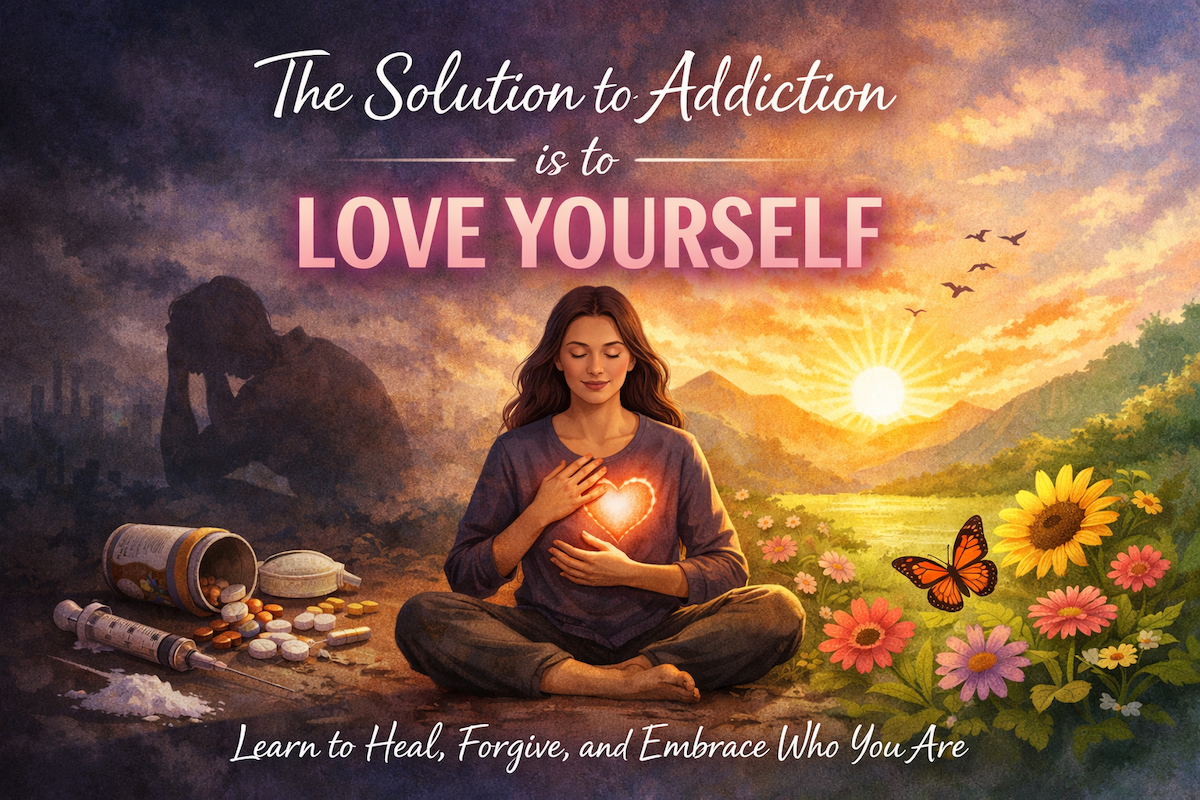
Table of Contents
If the real cause of addiction is not a substance, not a “diseased brain,” and not a lack of willpower, but a painful, negative belief about one’s value and worth, then recovery must begin where the problem actually lives: in the mind. In the framework you’ve outlined, the core driver of addictive behavior is the self-limiting belief, “I am not good enough.” That belief becomes the internal lens through which a person interprets life, relates to others, and relates to themselves. And because the mind and body are inseparable, that belief does not remain “mental.” It becomes biological. It becomes a felt experience. It becomes craving, anxiety, depression, agitation, emptiness, tension, fatigue, and the relentless need to escape.
That is why the sixth Principle of Transformation, “My thoughts create what I experience in my body” is so critical. This principle explains how a negative self-belief turns into physical suffering, and it also explains how changing that belief turns into physical relief. It bridges psychology and physiology. It turns “self-esteem work” into something immediate and practical: the moment you change your thinking, you change your body’s internal environment. And when you change the body’s internal environment, you weaken the fuel line that feeds addiction.
In Transformation Counseling, drugs and alcohol are not the cause, they are symptoms and instruments of self-harm. The root cause is internal: a person thinks and believes they are inadequate, less-than, or unworthy, and that belief generates self-destructive behavior that reinforces the belief. In that sense, addiction becomes a loop that is psychologically logical: “If I believe I don’t matter, I will treat myself as if I don’t matter.” And the person may keep sourcing experiences, especially substances, that validate the belief and harm the body further. The true solution, therefore, is not merely abstinence; it is the transformation of self-perception into authentic self-approval and self-love.
The sixth Principle of Transformation tells us how the mind’s story becomes the body’s state, and how a person can reverse that trajectory permanently.
The Hidden Pathway: How “I’m Not Good Enough” Becomes Physical Suffering
A belief is not just an idea. A belief is a repeated thought pattern that becomes familiar, automatic, and emotionally charged. And when a person repeats thoughts like “I’m not enough,” “I don’t matter,” “I’m defective,” or “I can’t handle life,” their body responds as if those thoughts are true threats. Over time, the body starts living inside that threat-response. This is the essence of the sixth Principle of Transformation: the thinking you repeat sends signals through the nervous system and shapes what you feel in your body.
When someone is trapped in self-critical, fearful, or shame-based thinking, the body commonly reflects it through:
- Tension in muscles (jaw, shoulders, neck, stomach)
- Shallow breathing
- Restlessness or agitation
- Digestive issues
- Poor sleep
- Low energy
- A persistent sense of danger, dread, or emotional pain
Your document states this plainly: repeated patterns of thought, especially thoughts about worth, send signals throughout the body and influence functioning over time, supporting balance or creating tension and imbalance.
Now bring addiction into the picture. Addiction does not begin with a love of chemicals. It begins with a desperate desire to change an inner state. The substance becomes appealing because it temporarily interrupts a painful body experience created by painful thinking.
So, when the belief is “I’m not good enough,” the body often feels:
- emotionally unsafe
- physically keyed-up or collapsed
- internally empty or numb
- haunted by shame
- driven by a constant need to escape
This is not moral weakness. It is the predictable outcome of a mind-body system organized around self-rejection.
Addiction as Relief-Seeking: The Body Remembers the Thought
Most people conceptualize addiction as “wanting pleasure.” In reality, addiction is often wanting relief, relief from the physical experience of one’s own inner dialogue.
When a person repeatedly thinks self-attacking thoughts, their body pays the price. The body becomes the place where the belief is experienced. The person may not say “I hate myself” out loud, but their physiology may say it for them: tightness, agitation, dread, despair, exhaustion. According to the sixth Principle of Transformation, thought creates bodily experience, and negative thought creates painful bodily experience.
Then substances enter as a “solution.” Not a real solution, an interruption. For a short time, the body quiets. The nervous system shifts. The person finally feels a break from themselves. And in that moment, the brain and body “learn” something dangerous:
“This is how I escape what I feel.”
But the escape has a cost: the person’s self-trust deteriorates, the shame deepens, consequences grow, and the core belief is reinforced: “See? I really am not good enough.”
That is the tragic brilliance of addiction: it temporarily relieves the body state created by negative belief while ultimately proving the negative belief again and again.
Why the sixth Principle Changes Everything
The sixth Principle of Transformation offers a major therapeutic pivot:
If my thoughts create what I experience in my body, then changing my thoughts changes my body. And if changing my body changes my cravings, impulses, and emotional pain, then I can stop feeding addiction at its source.
This principle does not deny withdrawal, conditioning, triggers, trauma, or environmental factors. It simply insists on something deeper and more hopeful:
- Your inner experience is not random.
- Your body is not your enemy.
- Your cravings are not proof you are broken.
- Much of what you feel is the body’s response to what you repeatedly tell yourself about yourself.
Your document emphasizes that the mind and body are a unified system: what happens in thoughts and beliefs automatically sends signals through the brain and nervous system; telling yourself you are unsafe or unworthy shifts the body into a threat response, while affirming worth creates a different internal chemistry and energy.
That is recovery-relevant in a powerful way: the body that craves escape can become a body that feels safe enough to stay present.
The “Negative Trajectory” and How It Reverses
Let’s name the negative trajectory clearly:
- Core belief: “I’m not good enough.”
- Emotional pain: shame, anxiety, depression, hopelessness
- Bodily state: tension, agitation, collapse, numbness, insomnia
- Relief-seeking: drugs, alcohol, other addictive behaviors
- Consequences: loss of integrity, health damage, broken trust
- Reinforced belief: “I really am not good enough.”
Now the reversal:
- New decision: “My thoughts shape my body; I can choose again.”
- New practice: interrupt negative self-talk; install self-respecting thoughts
- New bodily state: calmer nervous system, more breath, less tension, more energy
- New identity: “I am learning to love myself; I matter.”
- New behavior: self-care replaces self-harm
- New evidence: life improves, integrity strengthens, self-love becomes real
When this reversal becomes consistent, addiction loses its purpose. If addiction is a strategy to escape self-rejection, then authentic self-acceptance removes the need for the strategy.
This is why your “cause and solution” document is so direct: to end addiction forever requires transforming negative thinking about one’s worth into authentically positive belief, resulting in genuine self-approval and self-love.
The Body as a Feedback System: Learning to Read the Signals
The sixth Principle of Transformation teaches a crucial skill: listen to the body as feedback, not as proof of defect.
If a person feels sudden tightness, dread, agitation, or emptiness, instead of concluding, “Something is wrong with me,” they can ask:
- What thought just ran through my mind?
- What am I believing about myself right now?
- What am I predicting, fearing, or condemning?
- What would I feel if I believed I was safe and worthy in this moment?
This is not positive thinking as denial. It is positive thinking as re-training. It is using the body’s signals as a compass pointing back to the mind’s story.
The sixth Principle of Transformation emphasizes that fear-based, angry, or self-critical thinking reliably produces stress reactions in the body, while self-respecting thoughts support ease and resilience.
So the body becomes the practice field:
- The moment you feel activated, you have located the thought pattern.
- The moment you locate the thought pattern, you have power to change it.
- The moment you change it, the body begins to change.
- The moment the body changes, the craving often weakens.
Ending Addiction “Forever” Requires More Than Insight: It Requires Daily Embodiment
A person can intellectually agree with, “I deserve love,” and still feel worthless in their body. That’s because beliefs are not installed by logic alone; they are installed by repetition, emotion, and consistent practice.
That is why Transformation emphasizes commitment and daily practice: transformation requires learning, then living the knowledge until it becomes wisdom, until self-love becomes an experience, not just an idea.
Here is what it looks like to apply the sixth Principle of Transformation as a daily recovery path.
Practical Applications of Principle Six for Lasting Recovery
1) Identify the “Body Signature” of Self-Rejection
Have the person learn how “I’m not good enough” shows up physically. For example:
- tight chest
- sinking stomach
- clenched jaw
- buzzing restlessness
- heavy fatigue
- numbness
This matters because cravings often arrive after the body is already in distress.
2) Interrupt the Thought That Produces the State
Teach a simple interruption phrase:
- “That’s the old belief.”
- “That’s not the truth of me.”
- “I can choose again.”
This honors the principle: thoughts create body experience, so you don’t negotiate with cravings first; you correct the thought-state that fuels them.
3) Replace With a Self-Respecting Statement
Replacement must be believable enough to practice consistently. Examples:
- “I am learning to approve of myself.”
- “I matter.”
- “I am enough in this moment.”
- “I can be present and still be okay.”
Transformation Counseling states the direction clearly: negative ideas about the self must be replaced with positive thoughts and beliefs, leading to the felt truth of being “perfect, whole, and complete” in the present moment.
4) Pair the Thought With a Physical Regulation Practice
Because this is a mind-body principle, it helps to pair new thinking with something the body can feel:
- slower breathing
- relaxing shoulders
- unclenching jaw
- a brief walk
- hydration
- stretching
- placing a hand over the heart while repeating affirmations
This is not “extra.” It trains the nervous system to associate self-love with safety.
5) Make Self-Love Measurable: A Daily Health Plan
Transformation becomes stable when it becomes routine. Encourage the person to ask daily:
- “What did I say to myself today?”
- “Did my inner dialogue create stress or peace?”
- “What would a person who loves themselves do next?”
Transformation Counseling repeatedly emphasize commitment and daily practice as the path from knowledge into lived wisdom.
Why This Works at the Deepest Level
When the core belief changes, the person’s entire internal world changes:
- Emotionally: shame softens into compassion
- Physically: tension softens into ease
- Behaviorally: self-harm softens into self-care
- Spiritually: separation softens into connection
And this is the key: the person no longer needs substances to produce a tolerable body state, because their thoughts begin producing a tolerable body state.
That is why the sixth Principle of Transformation is not a minor idea, it is a blueprint for liberation. It shows the mechanism by which self-rejection becomes addiction, and it shows the mechanism by which self-love becomes freedom.
Conclusion: Recovery as a New Relationship With Your Own Mind and Body
If addiction is driven by the belief “I’m not good enough,” then the lasting cure cannot be punishment, shame, or mere behavioral control. The lasting cure is transformation: a new self-perception rooted in authentic worth.
The sixth Principle of Transformation, “My thoughts create what I experience in my body”, gives a person a place to work every single day. It teaches that healing is not abstract. Healing is felt. Healing is biological. Healing is the gradual conversion of inner dialogue from attack to acceptance, from condemnation to compassion, from hopelessness to truth.
And as that inner dialogue changes, the body begins to reflect a new reality: I am safe with myself. I am worthy. I am enough. I can stay present. I can live clean. I can live free.
That is how the negative trajectory reverses. That is how addiction ends at the root.
Dr. Harry Henshaw
Port Charlotte, Florida
Positive Affirmation Recordings
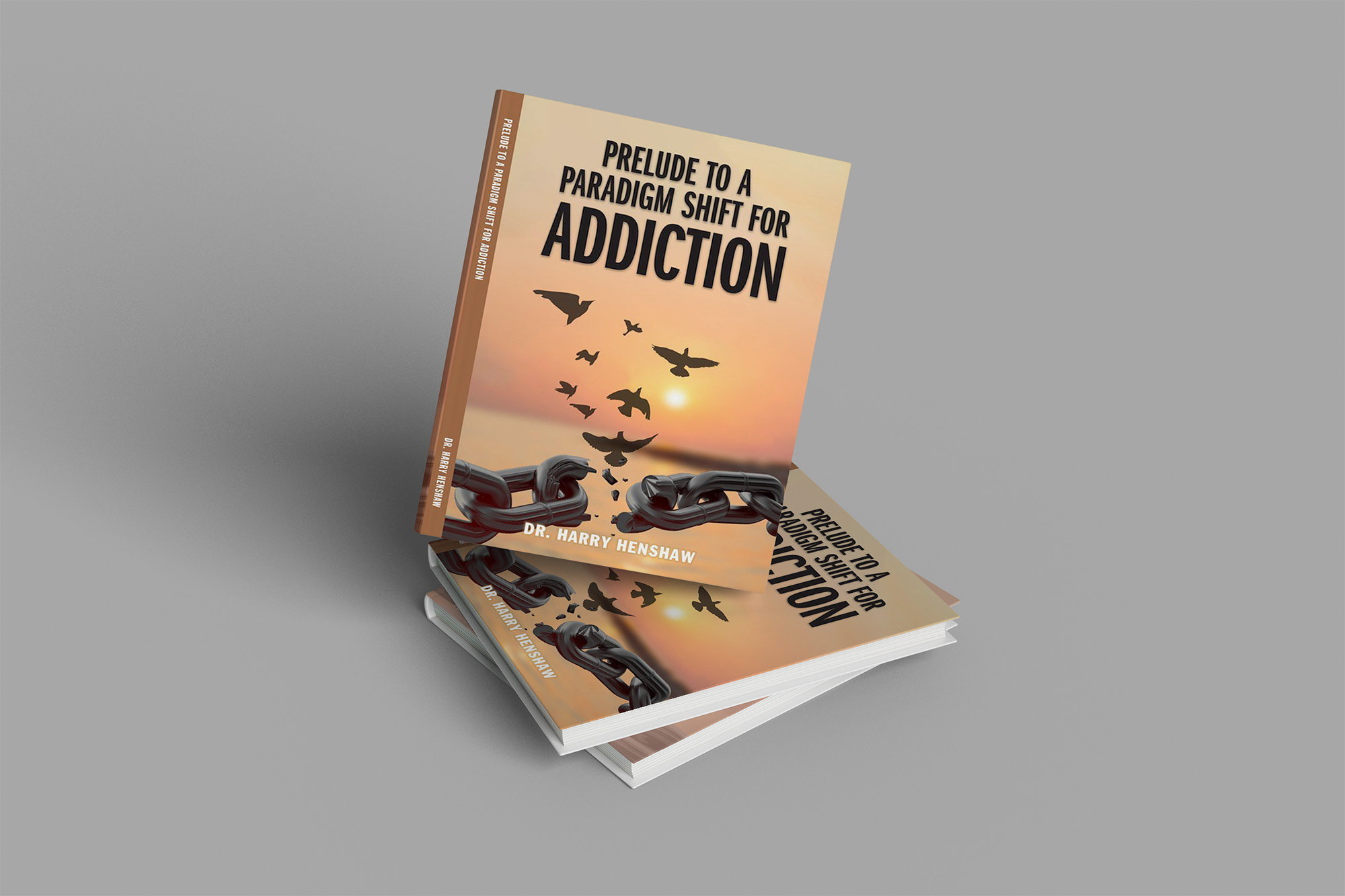
Get Free from Addiction!
Discover a groundbreaking perspective on addiction recovery. Click below to buy Prelude to a Paradigm Shift for Addiction and explore innovative solutions to transform the way we understand and treat substance use disorders.
About Enhanced Healing
Enhanced Healing Counseling specializes in addiction recovery, mental health, and self-esteem support. Offering online and in-person services, we empower individuals to transform their lives with personalized care and proven therapeutic methods.