Table of Contents
Reclaiming the Authorship of My Life
There was a pivotal moment in my journey when the course of my life quietly shifted.
Until then, life felt like something that just happened to me. Other people’s actions seemed aimed at me, and circumstances hemmed me in. Substances sometimes took control, driving my choices. Emotions crashed over me like waves I couldn’t escape. I felt pushed, pulled, and tossed by events, cravings, fears, and memories. Often, I saw myself as a pawn in life’s game, at the mercy of others and outside forces. The story in my mind went something like this:
“If they hadn’t treated me that way, I wouldn’t be like this.”
“If I hadn’t gone through what I did as a child, my life would be different.”
“If I didn’t have this disease, I wouldn’t keep relapsing.”
“Life keeps throwing things at me. I can’t win.”
Sometimes, events unfolded and I responded, with outcomes that favored me. Other times, things didn’t go my way, and I felt like a victim.
Then, one day—through reading a book, talking with a friend, watching a video, attending a counseling session, enduring a painful experience, and simply reflecting alone—I became aware of a different idea about responsibility. I was introduced to a new thought.
“I am responsible for all my experiences.”
Even though I began to think about my responsibility for my own life, I didn’t fully grasp what that meant or how I was accountable for my experiences. Until then, I didn’t believe I was responsible for anything significant; I thought things just happened, I faced their consequences, and then I reacted. For most of my life, I believed my circumstances were caused by forces outside myself—that life happened independently of me and my experience and that I dealt with the best I could.
At first, this new awareness of responsibility felt a bit harsh, even offensive. Sometimes, I became defensive and rejected the concept entirely.
“How can you say that? Me, responsible for what happened to me in the past? “How am I responsible for what is happening to me now?”
“You don’t know what I’ve been through or what is happening in my life. How am I responsible for any of it.”
“So it’s my fault that people have treated me this way?”
Those reactions were understandable at that stage of my life. At first, I repeatedly denied my responsibility. When I did acknowledge it, I saw responsibility as a weapon—something used for blame, guilt, and shame, toward myself and others. Understandably, this was a confusing and tumultuous time.
But the true nature of responsibility isn’t a weapon. It is a key—a key to change and transformation.
This chapter explores how to use that key to unlock the extraordinary power within the Principles of Transformation. As Dr. Wayne Dyer stated, when you change how you look at something, the something you look at changes.
It is this change in perspective about responsibility that transforms.
A New Kind of Responsibility
Before I go any further, I want to clarify a few key distinctions about Responsibility, the first Principle of Transformation.
- Responsibility is not blame.
- Responsibility is not guilt.
- Responsibility is not self-condemnation.
Blame vs. Responsibility: blame is where I believe that some person, place or thing was the cause of my feelings and what I experienced as opposed to responsibility that states that I was the one who caused all my experiences, not something external from me.
Blame says: “They did it to me. They hurt my feelings. They hurt my feelings when they spoke about my family the way that they did.”
Responsibility says: “I experienced their words and behavior, but I do not take it personally. What they said reflects more about them, not my worth. I decide what I will think, how I will feel and respond.”
Guilt vs. Responsibility: guilt is where I believe that my behavior, me doing something, was wrong and as a result I conclude that I am a bad person that needs to be punished as opposed to responsibility that states that I did what I did, taking complete ownership of it and that by changing my thoughts and behavior I can do different and better.
Guilt says: “I did something wrong, I am not a good person, and I deserve to suffer for what I did in the past.”
Responsibility says: “I am the author of my experience. I accept what I did, I learn from it, and I can choose again. I can be and do differently now.”
Past and Punishment vs. Present and Possibility
Blame and guilt keep us anchored in the past and often demand punishment of others and self.
Responsibility returns me to the present and opens the door to choice, change, and growth.
Judgment vs. Acceptance
Blame and guilt are both forms of judgment, whether directed at others or myself. Such judgment can easily lead to harsh or negative conclusions about my worth and identity, or about another person’s worth and identity.
Responsibility is about acceptance: I acknowledge a choice I made and its consequences without condemning, judging, or devaluing myself or another person.
Why Thought Matters
To fully understand these distinctions, I must include the role and function of thought or my thinking. An event occurs, but it is my interpretation or the meaning I give the occurrence, what I think or believe about the event, that shapes how I feel about the event and how I respond, the culmination resulting in what I eventually call my experience. When I become aware of my thinking and feeling patterns and discover that I am actively influencing the creation or development of my experience with my thoughts and beliefs, I regain my ability to choose different thoughts, which will alter how I feel and my responses, thereby shaping and determining my experience in the present moment.
With the understanding that it is my thinking, beliefs, and thought patterns that function in the space between the event’s existence and my experience of it, I can continue my exploration with another powerful distinction that deepens my understanding of what my Responsibility is all about.
Stages of Responsibility
Stage One: No Awareness
In Stage One, there is no awareness of responsibility. The sentence “I am responsible for all my experiences” has very little, if any, meaning in stage one. In stage one, I am completely unconscious or unaware of my responsibility for my experiences and life. In stage one, events seem to happen around me and sometimes are directed towards me; I merely experience them and even react to some. I experience these events, seemingly external to me, as if I were in a movie theater, watching a story unfold before me. At times, I am an observer, at other times, a victim. I may blame someone for an event not turning out the way I wanted, or myself if I believe I did something wrong or made a mistake, but there is no sense of responsibility in either case. This is how I was living and being until my first epiphany, when my consciousness became present to that space where thought exists.
Stage Two: Initial Awareness
Stage two is about the birth of conscious responsibility.
When I now say, “I am responsible for all my experiences,” I am not saying, “Everything that ever happened to me is someone else’s fault for treating me badly.” I am also not saying, “If I suffered abuse, neglect, violence, or injustice, I somehow deserved it or caused it.” Neither is it about responsibility, but rather about blame or guilt.
What I am saying in stage two of my understanding responsibility is this:
I am responsible for what I think, believe, say, feel, and do with respect to the external event in this moment, not for the existence of the event that happened.
I am responsible for the meanings and interpretations I give to events that happen both in the past and in the present.
I am responsible for the way I respond to what has happened and what is happening now.
I am not responsible for another person’s behavior.
This may sound simple. In truth, it was revolutionary for me and another step towards my true liberation. This was a very powerful epiphany for me in my journey, the discovery of the existence and importance of thought. I discovered thought existing in the space between an event occurring and my experience of the event, a discovery of something that had always been there, something that I was now awaking to.
This insight means that I am not a powerless victim of life, my history, my biology, external events happening or my symptoms. I am not an object being pushed around by life. I am a creative being whose thoughts, beliefs, and choices are actively shaping my experience, right now, in the present moment. In stage two, my initial awareness of responsibility, I become present to the existence and power of my thoughts, beliefs, and thinking, and how they shape or influence my experiences.
Responsibility, in this sense of the concept, is the first step out of the prison of victimhood. I did not cause the event I am responding to, but I am responsible for my interpretation of and the meaning I give to the event and how I response to it. With the birth of this stage of understanding of responsibility comes the foundation for true and lasting change and real definition of Responsibility.
Stage Three: Deeper Awareness
In this third stage of understanding responsibility, a deeper awareness, I discover that I am responsible for all my experiences, both the events that happen and the interpretations or meanings I give them. At this stage of awareness, the event and meaning are intricately connected, interrelated. An adequate understanding of what responsibility is all about, the first Principle of Transformation, unfolds fully only through a deepening, two‑stage process that emerges as this principle is fully considered, reflected upon and adequately understood.
In the second stage of initial awareness, it seems that I think and believe that I am not responsible for the external events in my life, but only for the meaning or interpretation that I give to those events. An abusive event, for example, appears initially to be something that happens “to” me, outside my control of it happening, random even and I am now becoming aware of the story I tell myself about that event, a story that is something I actively create and am responsible for. In this second stage of awareness, I do not believe that I have anything to do with causing the abusive event, but I do fully accept the meaning and interpretation I create of it, especially as they relate to my value and worth as a person, my identity.
In this stage, the focus is on how I have translated or interpreted the events into certain thoughts or even beliefs about myself. An abusive experience, for instance, can become the “proof” that I am not good enough, not lovable, or fundamentally defective if I so create or script the story or meaning in that manner. The event and my worth become entangled in my mind, so that I unconsciously conclude, “This happened to me because there is something wrong with me.” The event then becomes a mirror that seems to reflect my supposed inadequacy, even though, at this level of awareness, I still see the event itself as something I did not create.
As I continued to go deeper into my growing awareness of the true nature of responsibility, as I enter stage three, a deeper awareness, I recognize that I am responsible for both the events I attract or source and the interpretation and meaning I give them. I am now becoming aware of the fact that it is my unconscious matrix or belief system that structures, organizes, and helps create the types of events that show up in my life. The world I experience is not random; it is filtered and shaped through my deepest, unconscious assumptions and presuppositions about myself and reality, about my value and worth as a person, from my self-image.
From this deeper perspective about Responsibility, I now understand that I “source” or participate in “attracting” an abusive event into my life to match my pre‑existing negative self‑image. My belief that I am not good enough, not enough or less than sets up an inner template, and this template attracts or draws in people, places, things, situations, and dynamics that resonate with it. The meaning “I am not good enough” is the filter from which I source the event, so that the experience feels both inevitable and deserved. With the awareness of stage three, I come to believe that I deserve the abusive experience precisely because it matches my negative sense of self-worth. While the abusive experience both reinforces and confirms my negative sense of self‑worth, this insight is void of self-judgment or self-condemnation; there is no morality or judgment to the concept or psychic event.
This new awareness is not about blaming or shaming myself, but about reclaiming my power. I reclaim my power to change by acknowledging what is real, the Truth. If my unconscious beliefs about my value and worth, also known as my self-image, help to source or attract the matching events, thereby assisting in the generation of my experiences, then by becoming aware of and doing the work necessary to transform those initially unconscious beliefs about my self-image, I can begin to source very different kinds of events into my life. As I revise, change, or transform my inner cognitive matrix system, from “I am not good enough” to “I am inherently worthy”, the types of relationships, opportunities, and challenges that I choose to bring forth into my life begin to shift accordingly, shifting from primary negative to exclusively positive in nature. As this process unfolds, the nature of my experiences will necessarily transform as well.
Responsibility and My Self-Image
Everything in my life, all that I experience, flows from or out of how I see myself, from my self-perception of my value and worth as a human being, from what I have referred to as my self-image. There will always be a necessary and sufficient match between what I experience in life and my self-image. As stated above, much of my self-image exists, at least initially, at an unconscious level.
If, at a deep or unconscious level, I believe:
- “I am not good enough.”
- “I am not enough.”
- “I am broken.”
- “I am unlovable.”
- “I don’t matter.”
- “I am less than.”
- “I am damaged.”
then my mind will faithfully generate thoughts and thinking patterns that match those beliefs. Those thoughts will feed emotions of shame, fear, anxiety, and hopelessness. Those emotions, in turn, will drive my choices, often self-destructive ones, and the resulting negative, detrimental behavior, that seem to match and confirm my original beliefs. All along my negative mindset will continue to feed, reinforce and confirm my negative unconscious self-image, the foundation from which I source and attract situations and events into my life. In the spirit of a self-fulfilling prophecy, I then point to those choices and their consequences as proof of my fundamental inadequacy as a human being:
“See? I relapsed again. I am hopeless.”
“See? They left me. I was abandoned. I am unlovable.” “See? I was given up for adoption. Something is wrong with me.”
“See? I couldn’t handle it. I am weak. I failed. I am a failure.”
While my unconscious negative thoughts and beliefs about my value and worth as a person can and does generate behavior that will put me in harm’s way, this is not an indictment of my identity. I am not a bad or defective person because of what I think or even do. My thought process and patterns and destructive behavior is because I have been living my life from a wounded self-image, one that says, in a thousand different ways, “There is something wrong with me. I am not enough. I am not good enough. I am less than.”
Taking full and complete Responsibility for my experiences and life is when I acknowledge and accept that I am the cause in the matter, I am not the effect of life, that my conscious and unconscious thinking, beliefs and thought process can and because of the resulting behavior do create detrimental consequences for me and others. My transformation moves forward the moment I stop taking my wounded self-image as the unquestionable truth and begin to see it as a set of learned beliefs and thoughts that can be changed. My problems are about my thoughts and thinking and my thoughts and beliefs can be changed, can be transformed.
When I say, “I am responsible for all my experiences,” I am declaring:
- “I am responsible for all the thoughts I continue to create from moment to moment.”
- “I am responsible for the story I keep telling myself about who I am and my life.”
- “I am responsible for whether I keep rehearsing the old, painful narrative or begin to build a new one from positive feeling thoughts.”
- “I am responsible for my self-image and my unconscious beliefs, both positive and negative that I created, that define my self-image.”
- “I am responsible for the events that I live through, the negative ones included, which have been sourced or that I have attracted into my life because of the unconscious cognitive belief structure of my self-image that I created.”
- “I can create a positive, healthy life for myself by changing my conscious and unconscious thoughts and beliefs about my value and worth as a human being. I can change my life by changing my thinking about who I think I am, my self-image.”
I must remember that I did source and attracted every event of my life and that I created the meaning or story or narrative that I assign about the event that I choose. I am responsible for both, consciously or unconsciously and can transform or change both. The key to this transformation is to change the thoughts and beliefs that form the design and structure of my self-image. When this change or transformation happens, the trajectory of my life will necessarily transform.
This is where my power lies, in my ability to choose to change my thinking about myself, my self-perception of my value and worth as a person, my self-image, and as a result, transform the very trajectory of my life. This process of change or transformation begins with working with the conscious mind.
Responsibility in Addiction and Mental Health
Nowhere is the confusion around responsibility more evident than in the world of addiction and mental health.
The Old Story: “I Can’t Help It”
I may have been told, repeatedly, that my addiction is a disease I will have for the rest of my life. I may have been told that my brain is permanently altered, that I am powerless, or that I will always be “an addict” or “an alcoholic.” I may have been told that my depression, anxiety, or other symptoms prove that I have a permanent mental health disorder. I may have also been told that I am not responsible for the development or creation of my addictive behavior or mental health condition. At times I do feel like I am a victim.
Parts of that story may have felt relieving at first.
“It’s not my fault. It’s my disease. I am not responsible.”
“My past made me this way.”
“It’s my brain chemistry.”
But over time, another feeling seems to have crept in, a heavy, quiet sense of powerlessness and it’s linguistic relative, helplessness and even more detrimental, the eventual thought and feeling of hopelessness. My depression deepened at this point.
If my problem is a permanent defect in my brain or a lifelong disease that defines me, then what can I really do? I can manage, cope, and endure. I can try not to trigger the disease. But the power always seems to lie somewhere outside of me, in the drug, in the diagnosis, in my body, in the program, in the past.
Responsibility initiates a different story, a narrative different from what I have been listening to in the recovery community, mental health centers and from addiction and mental health professionals.
A New Story: “I Am Responsible for all of my experiences, including my addictive behavior with drugs and alcohol and mental health condition.”
Responsibility does not deny that the brain and body are involved in my addiction and mental health problems. Of course they are. The body keeps score. The brain adapts to repeated behaviors. There are real physical and neurological processes at work.
What responsibility does say is this:
Even with all those factors, I am not just a passive victim.
My thoughts, beliefs, and the choices I make still matter. My thoughts, beliefs, and the choices I make are playing a part in the creation of my addictive behaviors and mental health issues.
In fact, I believe now that it is my thinking, thoughts and beliefs that is the cause of my addiction and mental health conditions.
When I drink or use, I am not responding to a mysterious force. I am responding to thoughts and beliefs like:
- “I can’t stand this feeling.”
- “Nothing else works.”
- “I’ve already messed up; it doesn’t matter now.”
- “I’m too far gone to change.”
- “I am lost and not sure what to do.”
- “I am not good enough.”
When I sink into despair, I am not just falling into a chemical imbalance. I am also sinking into thoughts like:
- “My life will always be this way.”
- “There is no point in trying.”
- “I am a failure.”
- “I am inadequate.”
- “It all seems so hopeless.”
- “I am not enough.”
The more I believe these negative thoughts, the more powerless I feel. The more powerless I feel, the less likely I am to act. And the less I act, the more those thoughts seem to be “proven” true.
Responsibility interrupts that cycle and begins a new conversation.
It says:
- “These thoughts are not just happening to me. I am participating in in their creation.”
- “While it seems as though I may not have chosen the first thought that popped into my mind, I am starting to think that I am the author of all my thoughts and beliefs even the ones I once believed I was not.”
- “I am coming to consider that I am responsible for the creation of all my thoughts and beliefs, whether I challenge them or not, change and replace them or not, or accept them as reality.”
This is the first, essential step in transformation. I am starting to contemplate the possibility of my thinking and thought process as being not only a major factor in my addiction and mental health issues, but the primary cause of both conditions and disorders. The first Principle of Transformation tells me that I am responsible for all my experiences and that the foundation of my responsibility is to be found only within my psychology, within my thoughts and beliefs about myself.
As I continue to contemplate my situation further, as I continue to reflect on the true cause of my mental health concerns, my addiction to drugs and alcohol, and all the other addictive behaviors, I have concluded that it is my thoughts and beliefs about myself, my thoughts and beliefs about my value and worth as a human being, my negative self-image, that is the initial hidden part of my psychology that is the cause of my self-sabotaging, self-destructive disorders.
Responsibility and the Other Principles of Transformation
Responsibility is the first principle for a reason. Without it, the rest of the Principles of Transformation cannot fully take root. At the same time, responsibility is deeply connected to each of the others.
As I explore and consider the rest of this book, I will see this pattern repeatedly. For now, let me briefly look at how responsibility relates to the other nine Principles of Transformation.
- Responsibility and Choice
Principle 2: “I choose everything that I experience.”
Responsibility says, “These are my experiences and I created them.”
Choice says, “I am actively selecting them, through my thoughts, beliefs, and actions.”
Responsibility and Choice function as two sides of the same transformative coin: Responsibility reminds the individual that they are the creative source of their experiences, while Choice reveals the ongoing, moment‑by‑moment mechanism through which those experiences are generated. When a person accepts that they are responsible for what they think, believe, say, feel, and do, they step out of victimhood and reclaim their inner power, recognizing that their addictive behaviors and mental health struggles arise from their own repeated thoughts and beliefs about self‑worth. This acceptance of responsibility is not harsh blame, but an empowering acknowledgment that the same inner power once used to build negative patterns can now be used to create new, life‑affirming experiences. Responsibility therefore lays the foundation of transformation by affirming, “I am the creative power behind my life,” opening the door to genuine change in self‑image and behavior.
Choice then becomes the active expression of that responsibility in real time, showing that every experience is shaped by the thoughts, interpretations, and beliefs one selects in the present moment. The document emphasizes that a person is always choosing—even when on “automatic pilot”—what meanings to give events and what beliefs to hold about their value and worth, and these choices flow outward into every area of life, including relationships, recovery, and emotional well‑being. As awareness grows, Choice makes Responsibility concrete: by consciously choosing new, loving, truthful thoughts about one’s worth, the individual exercises responsible authorship of their life story and dissolves the illusion of being a victim of circumstances or the past. In this way, Responsibility declares that “my life is mine to create,” and Choice is the daily practice through which that creative power is used to think, feel, and live in a new way.
I cannot fully accept responsibility without also recognizing choice. If I had no choice, responsibility would just be another way to say, “I’m cursed.” But the moment I see that I am choosing all my responses, interpretations, and behaviors, even when it does not feel that way, I realize that responsibility is simply the recognition of my ongoing power to choose. Responsibility becomes operationalized through my choice, my choosing what I think, what I say, how I feel, and what I do.
- Responsibility and Power
Principle 3: “I have the power to transform all of my experiences.”
As soon as I accept responsibility, I reclaim power. I can no longer say, “There’s nothing I can do.” Responsibility and power are two sides of the same coin.
When I say, “I am responsible for my experiences,” I am also saying, “I have the power to change what I experience by changing how I think, what I believe, and how I act.” Without responsibility, power remains an abstract idea. With responsibility, it becomes a living reality.
Responsibility and Power are deeply intertwined: Responsibility declares that the individual is the creator of all their experiences, while Power names the inner capacity that makes such creation possible. The Principle of Responsibility teaches that a person is responsible for everything they think, believe, say, feel, do, and experience, because they are the one who accepted and repeated the thoughts that formed their self‑image and generated their addictive behaviors and mental health struggles. This recognition is not about harsh blame, but about reclaiming authorship and seeing that the same inner force that produced negative patterns can consciously be used to create new, healing experiences. Responsibility thus becomes the doorway through which a person stops seeing themselves as a victim and begins to acknowledge the power they already possess.
The Principle of Power then clarifies what Responsibility has uncovered: there has always been an inner power to transform experiences by changing thoughts, beliefs, and self‑image at their source. Power is described as the ever‑present ability to choose new thoughts, make new decisions, and redirect the trajectory of life, including ending addictive behavior and resolving mental health problems by replacing negative self‑judgments with truthful, self‑loving beliefs. As a person assumes full responsibility for their inner world, they naturally awaken to this power and begin to use it intentionally rather than unconsciously against themselves. In this way, Responsibility grounds the realization “I am the cause, not the effect,” and Power is the lived capacity to transform that realization into new patterns of thinking, feeling, and being.
- Responsibility and Thought
Principle 4: “My thoughts create all that I experience.”
Responsibility is rooted in the recognition that my thoughts are not neutral. They are very powerful and creative. If my thoughts create my experience, then my responsibility lies in my willingness to:
- Notice my thoughts.
- Question them.
- Choose which ones I will continue to believe.
While at times appearing that it does not, I am responsible for every thought that flashes across my mind. Many of them are old echoes, conditioned reactions, and cultural messages but I am responsible for their creation and reinforcement. I am especially responsible for whether I let them build a home in my mind.
Responsibility and Thought are inseparable in this transformational framework: Responsibility states that a person is accountable for everything they think, believe, say, feel, do, and experience, while the Thought principle explains how those very thoughts and beliefs continuously create the inner and outer reality of life. The Responsibility principle emphasizes that addictive behaviors, depression, anxiety, and low self‑esteem arise from negative ideas about value and worth that were accepted, repeated, and rehearsed until they became emotional realities and a distorted self‑image. Accepting responsibility therefore means recognizing “I am the one generating these thought patterns,” and that the same inner creative power that built painful experiences can also construct new, healing beliefs and outcomes. In this sense, Responsibility is the commitment to own one’s thinking as the true source of experience, rather than blaming circumstances, other people, or the past.
The Thought principle then details the mechanics behind that responsibility, asserting that thoughts and beliefs are profoundly creative forces that shape feelings, behaviors, and every experience in the present moment. It teaches that the core self‑limiting belief “I am not good enough” has been driving addiction and emotional suffering, not as a fixed fact but as a repeated thought that has been strengthened over time. When a person understands that their experiences flow from what they repeatedly think and believe, Responsibility becomes practical: by consciously choosing new, truthful, self‑affirming thoughts about their worth, they begin to transform their self‑image and, with it, the entire trajectory of their life. In this way, Responsibility provides the ownership—“these are my thoughts”—and the Thought principle provides the method—“by changing my thinking, I change what I experience.”
- Responsibility and the Present Moment
Principle 5: “My point of power is in the present moment.”
Responsibility lives now.
I cannot go back and change my childhood or rewrite last year. I cannot leap into the future and control everything that will happen. But I can, right now, in this moment, choose a different thought, a different interpretation, different meaning, a different response.
When I say, “I am responsible for my experiences,” I am really saying, “I am responsible for what I am thinking and doing now.” This is incredibly freeing. It means that no matter how many times I have chosen fear, shame, or self-destruction in the past, I can choose differently in this moment.
Responsibility and the Present Moment are directly linked because taking responsibility means recognizing that the power to create and transform experiences exists only in what is being thought, believed, said, felt, and done right now. The Responsibility principle states that a person is accountable for all their experiences—addiction, depression, anxiety, low self‑esteem—because they themselves accepted and rehearsed the thoughts that shaped their self‑image and generated those outcomes. This acceptance is not punitive but liberating, since it reveals that the same creative power once used to build negative patterns can be used, in this present moment, to form new thoughts and beliefs about one’s worth. Responsibility therefore calls the person out of victimhood and into conscious authorship of their life in the Now.
The Present Moment principle explains where and how that authorship is exercised, teaching that the only real point of power is the present moment, not the remembered past or imagined future. It emphasizes that change does not happen “someday,” but through the thoughts chosen and created in this moment, which either repeat old negative patterns or plant new, loving, empowering ones. When someone accepts Responsibility, they see that they are responsible for the thoughts they are generating now; when they live in the Present Moment, they discover that each current thought is a fresh opportunity to create a different experience. In this way, Responsibility defines who owns the experience, and the Present Moment defines where that ownership can be used to think differently, respond differently, and gradually reshape an entire life.
- Responsibility and the Body
Principle 6: “My thoughts create what I experience in my body.”
Responsibility invites me to recognize that my body is always listening to my mind. If I constantly think, “I am unsafe,” “I am in danger,” “I am not enough,” my body responds with tension, anxiety, stress hormones, and physical discomfort. Over time, this can become chronic. Responsibility does not mean I blame myself for every ache and pain. It does mean I am willing to ask, gently and honestly: “How might my thoughts and beliefs be affecting my body right now?” And then: “What would it be like to think thoughts that are kinder, safer, and more loving toward myself?”
Responsibility and “My thoughts create what I experience in my body” are closely connected because both insist that the body is not an autonomous problem but a mirror of the mind. The Responsibility principle states that a person is accountable for everything they think, believe, say, feel, do, and experience, including addiction, depression, anxiety, and low self‑esteem, because these all arise from the self‑image built out of repeated thoughts about worth and value. Taking responsibility means acknowledging, “I am the one generating and rehearsing the thoughts that shape my experiences,” and that the same creative power that once produced pain can now be used to create a healthier inner and outer life. This includes recognizing that victimhood is itself a thought pattern used to avoid full responsibility for one’s internal world.
The principle “My thoughts create what I experience in my body” applies that responsibility directly to physical experience, teaching that thoughts and beliefs send signals throughout the body, influencing muscles, organs, hormones, and the nervous system. Habitual fearful, angry, or self‑critical thinking produces stress reactions—tight muscles, shallow breathing, disturbed sleep, and weakened immunity—while loving, hopeful, and self‑respecting thoughts support ease, relaxation, and resilience. When someone accepts Responsibility, they see that they are not just passively suffering in a body, but actively participating in their bodily state through the ongoing inner dialogue about their worth. In this way, Responsibility provides the ownership—“these are my thoughts and therefore my bodily experiences”—and “My thoughts create what I experience in my body” explains the mechanism through which changing those thoughts can gradually support healing and greater physical well‑being.
- Responsibility and Doing Your Best
Principle 7: “I always do my best.”
At first glance, responsibility and “I always do my best” might seem to conflict. If I am responsible for my experiences, how can I say I was always doing my best? The answer lies in understanding that “my best” is always relative to my current level of knowledge, understanding, awareness and belief. When I was deeply identified with the belief “I am not good enough,” when I was drowning in shame and fear, when I had not yet learned another way to respond, my “best” might have included harmful if not self-destructive choices. It might have included using substances to cope or lashing out in anger.
Responsibility does not deny that. It simply says:
- “Now that I see more clearly, I can do better.”
- “I take responsibility for the harm I caused, and I also understand that I was acting from pain and confusion.”
This combination, responsibility plus compassion, is essential for healing.
Responsibility and “I always do my best” are complementary principles that reframe how a person views both their past and present behavior. Responsibility teaches that an individual is the creative power behind all their experiences because they accepted, repeated, and reinforced the thoughts that formed their self‑image and led to addiction, depression, anxiety, and low self‑esteem. This principle asks a person to own everything they think, believe, say, feel, do, and experience—not as harsh blame, but as a way of reclaiming power and stepping out of victimhood. Within that context, the idea that “I always do my best” introduces compassion, reminding the person that every past choice arose from the level of knowledge, understanding, and awareness available at that time. Together, they say, “I created my experiences, and I did so with the best tools I had then.”
The “I always do my best” principle deepens Responsibility by preventing it from turning into self‑condemnation and instead anchoring it in growth. It emphasizes that as knowledge becomes more accurate and aligned with Truth, thinking naturally changes, and with it, decisions, behaviors, and outcomes improve over time. This means that taking responsibility includes a commitment to seek more adequate knowledge, expand awareness, and continually upgrade one’s inner dialogue, rather than judging oneself for what could not yet be seen. In practice, Responsibility supplies the ownership—“these are my thoughts, choices, and experiences”—while “I always do my best” supplies the mercy and motivation—“I honor the best I did then, even as I learn to do better now
- Responsibility and Forgiveness
Principle 8: “I forgive myself and let go of the past.”
You cannot truly forgive yourself while still seeing yourself as a powerless victim. Forgiveness is an act of responsibility. It is the decision to stop punishing yourself for what you did when you did not know better. It is the choice to release your grip on guilt and shame, not because what happened was “okay,” but because you now choose to live differently.
Responsibility says, “I did those things.”
Forgiveness says, “And I now release myself to become someone new.”
Together, they open the door to transformation.
Responsibility and “I forgive myself and let the past go” work together to free a person from both victimhood and self‑condemnation. The Responsibility principle teaches that an individual is accountable for everything they think, believe, say, feel, do, and experience because they accepted and repeated the thoughts that shaped their self‑image and generated addiction, depression, anxiety, and low self‑esteem. This means recognizing, “I was the creative power behind my painful experiences,” and seeing that victimhood is itself a thought pattern used to avoid full ownership of one’s inner world. Yet Responsibility is framed not as harsh blame but as the realization that the same inner power that built negative patterns can now be used to create new, life‑affirming beliefs and outcomes.
The forgiveness principle then shows how Responsibility is applied to the past in a healing way instead of a punishing way. It emphasizes that the past exists now only as thoughts, beliefs, and memories that can be reinterpreted and transformed, and that clinging to blame and resentment keeps a person enslaved to an old victim identity. Forgiving oneself means letting go of the stories of powerlessness and not‑good‑enough, reclaiming the energy tied up in old hurts, and returning to the present moment where real power lives. In this way, Responsibility says, “I created my experiences and there is no one to blame,” while “I forgive myself and let the past go” says, “I release blame, including toward myself, so I can fully use my responsibility and power to think differently and create a new life now
- Responsibility and Commitment
Principle 9: “I am committed to my transformation.”
Commitment is responsibility in action. It is easy to say, “Yes, I’m responsible,” and then continue to live exactly as before. Real responsibility shows up in what I actually do, day after day.
- Do I choose to read and practice?
- Do I choose to examine my thoughts?
- Do I choose to reach out instead of isolate?
- Do I choose to tell the truth instead of hiding?
My commitment to transformation is how responsibility becomes a lived reality instead of a nice idea.
Responsibility and “I am committed to my transformation” are mutually reinforcing principles that turn insight into sustained change. Responsibility teaches that an individual is accountable for everything they think, believe, say, feel, do, and experience because their self‑image and life results arise from thoughts and beliefs they accepted, repeated, and reinforced over time. This principle exposes victimhood as a learned thought pattern and emphasizes that the same inner creative power that produced addiction, depression, anxiety, and low self‑esteem can be used to generate a new, healthier experience of self and life. Once a person recognizes, “I am the creative power behind my experiences,” the need for a wholehearted, ongoing commitment to transformation naturally follows.
The principle “I am committed to my transformation” then operationalizes Responsibility by demanding a full, not partial, dedication to changing these thoughts, beliefs, and attitudes—especially those related to self‑worth. It stresses that half‑measures will not work and calls for daily, structured action: following therapeutic guidance completely, showing up, doing assignments, and practicing new ways of thinking and behaving as if one’s life depends on it. Commitment becomes the long‑term choice to keep using Responsibility—continually taking ownership of thoughts, beliefs, and actions—rather than slipping back into old patterns or selective effort. In this way, Responsibility provides the foundation (“my life is mine to create”), and “I am committed to my transformation” is the ongoing promise to live that truth consistently until a new way of being is firmly established
- Responsibility and Spiritual Identity
Principle 10: “I am Spirit, Source, Higher Power, God.”
At the deepest level, responsibility is spiritual. If I am merely a damaged human with a defective brain, responsibility might feel like a cruel burden. But if I am, in truth, an expression of Spirit, of the same loving Presence that created me, then responsibility is simply the recognition of my own creative nature. I am not being asked to carry the weight of the world. I am being invited to remember that I am more than my story, more than my past, more than my behaviors. I am a powerful spiritual being learning to use that power consciously, rather than unconsciously against myself.
Responsibility and “I am Spirit, Source, Higher Power, God” are connected in that they both redefine identity and power from the inside out. The Responsibility principle teaches that a person is accountable for everything they think, believe, say, feel, do, and experience because they themselves accepted and repeated the ideas that shaped their self‑image and produced addiction, depression, anxiety, and low self‑esteem. This recognition dismantles the victim identity and reveals that the individual is the creative power behind their experiences, capable of generating new thoughts, beliefs, and outcomes. Responsibility, then, is the first step in discovering that real power has always lived within, not in external circumstances.
The principle “I am Spirit, Source, Higher Power, God” takes this inner shift further by revealing who the responsible creator truly is. It explains that a person is not their thoughts, roles, or external achievements, but the aware presence behind those thoughts—an expression of Source, Spirit, Higher Power, or God, of the same essence as that Source. As negative, not‑good‑enough beliefs are transformed into truthful, loving thoughts, authentic self‑love emerges, and this love is described as the very presence of God within. In this way, Responsibility says, “I am the creator of my experiences,” and “I am Spirit, Source, Higher Power, God” clarifies, “the creator I am reclaiming is actually spiritual in nature—whole, worthy, and one with the Source from which I came, of who I am.
Practicing Responsibility: Daily Exercises
Responsibility is not a concept I agree with once and then leave on a shelf. It is a daily practice—a way of meeting my life with honesty, courage, and self-respect. The goal is not perfection. The goal is awareness, because awareness gives me options—and options give me power.
When I practice responsibility, I stop waiting for life to change before I change. I stop handing my future to my past. I begin doing something simple and profound: I participate in my own healing.
Below are several exercises I can use to build responsibility the same way I build strength in the body—through repetition, patience, and daily practice.
A. Morning Responsibility Plan
Each morning: To take responsibility for initiating my daily health plan, work schedule and routine. Be specific.
For example:
- I wake up at my scheduled time each day, 4 am.
- I watch a motivational video.
- I start and complete my daily physical exercises, 5 am.
- I make breakfast for myself and my dog each morning, 6 am.
- I review my daily work plan for the day.
- I begin my morning online support group, 7 am..
- I start my planned work schedule for the day at 8 am.
One act of ownership per day becomes a new self-image:
I am the kind of person who shows up for my life.
B. Daily Responsibility Monitoring
Throughout the day, I listen for victim language in my speech and thoughts:
- “They made me…”
- “I can’t help it…”
- “There’s nothing I can do…”
- “That’s just the way I am…”
- “This always happens to me…”
These phrases often feel true in the moment, but they quietly reinforce powerlessness. So when I catch one, I do not criticize myself. I simply reframe it.
Examples:
- Instead of: “They made me feel worthless,”
I try: “I felt worthless when they did that—and I am responsible for how I see myself now.” - Instead of: “I can’t help it,”
I try: “Right now I am choosing this—and I can choose again.” - Instead of: “That’s just the way I am,”
I try: “That’s the way I have been practicing. I can practice something new.”
This is not about being fake. It is about being free. My language is not just description—it is self-programming. When I change my language, I begin changing my identity.
C. Evening Responsibility Inventory
At the end of each day, I take a few quiet minutes to reflect. In a journal I write:
- Today, where did I act from victim thinking? Describe situation, how I was feeling and what was I thinking? What person, place or thing did I blame and what for? What did I complain about?
How could I have acted differently and taken responsibility?
I am honest, but I am gentle. I am not writing to shame myself. I am writing to see clearly—to bring unconscious habits into the light so they no longer run my life from the shadows.
- Today, where did I act from responsibly?
Describe situation, how I was feeling, what I was thinking, what I did that shows I took responsibility for myself.
The second question matters more than I might realize. Noticing even one moment of responsibility—one moment of ownership—becomes proof that change is possible.
Awareness is the first step toward change and transformation. I cannot change what I refuse to see.
D. Responsibility Affirmations
I may choose to repeat, write, or record affirmations such as:
- “I am responsible for my experiences, and that is good news.”
- “I am willing to see where I have more power than I realized.”
- “I choose thoughts that support my healing.”
- “I can always choose again in this moment.”
- “I stop blaming the past and start building the future.”
- “I respond to life with awareness, not automatic reaction.”
I say them even if I feel resistance. Resistance does not mean the affirmation is wrong. Resistance often means the affirmation is aimed at the exact belief that has been limiting me.
Affirmations are seeds. I do not dig up seeds every day to see if they are growing. I plant them, water them, and keep going.
E. Mirror Work: Owning My Power
I stand in front of a mirror and look into my own eyes. This may feel uncomfortable at first. That discomfort is not a sign to stop—it is a sign that I am touching something real.
Then I say slowly:
- “I am responsible for my life.”
- “I am responsible for my thoughts.”
- “I am responsible for my feeling.”
- “I am responsible for my behavior.”
- “I am responsible for my healing.”
I pause after each sentence and notice what arises—resistance, sadness, anger, disbelief, numbness, fear. Whatever appears is welcome. It is simply showing me where old beliefs are still active.
I do not have to force myself to believe these statements immediately. I am not performing. I am practicing.
Sometimes the most powerful mirror-work addition is this:
“I am willing.”
- “I am willing to see myself differently.”
- “I am willing to stop blaming others.”
- “I am willing to stop judging myself.”
Willingness is responsibility in its earliest form.
F. The “I Helped Create or Maintain This” Reflection
I choose one recurring problem in my life right now: a relationship conflict, a familiar emotional spiral, a pattern of avoidance, a relapse cycle, or a repeated sense of defeat.
Then I ask a courageous question:
“If I were to assume that I helped create or maintain this, how might that be true?”
Again, this is not blame. This is power. I am not accusing myself—I am locating myself. I am finding where I still have influence.
I can ask:
- What thoughts do I repeatedly think about this situation?
- What story do I keep telling myself?
- What meaning do I assign to what happened?
- What behaviors or coping strategies do I keep choosing that feed the pattern?
- What do I avoid facing, asking for, or expressing?
Then I ask:
“If I am involved in creating this, how can I begin to create something different?”
I write down one new thought and one new action I could try—something realistic and small. Responsibility often begins with small shifts:
- a different response instead of a familiar reaction,
- a conversation I have avoided,
- a boundary I have never practiced,
- a new routine that supports stability,
- a willingness to feel discomfort without escaping.
A small change, repeated, becomes a new direction.
G. The “Next Right Step” Practice
When I feel overwhelmed, responsibility can feel too big. So I simplify it:
“What is the next right step I can take—right now?”
Not the next ten steps. Not the perfect plan. Just the next right step.
Then I take it.
This practice breaks the spell of helplessness. It brings me back to the present moment—where power always lives. Responsibility becomes manageable when it becomes one step at a time.
Closing and Transition: Responsibility as the Foundation
These exercises are not just techniques. They are identity practice. Each time I complete a responsibility inventory, reframe my language, face myself in the mirror, or take one next right step, I am doing something deeper than behavior change—I am changing the way I see myself. I am leaving behind the old identity of the person to whom life happens and I am stepping into a new identity: the person who participates. This is the beginning of real transformation—not because I am forcing myself to be different, but because I am training myself to return to the truth: I am not powerless. I am not trapped. I am not doomed to repeat the past.
Responsibility, then, becomes the solid ground beneath everything that follows. Without responsibility, I can read books, attend sessions, repeat affirmations, and gather insight—and still remain stuck in the same patterns, because at the deepest level I am still waiting for something outside myself to change first. Responsibility ends that waiting. It brings me back to the only place where change can actually happen: this moment, inside me, through me. When I take responsibility, I stop arguing for my limitations. I stop rehearsing the reasons I can’t. I begin living as the person who can.
And this naturally leads to the next principle. Because once I accept responsibility for my life, a simple truth becomes unavoidable: I always have choices. They may not always be the choices I want, and they may not always feel easy, but there is always a choice available in the present moment—how I interpret, how I respond, what I practice, what I feed, what I refuse, what I commit to. Responsibility is the doorway. Choice is the path. In the next chapter, we will explore how the power of choice—moment by moment—becomes the practical engine of recovery, healing, and transformation.
- Summary: Stepping into Authorship
The first principle of transformation is simple to state and profound to live:
I am responsible for all my experiences.
It means:
- I am responsible for what I think, believe, say, feel, and do.
- I am responsible for the story I tell myself about who I am.
- I am responsible for how I relate to my past in this present moment.
- I am responsible for the choices I make going forward.
- I am responsible for all of the experiences that I have.
This principle does not mean:
- That abuse, trauma, or injustice were my fault.
- That I should attack or punish myself.
- That I must heal alone.
It does mean that:
- I am not powerless. I am very powerful and am responsible for all of my experiences and life.
- I am not merely a victim of my history or biology. I have never been a victim. Victimization does not exist.
- I am a creative being who can choose new thoughts, new beliefs, new actions and new experiences.
Responsibility is the first step in reclaiming the authorship of my life. It is the moment I stop waiting for someone or something outside of me to fix everything and begin to say, “This is my mind, my heart, my life, and I am willing to participate in my healing and transformation.”
In the next chapter, I will deepen this journey with the second Principle of Transformation:
“I choose everything that I experience.”
If responsibility tells me that I am the author of my experiences and life, choice shows me the pen in my hand.
For now, simply sit with this:
Today, in this moment, I am willing to accept more responsibility for my experiences than I did yesterday.
I am willing to see where I have power I did not realize I had.
I am willing to begin again.
Dr. Harry Henshaw
Enhanced Healing Counseling
Port Charlotte, Florida
305-498-3442
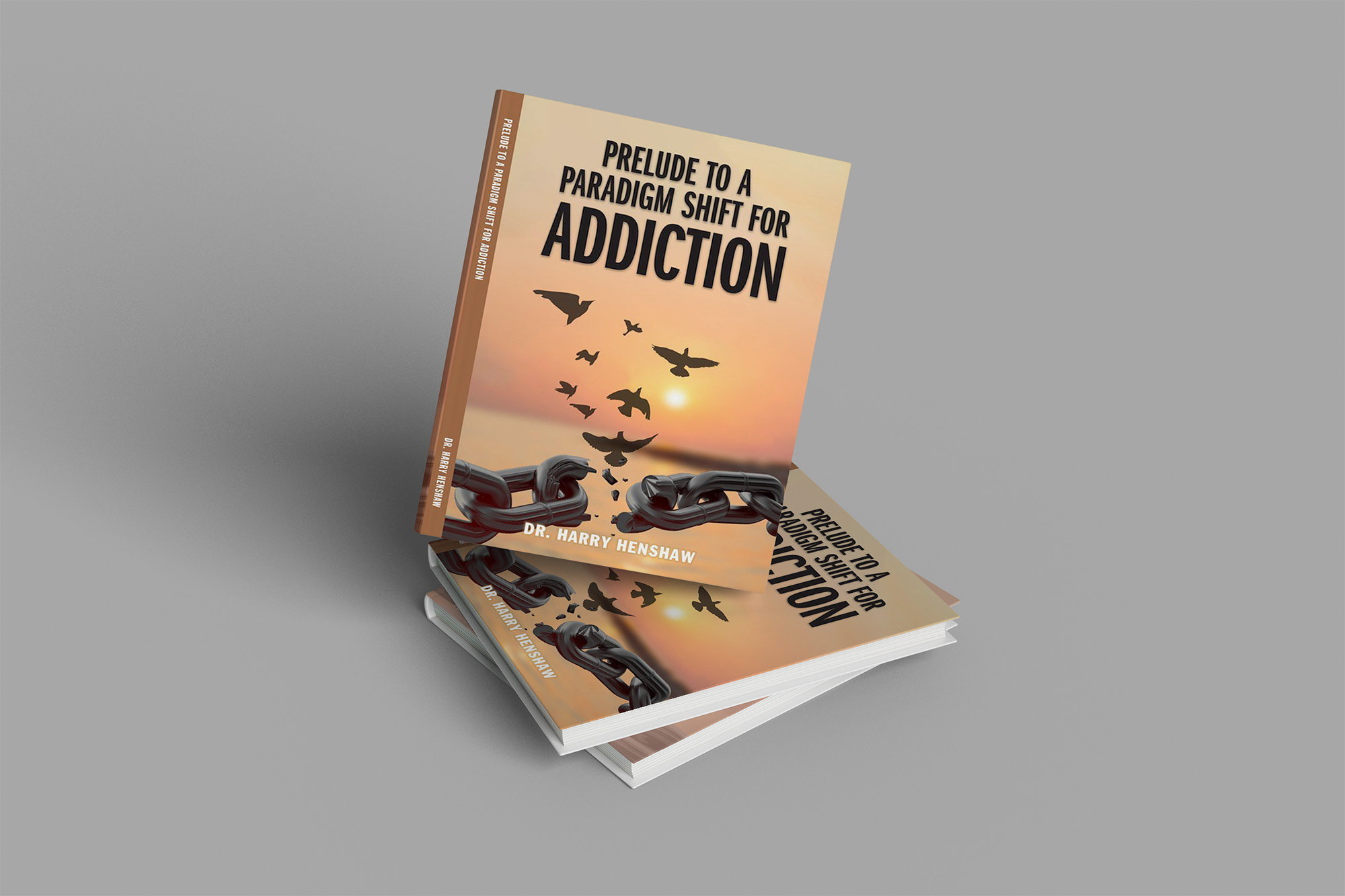
Get Free from Addiction!
Discover a groundbreaking perspective on addiction recovery. Click below to buy Prelude to a Paradigm Shift for Addiction and explore innovative solutions to transform the way we understand and treat substance use disorders.
About Enhanced Healing
Enhanced Healing Counseling specializes in addiction recovery, mental health, and self-esteem support. Offering online and in-person services, we empower individuals to transform their lives with personalized care and proven therapeutic methods.